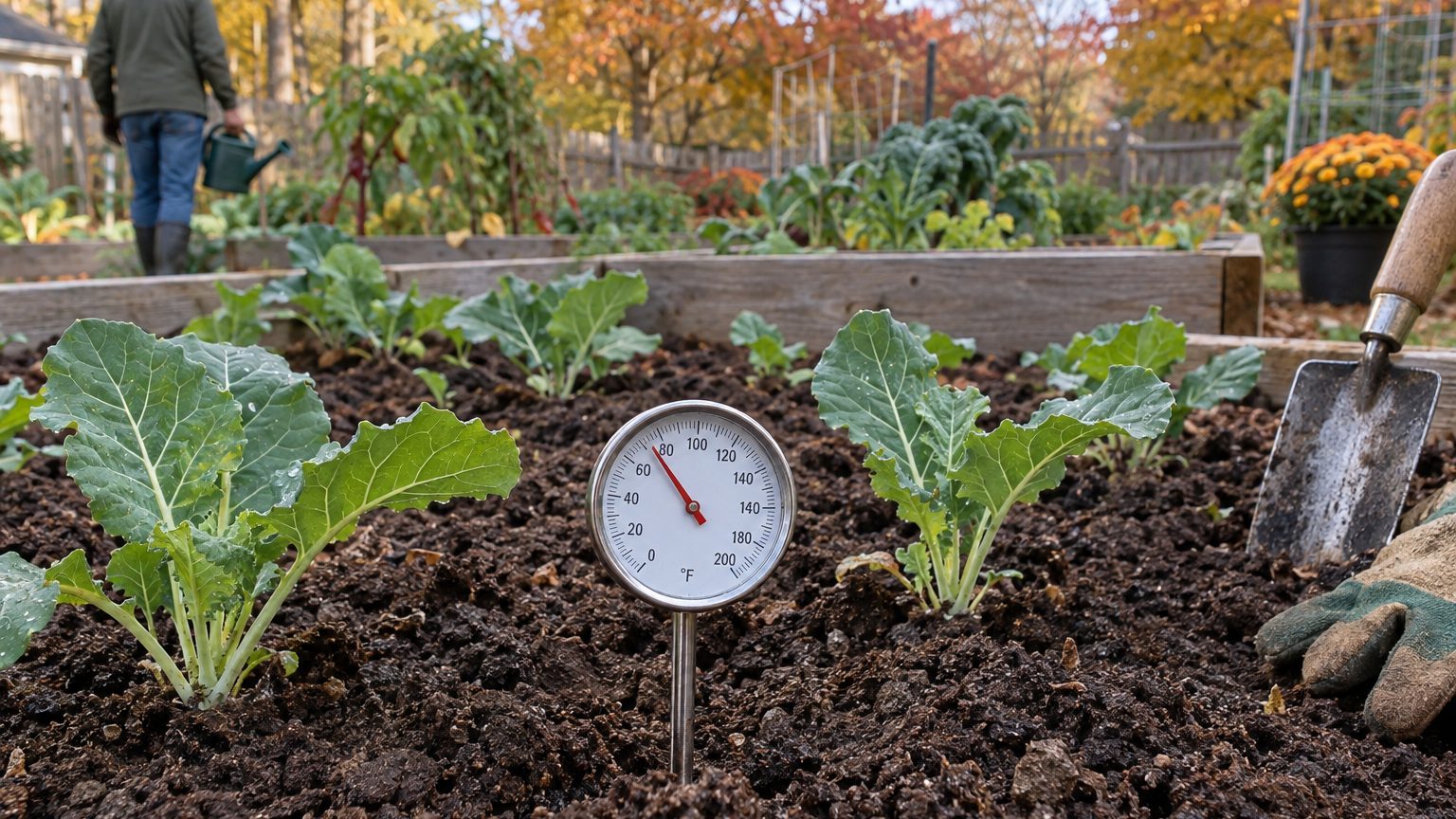

Collards go into a Nebraska garden once the soil has caught up with spring, not the moment the calendar clears frost risk. The frost-free window here runs long enough for a full-season planting, but the state’s real winter cold, not summer heat, is what decides whether you’re growing an autumn crop or dreaming of one you can’t actually keep. Variety choice belongs to your county extension office, not a generic list.
When the soil is warm enough in Nebraska

The figure gardeners want first is the last spring frost date, and for eastern Nebraska it falls between April 12 and April 23, based on the 30-70% freeze-probability band in NOAA’s 1991-2020 Climate Normals for the Omaha station (USW00014942). That’s a probability window, not a guarantee. Some years the last freeze lands well before April 12; other years it sneaks in after April 23. Suburban and rural gardens away from that airport station typically see the last spring frost arrive later, sometimes by one to two weeks, and more at elevation, so a county a hundred miles west of Omaha shouldn’t lean on this exact date without checking its own record.
Frost is a proxy, not the real target. What collards actually need is warm soil, and soil temperature lags behind air temperature by a couple of weeks in spring. That means the point when a hard freeze becomes unlikely isn’t necessarily the point when direct-seeded collards will germinate quickly or transplants will take off without stalling. Extension guidance generally treats soil in the mid-40s Fahrenheit as workable for brassica seed, with faster, more even growth once soil runs warmer still, so waiting a week or two past the last-frost window often pays off more than rushing it.
Gardeners here split into two camps: those who start seed indoors four to six weeks ahead and set out transplants once frost risk has passed, and those who direct-seed once the soil has warmed, favoring types known for steady cool-season growth rather than pushing for the earliest possible sowing date. Either approach works in this climate; the choice comes down to how much lead time you want on the harvest rather than any hard requirement of the crop itself.
One more thing worth building into the bed plan from day one: collards are brassicas, in the same family as turnip, rutabaga, cabbage, kale and mustard. They share the same soil-borne pests and diseases, which means a bed that grew any of those crops last season hasn’t been rotated just because it’s growing something with a different name this year. Check the site’s crop rotation guide before deciding where this year’s collard row goes.
How long the season lasts here
Stack the two frost windows and the frost-free stretch in eastern Nebraska comes out to roughly 175 to 197 days, depending on which edge of each probability band actually shows up in a given year (last frost April 12-23, first frost October 15-26, both from the same NOAA Climate Normals dataset for the Omaha station). Either end of that range is a long season by garden standards, close to six months of frost-free growing.
What that length actually buys you is flexibility, not just a longer harvest. A season this long comfortably fits two collard plantings: one seeded or transplanted after the spring frost risk clears, and a second, direct-seeded planting in mid-to-late summer timed to mature as the weather cools toward fall. Because the window is generous, that second sowing rarely needs the head start of an indoor transplant, which also means skipping the extra step of checking transplant roots for circling or girdling before they go into the ground. Direct seed works fine when there’s this much calendar to spare.
A short-season territory forces a gardener into a single planting and makes every week of lead time count. Nebraska isn’t that. The real constraint on how this bed gets used isn’t the length of the frost-free stretch, it’s what happens after that stretch ends, which the next section gets into directly. For the mechanics of timing a second planting against this specific frost window, the site’s succession sowing guide walks through the spacing between sowings step by step.
Heat and water in Nebraska

Nebraska summers have a reputation for lurching between real heat and cooler, wetter stretches, but the number that actually decides how a collard bed gets planned here isn’t a summer statistic at all. It’s the mean daily minimum of the coldest month, which at the Omaha reference station runs 15.2°F, placing most of the state within USDA hardiness zones 4a to 5b under the current Plant Hardiness Zone Map.
Collards live two entirely different lives depending on how that number reads. Where the coldest month stays mild, close to freezing rather than well below it, gardeners treat collards as a standing crop, picking leaves one at a time from November into March, with cold snaps sweetening the flavor along the way. A mean minimum in the mid-teens rules that out. Repeated exposure at that level is more than collard foliage reliably tolerates, so here the crop behaves as an autumn planting that runs its course and ends at the first hard freeze, not a bed you keep returning to all winter.
This page doesn’t carry a verified count of days above 90°F or a summer rainfall total specific to this territory, so treat any such figure elsewhere with caution unless it names its station. What holds regardless of the exact number: humid, still air between waterings is what invites the leaf mildew and rot that brassicas are prone to in a warm, damp stretch. Spacing plants for airflow and watering at the soil line rather than overhead matters here as much as it does anywhere collards get grown, cool-summer territory or not. The same brassica family pests and diseases that follow turnip, rutabaga and cabbage through a rotation will find collards just as easily, which is the other reason that rotation plan from the previous section matters more than any single-season fix.
Which collards suit Nebraska
With a frost-free window stretching up to six months, season length rarely narrows the field of collard types worth growing in Nebraska. What actually narrows it is the winter. Since the coldest month here averages in the mid-teens Fahrenheit, no type reliably survives as a standing winter crop, so the real choice is which type finishes cleanly before a hard fall freeze, not which one can be picked all winter the way a milder-climate gardener might expect.
Inside a Nebraska summer that swings between real heat and cooler spells, types that hold leaf quality without bolting prematurely tend to reward the extra effort of giving them afternoon shade and consistent moisture at the root. And because still, humid air between waterings invites the same mildew and rot pressure covered above, resistance to common brassica leaf disease is worth weighing before flavor or leaf shape in a garden that struggles with airflow.
None of that points to a specific cultivar, and this page won’t offer one. Naming a variety here would be guessing, since the types that actually perform well against this frost timing and this summer pattern are the ones tracked by local trials, not a nationally circulated list. The reliable move is to ask the county extension office which types were trialled locally before ordering seed, through the University of Nebraska-Lincoln Extension at extension.unl.edu. Their county-level records reflect the same freeze-probability bands and the same coldest-month figures used throughout this page, which beats any generic recommendation this article could offer instead.