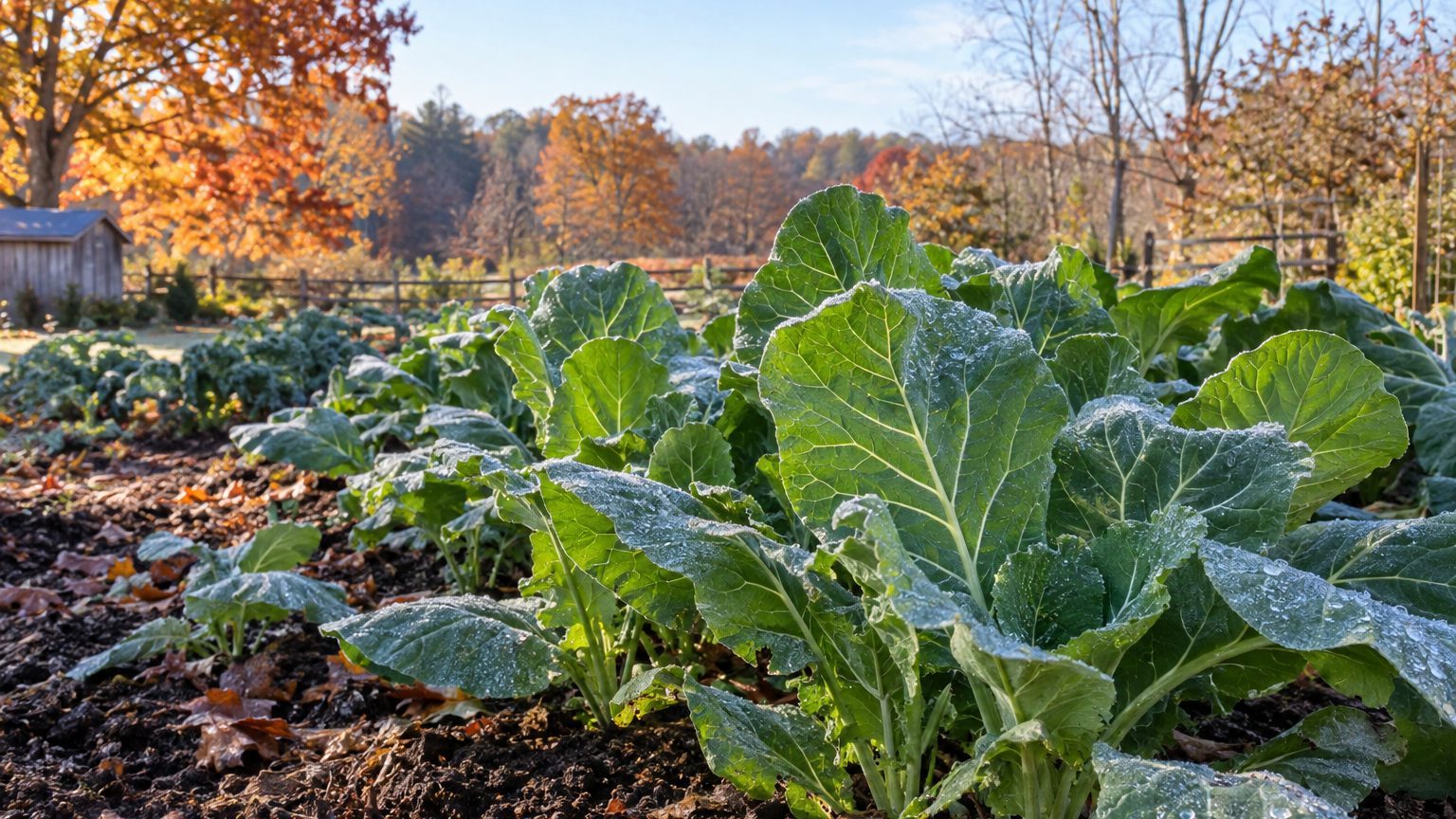

Nevada has no single collard calendar. In the Las Vegas valley, seeds go in from late summer into fall, and the crop grows through a mild winter. In the north and at elevation, sow in spring as soon as the soil can be worked, then again in midsummer for a fall crop. Collards grow best in cool weather and sweeten after frost, so the goal is to aim the growing months at the cool part of your year.
The short answer for Nevada
Sow collards so they grow in cool weather: late summer through fall in the low desert, spring and midsummer in the north and the mountains. Dates shift with elevation, because frost reaches Nevada gardens months apart depending on where they sit.
The one station with solid numbers is Las Vegas. NOAA’s 1991-2020 climate normals put the last spring 32°F freeze there between January 7 and February 1, and the first fall freeze between December 8 and December 23. Those are probabilities, not deadlines. Each range marks the stretch of dates when the odds of a 32°F freeze at that station run between 30 and 70 percent. A freeze can still land outside it.
These dates describe the mildest corner of the state, not Nevada as a whole. The Las Vegas airport sits in a desert urban heat island, and Reno, Carson City, and any garden at elevation see frost months earlier in fall and months later in spring. A Las Vegas gardener can sow through the cool season, while a gardener in the north is working with a much shorter stretch between hard freezes.
Winter in the low desert is gentle. The average daily minimum in the coldest month in Las Vegas is 39.6°F, so most nights stay above freezing and collards keep growing straight through. Farther north, count backward instead. Collards shrug off light frost, so a spring sowing can go in a few weeks before the last frost is expected. A fall sowing has to be well established before the hard freezes arrive. Growers who want the full picture of the crop can read Growing Collards in Nevada.
What will not work here
Copying a Southern calendar. Advice written for Georgia or the Carolinas assumes a long, humid growing season and a gentle fall. Nevada’s frost dates span a far wider range, so a date that is right in one county can be months off in another.
A late spring sowing in the Las Vegas valley is the classic failure. Collards started when the weather is already warming never get a cool stretch to build leaves in. Summer heat stalls growth, toughens the leaves, and turns them bitter. In the low desert the season belongs to fall, winter, and very early spring, which is why the airport’s frost window falls in the dead of winter.
At elevation the problem reverses. Where the first fall frost comes months before Las Vegas gets one, the slowest collards run out of season. A variety with long packet days to maturity, counted from sowing when you plant seed directly in the ground, may still be small when the hard freezes arrive. Collards tolerate frost, but not a deep freeze well below 32°F. Choosing a faster variety matters more here than in the valley, and The Best Collards and Greens for Nevada sorts the options by season length.
Weekly watering fails almost everywhere in the state. Collards are leafy and shallow-rooted, and in dry air and fast-draining soil a once-a-week soak leaves the root zone parched for days. Plants that swing between dry and wet grow slowly and taste harsher. Mulch and a steadier schedule do far more good than a deeper soak once a week.
Wind is the quieter killer. Spring gusts across open Nevada ground can shred young transplants and dry out seedlings overnight. A windbreak, a fence line, or a row cover placed early often decides whether a spring planting survives to harvest.
What changes across Nevada
The USDA Plant Hardiness Zone Map (2023 edition, built on 1991-2020 normals) places Nevada anywhere from zone 4a to 10a. That is a wide range of zones, and no single answer fits inside it. The system rests on one variable, the average annual extreme minimum temperature, so it says how cold a place gets, not how long the season runs or how hot summer becomes. For collards, those two matter at least as much.
A reader should look up their own location on the USDA map rather than guess from a neighbor’s garden, because zones here can change within a few miles of elevation. The practical spread looks like this:
| Setting | Main sowing window | What to shift |
|---|---|---|
| Low desert (Las Vegas valley) | Late summer through fall, into winter | Skip summer sowings; harvest through winter |
| Mid-elevation valleys (Reno, Carson City area) | Spring, then midsummer for fall | Frost comes months earlier in fall and later in spring than in Las Vegas |
| Higher, colder ground | Late spring and midsummer, with protection | Choose fast varieties; use row cover and wind shelter |
Gardeners in the north or at altitude should shift in three ways: start spring crops later, count back from the first hard freeze when timing a fall crop, and choose faster varieties. Transplants help because they put you weeks ahead of seed in a short season. In the low desert the shift runs the other way: plant later in the year than your instinct says, once the heat has truly broken.
Where to check this for your own county
The best local reference is your land-grant extension office. University of Nevada, Reno Extension serves the state’s counties, and its offices know the local frost patterns, soils, and water conditions that no statewide guideline can capture.
Look for two things there. First, a planting calendar written for your county, which will give sowing and transplant windows tied to local frost dates rather than a state average. Second, vegetable varieties trialed in your county, since a collard that performs in one valley can bolt or stall in another. Ask the office whether brassica greens have been tested nearby, and which varieties held up to the local heat and wind.
A county recommendation beats a state one, and the state-level guidance in this article is the broader outline. Counties in Nevada can span huge elevation differences, so ask which part of the county the calendar was written for. If the office gives a range of dates, treat the early end as a risk and the late end as the safer choice, and let your own garden’s conditions decide where you fall.
Checking this against your own garden
Your own observations outrank every date above. Three things are worth watching, and none needs an instrument.
- Soil warmth by feel. Push a bare hand a few inches into the bed in the morning. If it feels cold and clammy, seed will sit and sulk or rot. If it feels cool but not chilling, collard seed will germinate. A bed that warms early tells you your site runs ahead of the valley average.
- First true leaves. The first pair on a seedling are seed leaves. The true leaves that follow show how fast the plant is actually growing. If they appear quickly, your timing fits. If they come slowly or the seedlings stall, the soil is too cold, the spot is too shaded, or the wind is too strong.
- Where frost lingers. Notice which spots keep a white coat on the lawn or car windshield longest on cold mornings. Those low pockets collect cold air and freeze earlier in fall and later in spring, so plant your hardiest crop there or move beds up the slope.
Keep a simple note each year of when the soil first felt workable, when seedlings broke ground, and when the first hard freeze arrived. Two or three seasons of notes will give you a calendar tuned to your own yard.
The Moon calendar is a separate, older custom: see when to plant collard greens by the moon, written as tradition rather than fact.
Common questions
Can I plant collards in Las Vegas in the fall?
Yes, fall is the main season there. Sow once summer heat has truly broken, and the plants can keep growing through a mild winter, since the coldest month’s average daily minimum is 39.6°F.
Will collards survive a Nevada winter?
It depends on the zone, which ranges from 4a to 10a across the state. In the low desert they usually keep growing. In colder zones a hard freeze well below 32°F can kill them, so mulch, row cover, and a sheltered spot matter.
Should I start collards indoors or sow seed outside?
In the north and at elevation, transplants give a short season a head start. In the low desert, direct sowing in fall works well because the soil and weather are already cooperative.
Can I sow collards in midsummer?
In the north and in the mountains, yes, and that is the usual timing for a fall crop that matures in cooler weather. In the low desert, wait until the heat breaks, because seedlings sown into peak summer heat struggle and grow bitter.