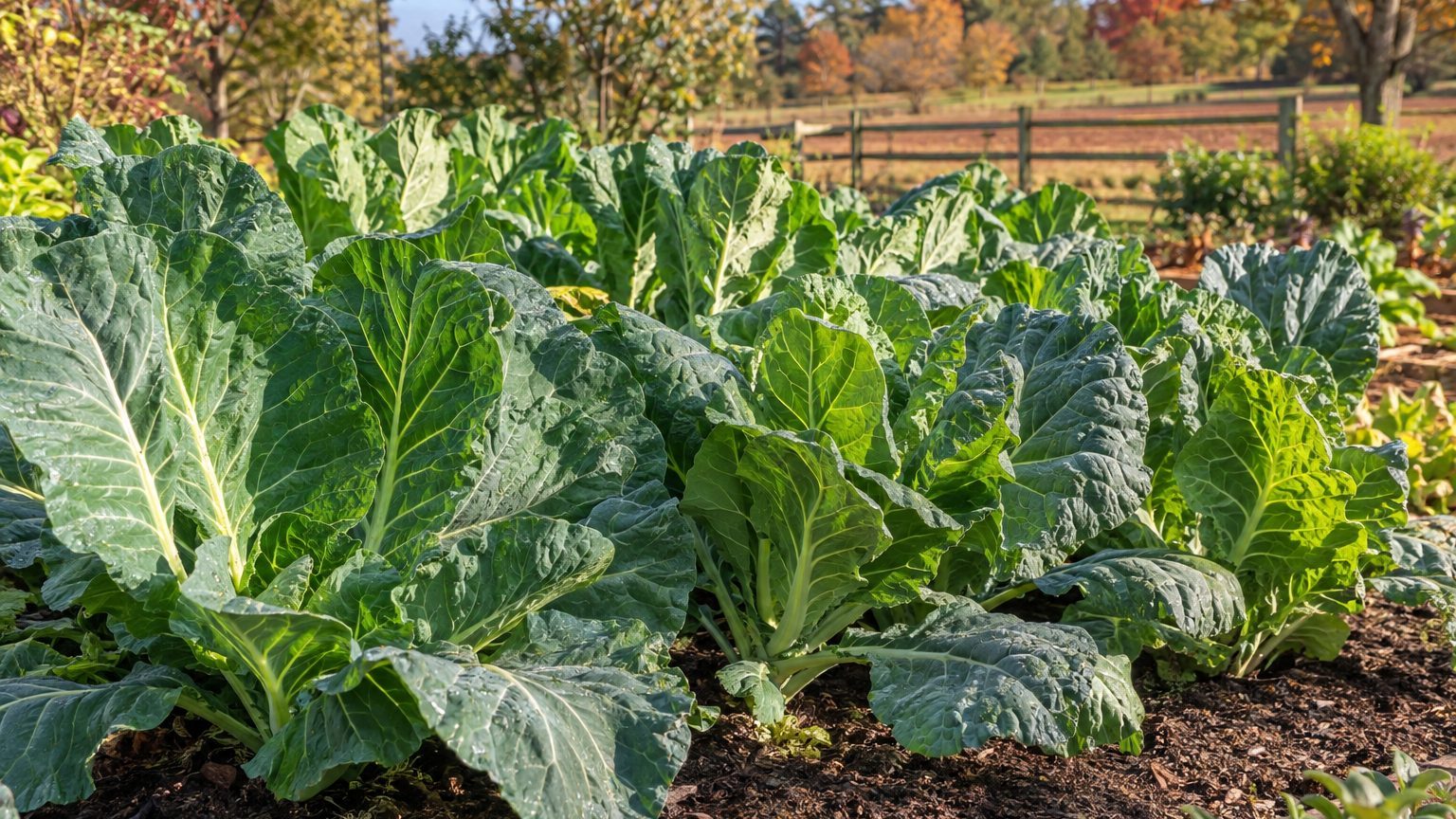

Plant a compact, quick-to-size collard with good bolt tolerance, and treat fall as the main harvest. The growing season is about six months at the Omaha reference station, summers are hot, and winters are too cold for collards to return. That favors Vates-type and other early or mid-season selections over big, slow Southern heirlooms. Kale and other greens fill in where collards struggle. For the crop itself, start with Growing Collards in Nebraska.
The short answer for Nebraska
Choose by type, and let the calendar do the sorting. At the Omaha airport weather station, the last spring freeze (32°F) has a 30 to 70 percent chance of having already passed between April 12 and April 23. The first fall freeze lands in the same kind of band, October 15 to October 26. Those are probabilities, not promises. A freeze can still show up after the late end of the spring range, and a fall one can arrive before the early end.
Collards tolerate light frost and taste better after it, so a spring planting can go out before the last freeze. That leaves roughly six months of usable season in the reference city, and less on a rural lot. Airport readings run milder than outlying gardens, which commonly see the last spring frost one to two weeks later and the first fall frost one to two weeks earlier. Add more at higher elevation.
Here is how the main types sort out for that window.
| Type | Examples | Fit for Nebraska |
|---|---|---|
| Compact, open-leaf, bolt-tolerant | Vates, Champion | Best all-round choice; handles both spring and fall plantings |
| Fast, smooth-leaf hybrid | Flash | Good for a quick spring crop and a late-summer fall planting |
| Large Southern heirloom | Georgia Southern | Works only if transplanted early; may run out of season in a cool fall |
| Cold-hardy kale (alternative) | Winterbor, Lacinato | Holds on later into fall than most collards and takes hard cold well |
Plan on two windows. Set transplants out in early to mid spring, and start a second batch in midsummer for a fall harvest that matures as nights cool. The fall crop is the better one, because leaves sweeten as the cold arrives and the heat-driven bolting pressure is gone. The timing details are in When to Plant Collards in Nebraska.
What will not work here
Slow varieties fail first. A big heirloom that wants a long, warm season gets a late start from a cold April and then runs into freezes in October. Plants that never reach full size give you a few small leaves instead of baskets of them. A fall crop started from seed too late in summer has the same problem.
Weekly watering fails in a hot, dry stretch. Collards have a lot of leaf area, and in July heat a plant can lose more water in a day than a once-a-week soak puts back. Shallow, infrequent watering leaves leaves tough, bitter, and edged with brown. Mulch with straw or shredded leaves several inches deep and water deeply when the top inch or two of soil is dry. Direct-sowing a fall crop in midsummer has a related weakness: the soil crusts, seeds dry out, and the seedlings come up patchy. Starting transplants in a shaded flat and moving them out works better.
Close spacing fails where humid summers sit on the eastern part of the state. Dense leaves hold moisture, which helps fungal leaf spots and gives cabbage worms and aphids good cover. Give each plant room on all sides so air can move between them, and check the undersides of leaves weekly.
Plan against winter survival too. The coldest month in Omaha has a mean daily minimum of 15.2°F, and the USDA Plant Hardiness Zone Map (2023) puts the state between 4a and 5b. A hard January will kill collard plants in most gardens. Treat them as annuals. Some mulched fall plantings hold on into early winter and a few plants survive a mild one, but a garden that plans on spring regrowth will usually be replanting.
Finally, transplants set out straight from a warm porch on a windy April day can get burned by cold and wind. Harden them off over a week or so before they go in the ground.
What changes across Nebraska
Nebraska is not one garden. The USDA zone map (2023, built on 1991-2020 normals) puts the state between 4a and 5b, and that range is the honest answer: there is no single zone and no single date. The USDA system rests on one variable, the average annual extreme minimum temperature. It says how cold a winter can get, not how long the season runs.
For collards, which are grown as annuals here, season length matters more than zone. Omaha’s dates sit toward the milder, eastern side. Gardeners farther north, in the Panhandle, or on higher ground can plan on a later last spring frost and an earlier first fall frost than the airport numbers. Shift your spring planting a week or two later, and favor the faster types in the table above so the crop is full-sized before fall freezes. Start the fall batch earlier as well, since the first cold arrives sooner.
Southeastern gardens get the longest runway, which gives slower types like Georgia Southern a better chance. They also get the humidity, so spacing and leaf-spot watching matter more there. Drier western gardens trade that for wind and a steeper watering bill.
Look up your own area on the USDA Plant Hardiness Zone Map rather than guessing from a neighbor’s garden. A few miles and a few hundred feet of elevation can change the answer.
Where to check this for your own county
Start with University of Nebraska–Lincoln Extension. As the state’s land-grant extension service, it has county offices staffed by people who see local weather and local pest problems each year.
Two things are worth looking for. The first is a planting calendar for your county or the nearest one, with spring and fall transplant dates for cool-season crops like collards, kale, and cabbage. The second is the vegetable varieties that have been trialled near you, which tell you which collards and other greens performed under local heat, wind, and pest pressure rather than just in a catalog description.
When you call or visit, ask three things: the average last spring and first fall frost for your part of the county, which brassica pests are heaviest locally, and whether any trial results cover collards or kale.
A county recommendation beats a state one. The state view above leans on one reference station in Omaha and a state-wide zone range, and it is a good starting point, not a final answer. If your county office gives dates that differ from the ones here, go with the county.
Checking this against your own garden
Your own yard outranks every date above. Three observations tell you more than any calendar.
- Soil warmth by feel. Push a hand a few inches into the bed in early spring. Cold, wet soil that clumps and chills your fingers means wait; soil that crumbles and feels cool but not cold is ready for transplants. A south-facing bed beside a wall will warm days ahead of an open one.
- First true leaves. The first pair that look like leaves, not the seed leaves, mean a seedling is ready to harden off. Slow seedlings in a cool room tell you your starting spot needs more light or warmth.
- Where frost lands first. On the first frosty mornings, walk the yard. Frost on low spots and open ground but not along the house tells you where cold settles, and where a fall crop will last longest.
Keep notes on these for a year or two. They add up to your own frost dates and your own bolting date, which are worth more than any state average.
Common questions
What is the best collard variety for Nebraska?
A compact, bolt-tolerant, early-to-mid-season type such as Vates or Champion is the safest bet. It reaches harvest size within the available season and tolerates both spring cool and summer stress.
Will collards survive a Nebraska winter?
Usually not. With January’s mean daily minimum at 15.2°F in Omaha and a state hardiness range of 4a to 5b, most plants die over winter. Treat collards as annuals and plan to replant.
Should I plant collards in spring or fall?
Both, but fall is better. Spring plants face rising heat and bolting. A midsummer transplant matures into cooler nights and gains sweetness after frost.
Are other greens easier than collards?
Kale is the closest substitute and handles hard cold well. Mustard and turnip greens grow faster and suit short seasons. Collards still give the heaviest harvest per plant when the season is long enough.