
Start pepper seed indoors 8 to 10 weeks before your local transplant date, and transplant only after frost has passed and soil has warmed to 60 F. In Nevada that transplant date itself is not fixed: it shifts by months depending on whether you garden in a low desert valley, at elevation, or in the Reno-Carson City corridor. The rest of this page shows you how to find your own number.
The short answer
At the reference station in Las Vegas, NOAA’s 1991-2020 Climate Normals put the average count of days at or above 90 F at 131.3 days a year. That is not a curiosity. It is the number that decides whether your pepper flowers turn into fruit or just fall off the plant. Pepper fruit set stalls when daytime highs push past 90 F for any stretch, because the plant aborts blossoms rather than spend energy on fruit it may not be able to support in that heat. With well over four months of the year crossing that line in the low desert, a Las Vegas-area or Laughlin-area gardener has to plan around long hot stretches where the plant simply stops setting fruit, then resumes once temperatures ease.
Reno, Carson City and the higher valleys of northern and central Nevada see far fewer 90 F days than the Las Vegas figure, though this site does not carry a separate day-count for those stations. If you garden outside the low desert, treat the 131.3 figure as an illustration of how extreme the hot end can get in this state, not as your own local number.
Fruit set fails at the other end too, and this is the part growers tend to forget. Nights that drop below 55 F cause the same kind of blossom drop as heat does, just from the opposite direction. This site does not carry summer night minimum temperatures for Nevada locations, and that gap matters here more than almost anywhere else in the country, because Nevada’s elevation range is enormous. A valley floor in the south can hold warm nights well into the season while a high desert town two hours north can drop into the 40s on a summer night. Nobody can hand you a safe number for your own nights from a map. Watch your own thermometer through the season, especially in the weeks around your expected transplant date, and again as fall approaches.
When to start seed here
The count-back math is the same no matter where you live in Nevada. What changes is the date you plug in for frost and soil warmth. Work through it in this order:
- Find your last spring frost date. Nevada’s range is wide enough that a single statewide date would mislead you. NOAA’s 32 F freeze-probability data for the Las Vegas airport station shows frost risk clearing between January 7 and February 1, but that reading reflects an extreme desert urban-heat-island site and should not be used as guidance for the rest of the state. Reno, Carson City, and anywhere at elevation see frost linger months later in spring and arrive months earlier in fall. Call your county extension office for the frost window that applies to your actual garden.
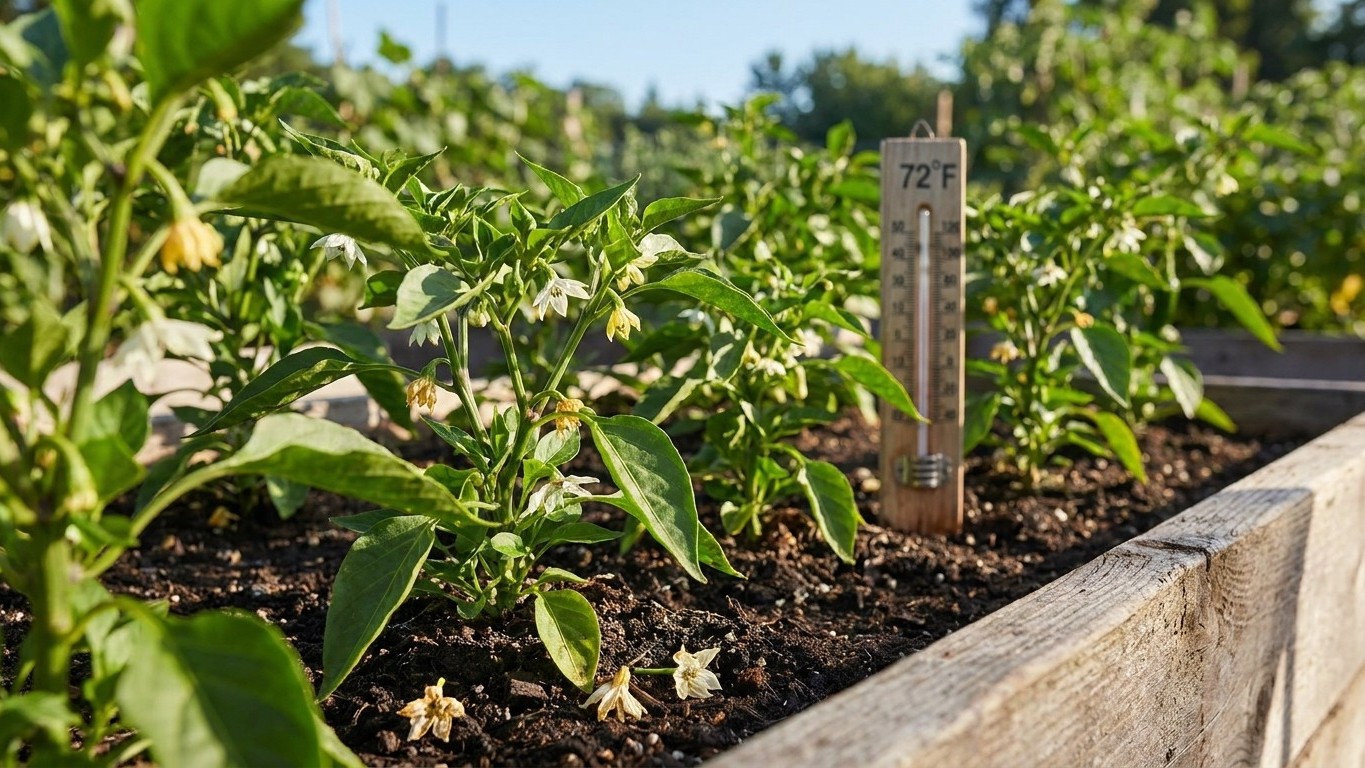
- Confirm soil temperature, not just air temperature. Transplant only once soil at planting depth has reached 60 F, checked with a soil thermometer pushed a few inches into the bed, ideally in the morning before the sun has warmed the surface. Air temperature can feel warm on a spring day while the soil underneath is still cold from winter, especially at elevation.
- Set your transplant date at the later of those two markers. If your frost-free date arrives before your soil hits 60 F, wait for the soil. Peppers set into cold soil sit and sulk rather than grow.
- Count back 8 to 10 weeks from that transplant date to find your indoor sowing date. If your county extension pegs your last frost around a given week and your soil typically reaches 60 F around the same time or shortly after, use that combined date as your anchor and subtract 8 to 10 weeks.
- Adjust for your elevation band each year. A late, cold spring in a mountain valley can push both frost and soil warmth back by two or three weeks compared with an average year, so treat your count-back date as a starting estimate, not a fixed calendar entry.
Because Nevada spans low desert basins near sea-level equivalent conditions and mountain valleys above 4,500 feet, this arithmetic can put a low-desert grower starting seed indoors as early as midwinter, while a high-valley grower in the same state might not start until well into spring. There is no single “Nevada date.” There is only the math applied to your own county’s numbers.
What goes wrong here
- Blossom drop during a hot spell. When daytime highs climb past 90 F, the plant drops flowers instead of setting fruit, a pattern that shows up often across the many days a year the low desert spends above that mark. There is no fix once the heat hits; the practical response is shade cloth over the row during the hottest weeks and picking varieties known locally for holding up under heat, since fruit set will resume once temperatures ease.
- Blossom drop from a cool night. The same dropped-flower symptom shows up when nights fall below 55 F, and because this site does not track summer night minimums for Nevada, you will only catch this by watching your own overnight lows. Row cover pulled over plants on a night you know will run cold, or simply timing transplant later in a high-elevation garden, reduces how often this happens.
- Sunscald on exposed fruit. Nevada’s sun intensity, paired with the same stretch of days above 90 F, can scorch fruit that loses its leaf cover, leaving pale, papery patches on the skin. Keep foliage full through careful watering and avoid heavy pruning during the hottest months so leaves keep shading the fruit.
- Blossom-end rot. This shows up as a sunken, leathery patch on the fruit’s bottom end and traces to inconsistent watering that disrupts calcium uptake, a common problem in fast-drying desert soil. Even, regular watering on a set schedule, rather than occasional deep soaks followed by dry stretches, keeps this from developing.
Common questions
Can I use the Las Vegas frost date for my garden if I live elsewhere in Nevada?
No. That figure comes from an airport station in an urban-heat-island desert setting and runs months ahead of frost dates at elevation or in northern Nevada. Use it only as an illustration of how early frost can clear in the hottest corner of the state, and get your own county’s date from your local extension office.
What if my nights stay above 55 F all summer but days keep crossing 90 F?
Expect fruit set to stall during the hottest stretches regardless of warm nights, since the heat threshold alone can shut fruit set down. Shade cloth during the worst weeks and patience for cooler stretches later in the season are the practical responses.
Does starting seed earlier than 8 to 10 weeks give me a head start?
Not usefully. Seedlings held too long indoors before soil reaches 60 F tend to become leggy and stressed waiting for conditions to catch up, which sets them back more than a slightly later, cleaner start would.
How do I know when my soil has actually reached 60 F instead of guessing from air temperature?
Use a soil thermometer pushed a few inches into the bed, checked in the morning before the sun heats the surface, and check it over several consecutive days rather than trusting a single warm afternoon.