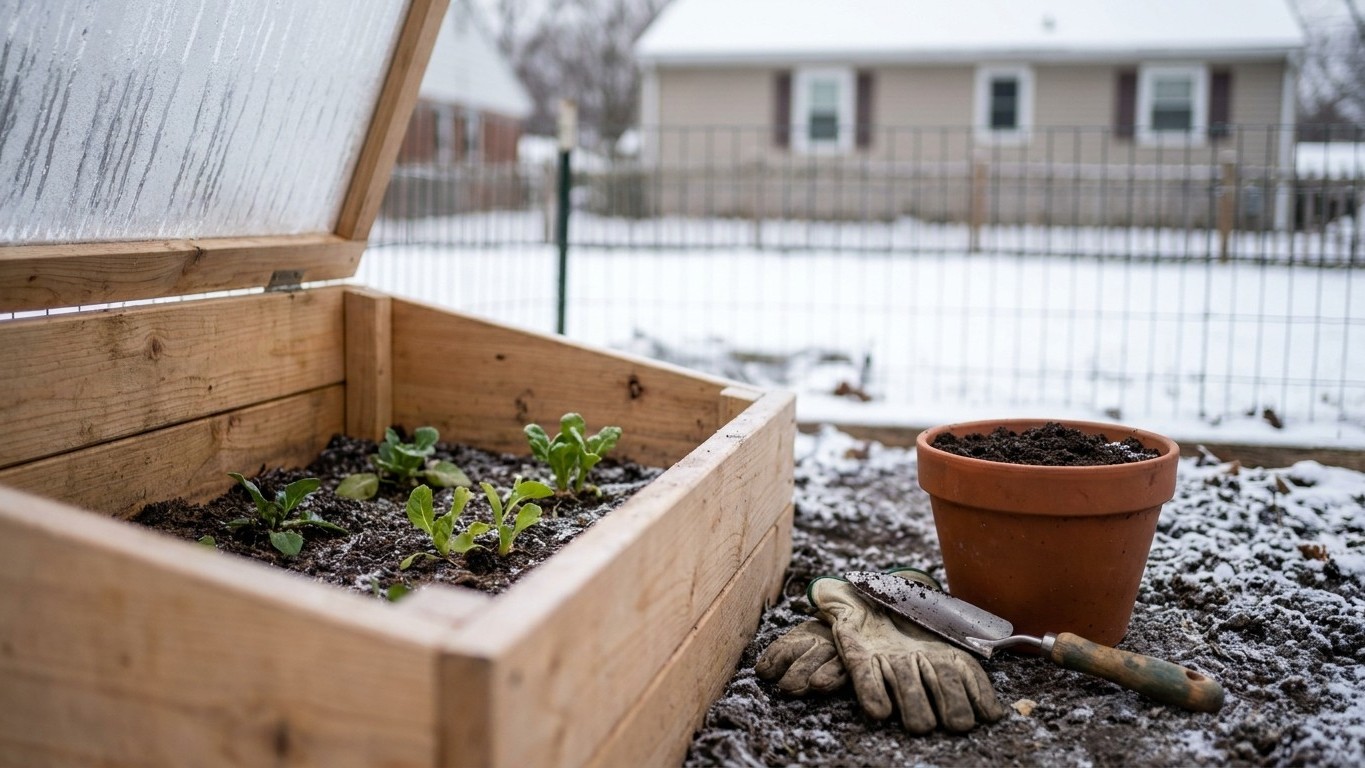

January in Nevada is almost entirely a dormant-season month outdoors, not a planting one. Across most of the state the ground is frozen or too wet to work, so the real work is garlic and shallots where soil is still workable, bare-root fruit trees and canes going in while they’re dormant, cold frames protecting hardy greens, and seed starting under lights indoors for the long season ahead.
What goes in the ground in January

Nevada spans USDA Plant Hardiness Zones 4a to 10a, a range wide enough to cover both a high desert basin where the soil is frozen solid and a low desert valley where it barely dips below freezing at all. That spread is the reason a single statewide answer to “what can I plant” doesn’t really exist for this month. The decision isn’t the calendar, it’s whether the soil itself is workable and whether the freeze risk has passed for whatever you’re putting in.
For most of the state, the honest answer is that nothing goes into open ground in January. Reno, Carson City, Elko and the rest of the higher, colder country are still locked into winter, and pushing seed or transplants into frozen or waterlogged soil wastes both the seed and the season. Even in the warmer low desert pockets, freeze data collected at the Las Vegas airport (a desert location with a strong urban heat-island effect) shows the 30 to 70 percent probability window for the last 32°F freeze running from January 7 to February 1, and the first fall freeze arriving between December 8 and December 23. That’s a narrow, site-specific reading, not a Nevada-wide guide, and it says nothing about what happens fifteen minutes outside city limits or a thousand feet higher in elevation.
Region by region
| Region | General character | January ground condition | What’s realistic now |
|---|---|---|---|
| High desert north (Reno, Carson City, Elko) | Colder end of the state’s hardiness range, higher elevation | Typically frozen or snow-covered | Dormant bare-root planting only when soil thaws briefly; otherwise wait |
| Central Nevada basins | Wide day-to-night temperature swings, variable elevation | Often frozen mornings, workable by midday in mild stretches | Garlic or shallots if the ground is diggable; cold frames for greens |
| Low desert south (Las Vegas valley) | Warmer end of the state’s range | Rarely frozen solid for long, but still cold | Hardy alliums and peas possible in sheltered, workable beds |
Where the ground is workable, garlic and shallot cloves can still go in, along with bare-root roses, fruit trees and cane fruit while they’re fully dormant. Cold frames and low tunnels let you keep hardy greens like spinach and mache alive through the coldest stretch. Forcing rhubarb or chicory indoors in a dark, cool space is another way to get something edible without touching frozen ground at all.
What to start under cover
The trick with January seed starting isn’t the date on the calendar, it’s counting backward from your own last frost. Because Nevada’s frost window shifts by weeks depending on elevation and region, a fixed “start on this day” instruction doesn’t hold up statewide. Instead, work out roughly how many weeks before your area’s typical last freeze you are right now, and match that to the crop.
Tomatoes generally want six to eight weeks of indoor growing before they go outside, peppers and eggplant closer to eight to ten weeks because they’re slower to size up. If your local last freeze tends to fall in the earlier part of the range described for the Las Vegas area, that math points to starting peppers and eggplant now under lights. If you’re gardening at elevation where the ground stays frozen well past that window, starting this early risks ending up with rootbound, leggy seedlings sitting in trays for weeks longer than they should, stretching toward a window that hasn’t opened yet.
The opposite mistake costs just as much. Wait too long to start slow crops like onions from seed, celery, or artichokes grown as perennials, and you run out of runway before the transplant window arrives, especially in the shorter growing seasons of Nevada’s higher basins. Onions from seed in particular need an early jump, often eight to ten weeks before transplanting, because they’re building bulb structure long before they look like much above the soil line.
A simple gut check: if a seedling under lights is outgrowing its cell before outdoor conditions are realistically ready, you started too early for your zone. If you’re sowing something that still needs two more months of growth and your outdoor window is closing in on you, you started too late. Both are avoidable once you know your own frost range rather than borrowing someone else’s.
What is ready to pick
Outdoors, January gives Nevada gardeners very little to harvest, and that’s true almost everywhere in the state given how cold or how workable the ground is at this point. That’s not a gap in the season, it’s just where the calendar sits. What still feeds the table comes from what was planned for ahead of time.
Kale, leeks and other hardy crops planted in fall often sit tolerant of hard cold right where they are, sometimes under a layer of snow, and can be harvested as needed once you dig them out. Cold frames extend that further, keeping spinach, mache, arugula and other cold-hardy leaves growing slowly enough to pick a few leaves at a time through the coldest stretch. Indoors, sprouts and microgreens fill the gap completely: a jar of sprouting seeds or a tray of microgreens on a windowsill produces a fresh harvest in days, not months, and needs no outdoor conditions at all.
This is also the month to go through whatever’s in storage. Squash should feel firm with no soft spots; a squash starting to give under light pressure near the stem end is on its way out and should be used first. Potatoes that have gone soft, sprouted heavily, or turned green near the skin need pulling from the bin. Onions with soft necks or a sour smell are done and should come out before they spread rot to the rest of the batch. A five-minute check of the storage shelf now saves losing the whole crate later.
The jobs that matter this month
January carries more real deadlines than the empty look of a winter garden suggests, and skipping them costs the coming season rather than this one.
Dormant pruning of fruit trees and cane fruit is at its best window right now, while the plant is fully asleep and you can see its structure without leaves in the way. Cut out crossing branches, dead wood and anything growing toward the trunk instead of away from it, and you’re setting the shape of that tree for years. Prune too late, after buds start swelling, and you risk cutting into the plant’s stored energy for the season.
Seed ordering belongs on this month’s list too, and it’s easy to underestimate how fast popular varieties sell out. Waiting until spring often means settling for whatever’s left rather than the variety you actually wanted.
Soil testing and amending pays off precisely because nothing’s actively growing to disturb. Adding compost, lime or sulfur now gives amendments weeks to work into the soil before spring planting starts. Turning the compost pile keeps decomposition moving even in cold weather, and it’s a job that’s easy to forget once the pile is out of sight under snow.
Tool maintenance, bed and fencing repair, and rotation planning round out the list. A dull pruning saw tears wood instead of cutting it cleanly, and a fence panel that’s been leaning all winter is far easier to fix now than after it collapses under a spring windstorm. None of this is filler work. It’s the difference between a garden that’s ready to move the moment the ground thaws and one that’s still catching up in April.
What not to do in January
The most common mistake this month is trusting the air temperature over the soil temperature. Nevada’s dry climate and strong desert sun can push daytime air into the 50s or 60s even while the ground underneath stays frozen or barely above freezing. Gardeners who plant warm-season starts because “it felt warm out” almost always lose them to the cold soil their roots actually sit in.
Uncovering cold frames and row covers too early after a mild stretch is the second trap. A few warm days can feel like a turning point, but Nevada’s freeze risk lingers well into the range described for even its warmer valleys, and a single hard night after the covers come off can undo weeks of protected growth in a single frost.
Feeding nitrogen at the wrong point is a quieter mistake but a costly one. Fertilizing dormant fruit trees or cane fruit now pushes tender new growth right before a freeze can hit it, wasting the plant’s energy on shoots that won’t survive. Hold off on nitrogen until real growth resumes.
Overwatering dormant plants is the last one worth flagging. Dormant roots need far less moisture than actively growing ones, and soil that’s kept too wet in cold weather invites rot rather than helping the plant along. Check soil moisture before watering out of habit, not the other way around.
Checking this against your own county
A statewide month is a starting point, not an instruction, and Nevada makes that gap wider than most states. Elevation alone can shift a frost window by weeks between two towns fifty miles apart, and the difference between the state’s high desert north and its low desert south is enough to put two gardeners completely out of sync in the same month. Before acting on anything above, check it against your own county through the University of Nevada, Reno Extension Service at extension.unr.edu, which tracks local frost data and planting guidance specific to Nevada’s growing regions.
Common questions
Can I plant vegetables outdoors in Nevada in January?
For most of the state, no. The ground is typically frozen or too wet to work. Hardy alliums like garlic and shallots are the exception where soil stays workable, and cold frames can keep hardy greens going through the cold.
What zone is Nevada for gardening purposes?
Nevada spans USDA Plant Hardiness Zones 4a through 10a, one of the widest ranges of any state, running from cold high desert basins to warm low desert valleys.
When is the last frost in Nevada?
It varies enormously by location. Data collected at the Las Vegas airport puts the 30 to 70 percent probability window for the last 32°F freeze between January 7 and February 1, but that figure reflects a specific desert, urban-heat-island site and does not apply to higher or more northern parts of the state.
What should I be doing in the garden in January if I can’t plant anything?
Prune dormant fruit trees and canes, order seed before good varieties sell out, test and amend soil, turn compost, sharpen tools, and check stored squash, potatoes and onions for early signs of rot.