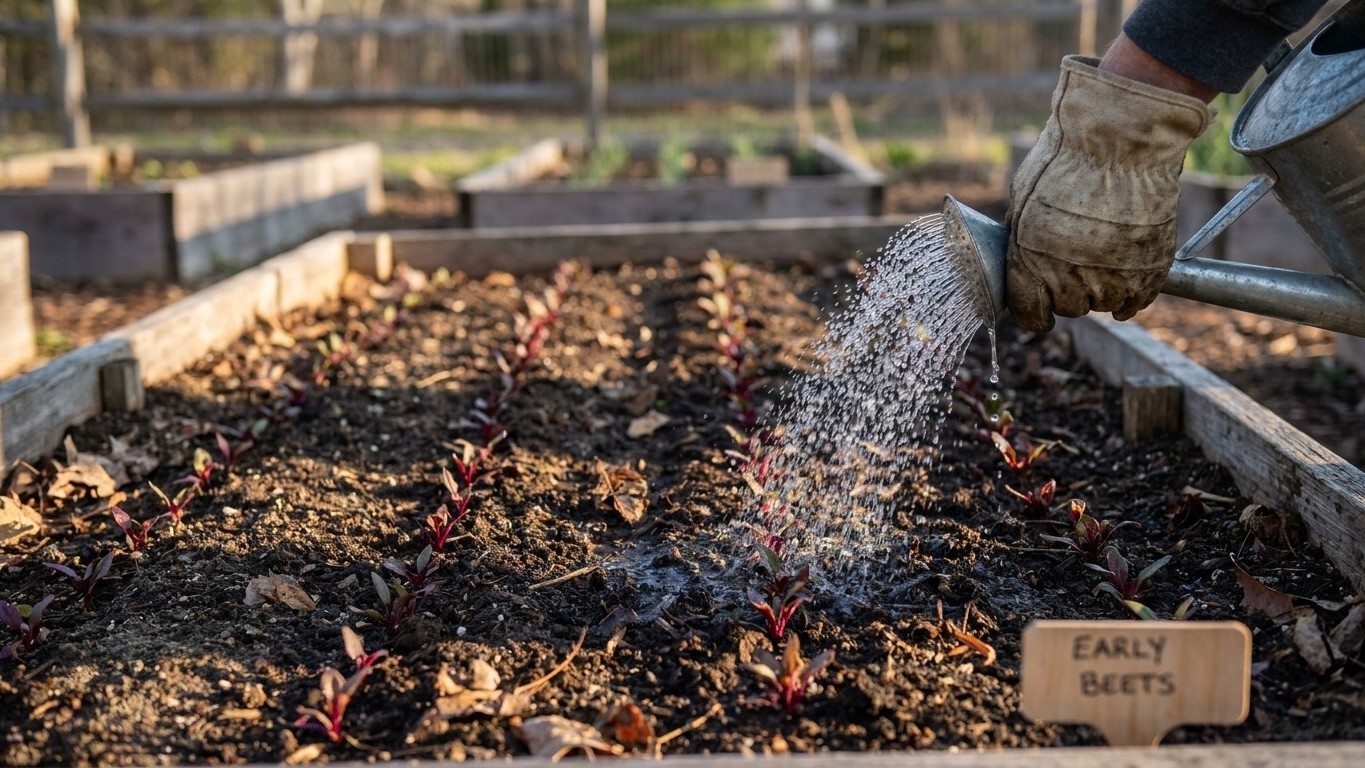

New Hampshire gardeners can raise a solid beet crop, but the payoff depends on two separate risks: dry soil in the first six weeks after sowing, which triggers bolting, and heat later in summer, which turns roots woody. The state’s representative soil runs sandy and strongly acid, workable for beets once tested and amended, and the last spring frost near Manchester falls between April 16 and April 27, setting the sowing window that decides most of what happens next.
The short answer
New Hampshire’s representative soil is the Marlow series, a Spodosol mapped under conifer stands across much of the state. USDA NRCS records for the surface horizon of the series’s major components (215 components sampled) show 57 percent sand, 5 percent clay and 38 percent silt, a loam-to-silt texture, with a surface pH near 3.5, strongly acid, and drainage classed as well drained. Organic matter in that surface horizon runs about 85 percent, a figure that reflects the natural litter layer under forest cover rather than a cultivated bed; a garden that has been dug, amended and planted for a few seasons will not carry anywhere near that number, and gardeners should treat the pH reading the same way, as a description of undisturbed forest ground, not a stand-in for their own plot.
For a beet, that combination cuts two ways. Utah State University Extension calls for deep, sandy, well-drained soil rich in organic matter, and the Marlow series’s sand fraction and drainage class fit that description well. The acidity does not: soil anywhere near pH 3.5 makes root development harder regardless of texture, which is exactly why a soil test matters more here than in states with naturally neutral ground. A closer look at Beet Soil in New Hampshire shows New Hampshire spans hundreds of soil series, from river-bottom silt to hill-country till to ledge close to the surface, and the Marlow series is only a starting point for what the state’s ground tends to do, not a description of any one backyard.
On heat, Utah State University Extension sets the woodiness threshold at 85 F combined with water stress. The exact count of days New Hampshire’s reference climate station spends above 90 F each year is not part of the published dataset behind this page, so no number appears here. What is published is the frost record: the last spring freeze at the Manchester airport station falls between April 16 and April 27, a window that sits well before New Hampshire’s warmest weeks, which gives beets a workable stretch of cool weeks before that 85 F threshold becomes a live concern. The heat risk is real, it is just not quantified in days for this location.
The six weeks that decide it here
Beets are sown directly in the ground, never transplanted, and the standard advice is to put seed in the soil two to three weeks before the last expected frost. When to Sow Beets in New Hampshire depends on the Manchester airport station’s last freeze falling between April 16 and April 27, so that sowing window lands somewhere in the last days of March through early April for most of the state’s lower elevations, earlier near the coast, later inland and later still at elevation. The first six weeks after that sowing date, the stretch Utah State University Extension flags as the period when water stress causes premature flowering, runs through most of April and into May for most gardens.
New Hampshire spring in that stretch is not reliably wet and not reliably dry. It swings: a week of soaked ground and mud season conditions can be followed within days by a stretch of drying wind and no rain, especially on the sandy, well-drained texture the Marlow series represents, where water moves through the soil profile quickly rather than sitting in the root zone. That drainage helps avoid rot, but it also means a dry week shows up in the topsoil faster here than it would on a heavier clay soil that holds moisture longer.
The practical result is that the bolting risk in New Hampshire sits less with the calendar and more with attention during those first six weeks. A gardener who sows on schedule but then lets a dry, windy stretch in late April pass without supplemental watering is handing the crop the exact stress Utah State University Extension identifies as the trigger for premature flowering. Mulch right after emergence helps hold moisture that a fast-draining soil will not hold on its own, and a consistent watering schedule through that six-week window matters more on this soil than it would on a slower-draining clay.
What goes wrong here
- Strongly acid, unamended ground. Where a garden sits close to the Marlow series’s native surface pH near 3.5, roots stay stunted no matter how well the bed drains. Test the soil before planting and amend based on the result rather than guessing; the state soil’s pH describes forest ground, not a number to plant against.
- Compaction under a sandy-looking surface. Some New Hampshire gardens carved from cleared hill country sit over thin till or ledge a few inches down, even where the surface looks loose and sandy. Roots that hit that layer fork or stop growing. Dig a test hole before committing a bed, and build up with a raised frame where the ledge sits close to the surface.
- Bolting from a dry week in the first six weeks. The state’s fast-draining texture lets a short dry spell reach the root zone quickly. Mulch after emergence and water on a set schedule through the first six weeks rather than waiting for visible wilting.
- Woody roots from summer heat. Once temperatures pass 85 F, any accompanying water stress toughens the root, per Utah State University Extension. Keep watering consistent through the hottest stretch of summer and harvest before an extended hot, dry run sets in rather than after.
- Over-amending organic matter. Utah State University Extension caps additions at 1 inch of composted organic matter per 100 square feet. Gardeners working the Marlow series’s naturally leached, low-fertility ground sometimes overcorrect, piling on compost well past that figure, which can push the bed out of balance rather than helping it.
Checking this against your own county
Everything above describes the soil series USDA lists as representative of New Hampshire and the frost record from one airport weather station. Neither is a substitute for what is actually in a specific garden bed. A county extension office can run or point to a proper soil test, giving an actual pH and nutrient reading instead of the Marlow series’s forest-floor figures, and can speak to local frost timing, which typically runs one to two weeks later in spring and earlier in fall than an airport station shows, more so at elevation.
UNH Extension, the state’s land-grant extension service, is the point of contact for that county-level detail. Reaching out before committing to a sowing date, particularly in a first season on a new plot, turns the general figures on this page into numbers that actually apply to the ground being planted.
Common questions
How long does it take beets to mature in New Hampshire?
Beets are sown directly in the ground and typically reach harvest 60 to 80 days from seeding, not from a transplant date, since beets are not started indoors and moved outside. That window holds regardless of state; what changes locally is the sowing date, driven here by the April 16 to April 27 last-frost record.
Should I test my soil before planting beets in New Hampshire?
Yes, given the state’s representative Marlow series soil runs strongly acid at the surface, near pH 3.5. Unamended garden soil may sit closer to that reading than most root vegetables tolerate, and a test through UNH Extension replaces that forest-floor figure with an actual reading for the bed.
What causes beets to bolt in New Hampshire gardens?
Water stress in the first six weeks after sowing, according to Utah State University Extension. New Hampshire’s swinging spring weather can produce a dry week even in an otherwise wet season, which is why consistent watering after emergence matters more than the overall seasonal pattern.
Why do beet roots turn woody in New Hampshire summers?
Woodiness follows heat above 85 F combined with water stress, a separate failure from bolting and tied to later summer rather than the first six weeks. Keeping watering consistent through the hottest weeks and harvesting before an extended hot, dry stretch avoids it.