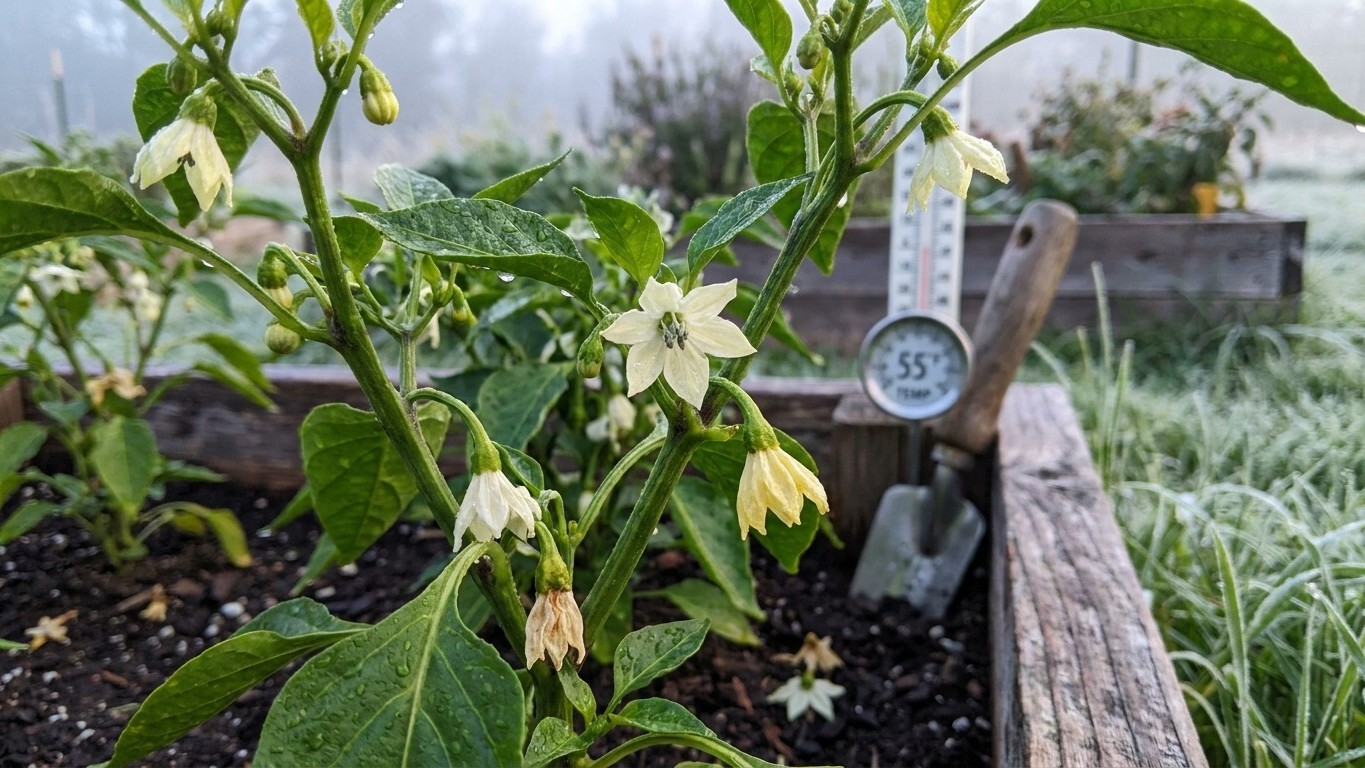

Peppers in New Hampshire can set a full crop in most years, but the window is narrower than gardeners expect. The state’s summers rarely deliver dangerous heat, so the real risk running under the radar is cold: a single night dropping below 55°F during flowering can abort blossoms just as easily as a heat wave. When to Start Pepper Seed in New Hampshire matters more than almost any other single decision, since timing indoor seed starting to the local frost window sets the stage for the whole season.
The short answer

At the Manchester reference station, NOAA NCEI Climate Normals for 1991-2020 put the average count of days at or above 90°F at 10.9 per year. That’s a modest number as far as pepper-growing climates go, and it means outright heat stress, the kind that causes flowers to abort because the plant can’t keep pace with water loss, is not the dominant threat for most New Hampshire gardens. A handful of days each summer might brush that 90°F line, and on those days pepper blossoms can drop rather than set fruit, but this isn’t a climate where heat routinely shuts down a pepper patch for weeks at a stretch the way it does farther south.
The other edge of the fruit-set window is the one New Hampshire gardeners need to watch more closely, and it’s also the one this site cannot hand to you as a number. Utah State University Extension’s guidance on peppers is direct: fruit set fails on both ends, when nights drop below 55°F just as surely as when days climb above 90°F. Understanding Why Peppers Fail to Set Fruit in New Hampshire starts with this two-sided threshold. This site tracks the hot threshold by territory, including the 10.9 days above 90°F figure above, but it does not carry summer night minimums for New Hampshire or any other state.
That gap isn’t an oversight, it’s a limit worth being honest about. Night temperatures vary enormously across a state this size, and even within a single county, depending on elevation, whether a garden sits in a low-lying frost pocket, and how close it is to open water that moderates swings. A valley garden near a river might see markedly cooler nights than a spot two miles away on a south-facing slope. Guessing at those numbers from a map or from a coldest-month average would be worse than not guessing at all.
The practical move is to track your own nights directly. A simple min/max thermometer left in the garden through June and into early July will tell you more about your specific fruit-set risk than any state-level figure could. If you see a run of nights dipping into the low 50s during flowering, that’s the signal to expect stalled fruit set, not a hot afternoon. Pepper plants can look completely healthy, green and bushy, while quietly dropping every blossom because the nights aren’t cooperating. Choosing among Pepper Varieties That Ripen in a New Hampshire Season can also help hedge against these cool-night setbacks.
When to start seed here
Utah State University Extension’s rule of thumb for peppers is 8 to 10 weeks of indoor growing before transplant, with two conditions that both have to be met before the plants go outside: the frost risk has to be past, and the soil has to have warmed to 60°F. Working backward from those two anchors is the most reliable way to set a seed-starting date for a New Hampshire garden.
- Start with the frost floor. NOAA NCEI’s 1991-2020 normals put the last spring freeze at the Manchester station somewhere in the window of April 16 to April 27, based on 32°F freeze probabilities. That’s the airport-station figure, and it’s the earliest reasonable target date for outdoor transplant, not a guarantee for every yard.
- Push that date later for a real garden. Suburban and rural sites, especially those away from pavement and open water, typically see their last spring frost land one to two weeks after the airport date, and more if the garden sits at higher elevation or in a low spot that collects cold air overnight. A garden that would show April 16 to April 27 at the reference station might realistically clear frost risk in early May.
- Check soil temperature directly, don’t assume it. Air frost clearing doesn’t mean the soil has caught up. Peppers need the soil itself at 60°F, and that’s measured with a simple soil thermometer pushed a few inches into the bed, checked in the morning before the sun has warmed the surface. This site doesn’t carry a published soil-temperature date for New Hampshire, so this step has to be done in the actual garden, not estimated from a chart.
- Set the transplant date once both conditions are met. Whichever comes later, the frost-clear date or the day the soil reads 60°F, becomes the actual transplant target for that specific garden.
- Count back 8 to 10 weeks from that transplant date to find the seed-starting date. If a garden’s real transplant date lands in early to mid-May once both frost and soil conditions are checked, indoor seed starting needs to begin roughly two and a half months earlier, in late winter.
This arithmetic is worth redoing every year rather than trusting last year’s date, since frost timing shifts and soil warms at different rates depending on how wet or dry the spring has been.
What goes wrong here
- Blossom drop from a hot spell. On the rare days that push past 90°F, which happen an average of 10.9 times a year near Manchester, pepper flowers can abort even on well-watered plants. There’s no fix once it happens; the plant will usually recover and set new flowers once temperatures settle back down, so the main response is deep, consistent watering before and during a forecast hot stretch to reduce the stress load, and light afternoon shade cloth over the most exposed plants if a multi-day heat run is expected.
- Blossom drop from a cool night. The flip side, and the one this climate makes more likely on a typical summer, is a run of nights under 55°F stalling fruit set just as effectively as heat does. Since this site doesn’t track New Hampshire’s summer night minimums, the only reliable defense is a thermometer in the garden and a floating row cover or cold frame ready to throw over plants if an unusual cold snap is forecast during flowering.
- Sunscald on exposed fruit. Once fruit has set, direct summer sun on a pepper that’s lost its leaf cover, from disease, pruning, or wind damage, can bleach and blister the skin. Keeping the plant’s foliage full through the season is the main prevention; avoid heavy pruning of leaves once fruit is forming, and stake plants so wind doesn’t strip cover unevenly.
- Blossom-end rot. This shows up as a sunken, leathery patch on the bottom of the fruit and traces back to inconsistent watering interrupting the plant’s calcium uptake, not a soil calcium shortage in most cases. Even, regular watering, especially through the uneven rainfall patterns New Hampshire summers can bring, does more to prevent it than any soil amendment.
Checking this against your own county
Every figure above comes from a single reference station and a general extension guideline, and neither one is a substitute for what’s actually happening in a specific yard. Frost dates run later in low-lying or rural gardens than at the Manchester airport, night temperatures swing differently depending on elevation and nearby water, and soil warms at its own pace depending on drainage and how much shade a bed gets in early spring.
UNH Extension is the resource built for exactly this kind of local check. Their office can speak to frost patterns, soil conditions, and pepper variety performance for a specific county rather than a statewide average, and that local read is worth more than any single number pulled from a climate normal. Find them at extension.unh.edu.
Common questions
Can peppers set fruit if nights stay in the upper 50s?
Utah State University Extension’s guidance draws the failure line at nights below 55°F, so upper-50s nights are generally on the safe side of that threshold, though a run of nights right at that edge is worth watching closely during flowering rather than assumed fine.
Does New Hampshire get hot enough to hurt pepper fruit set most summers?
Not routinely. At 10.9 days above 90°F a year on average near Manchester, sustained heat stress isn’t the state’s dominant pepper problem; a cool night during flowering is a more common cause of dropped blossoms here than a hot day.
How many weeks before the last frost should pepper seed go in?
Utah State University Extension calls for 8 to 10 weeks of indoor growing before transplant, and transplant itself should wait for both frost to clear and soil to reach 60°F, so the seed-starting date should be counted back from whichever of those two conditions arrives later in a given garden.
Why does my pepper plant look healthy but isn’t setting fruit?
Healthy foliage doesn’t guarantee fruit set. Both temperature extremes, nights under 55°F and days over 90°F, can cause a plant to drop its flowers while otherwise looking green and vigorous, so the fix is tracking the plant’s actual overnight and daytime temperatures during its flowering stretch rather than judging by leaf appearance.