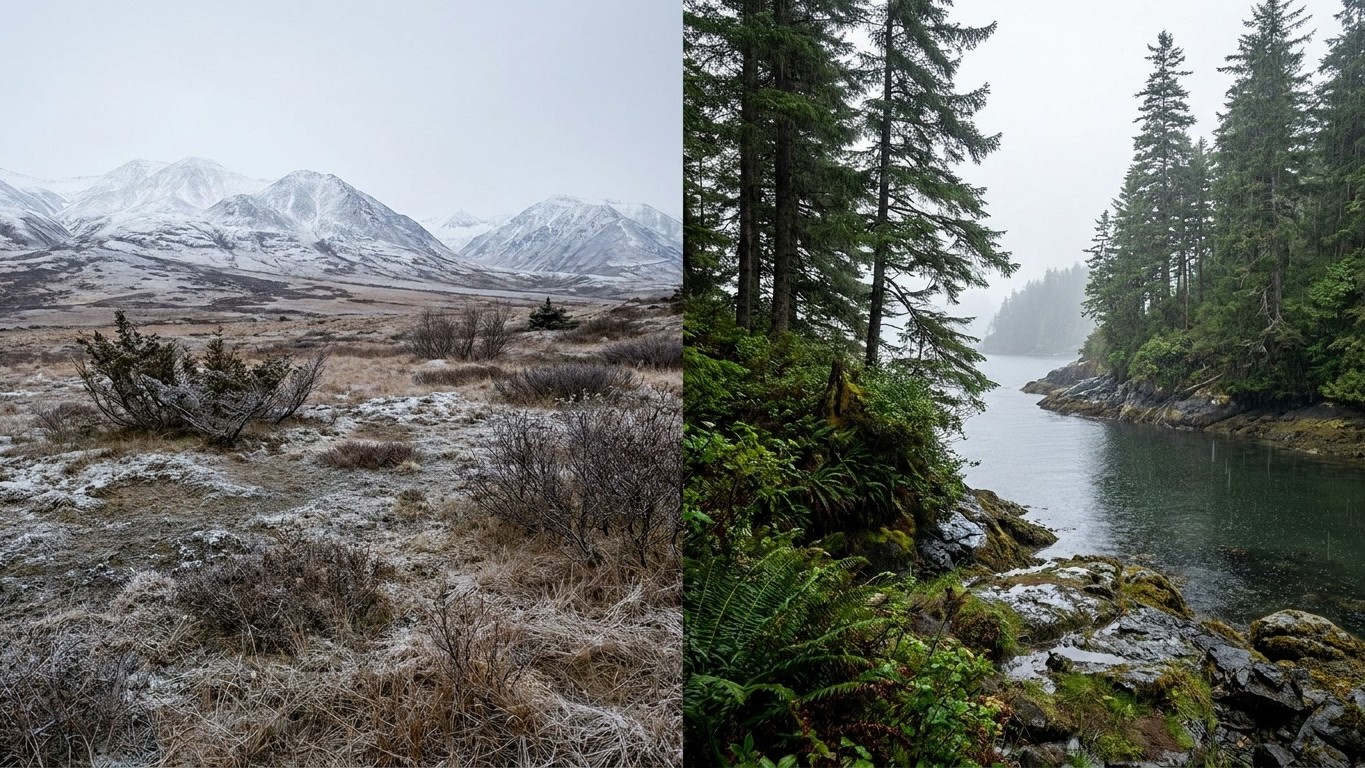

New Hampshire’s growing zones run from 3b up to 6a on the USDA scale, and that range is the whole story here. Of the 65 landscape Trees, Shrubs and Perennials this site tracks, 30 shrug off every zone in that span, 34 make it through only part of the state, and exactly one has no business here at all.
What will not survive a winter in New Hampshire

Start with the easy part. Out of 65 documented species, only one fails across the entire 3b-6a range this state covers: the common fig, Ficus carica. It’s a warm-climate plant through and through, and New Hampshire’s coldest zones simply never let up long enough, or deep enough, for it to make it through a winter outdoors.
That’s the whole “will not survive” list. Everything else this site documents for New Hampshire is either hardy across the full state or hardy in part of it, which is the more interesting case and the subject of the next section.
| Plant | Category | Where the mismatch is |
|---|---|---|
| Ficus carica (fig) | Fruit | Too cold everywhere in the state’s 3b-6a range |
One clarification worth making once, because it changes how you read every table on this page: “hardy” describes survival, not comfort. A plant rated hardy for zone 6a can still sit at the ragged edge of what it tolerates in the warmest pocket of New Hampshire, especially if the trait that limits it is heat rather than cold. A hardiness rating tells you whether the plant lives through January. It says nothing about whether it thrives in July.
The plants that work in part of the state and not the rest
This is where a state-level answer stops being a single answer. New Hampshire spans four and a half USDA zones, from the cold interior and higher elevations near 3b up through the milder pockets near the coast and southern border at 6a. Thirty-four of the 65 species this site documents fall into that gap: hardy somewhere in New Hampshire, not hardy everywhere in it.
Every one of these 34 fails at the cold end of the range, not the warm end, though how far into the cold varies. Group them by how much of the state’s cold zone shuts them out.
Fails only in the coldest zone (3b)
This group loses only the northernmost and highest-elevation parts of the state. Everywhere else, they’re fine: Diospyros virginiana, Morus rubra, Prunus domestica, Pyrus communis, Rubus idaeus, Rubus occidentalis, Sambucus canadensis, Heuchera americana, Monarda didyma, Phlox paniculata, Salvia nemorosa, Hylotelephium spectabile, Ilex glabra, Kalmia latifolia, Betula nigra, Cercis canadensis, Nyssa sylvatica, Platanus occidentalis, and Quercus rubra.
Fails across 3b, 4a and 4b
This band cuts deeper, ruling out a larger share of the state’s colder interior: Asimina triloba, Fragaria virginiana, Fragaria x ananassa, Prunus persica, Amsonia hubrichtii, Lavandula angustifolia, Buxus sempervirens, Fothergilla gardenii, Itea virginica, Cornus florida, and Liquidambar styraciflua.
Fails across 3b through 5b, surviving only in 6a
Three plants only hold on in the mildest sliver of New Hampshire: Hydrangea macrophylla, Lagerstroemia indica, and Magnolia grandiflora. For most of the state, these are off the table.
| Plant | Fails in | Category |
|---|---|---|
| Hydrangea macrophylla | 3b, 4a, 4b, 5a, 5b | Shrub |
| Lagerstroemia indica | 3b, 4a, 4b, 5a, 5b | Tree |
| Magnolia grandiflora | 3b, 4a, 4b, 5a, 5b | Tree |
| Cornus florida | 3b, 4a, 4b | Tree |
| Liquidambar styraciflua | 3b, 4a, 4b | Tree |
| Quercus rubra | 3b | Tree |
The full breakdown lists 34 species, and the pattern holds for every one of them: nothing in this middle bucket fails at the warm end of New Hampshire’s range. The question is never “does it grow in New Hampshire,” it’s “which part of New Hampshire is my yard in.” The state’s insulation page carries a county-level picture of where the zone lines fall, which is the fastest way to place your own address before you check any plant against these tables.
The soil and the summer they will be planted into
New Hampshire’s representative soil, the Marlow series, is a Spodosol: sandy and strongly acid, with a surface pH around 3.5, and a texture that runs 57 percent sand, 38 percent silt, and just 5 percent clay. It’s well drained. For a woody plant, drainage matters more than almost anything else, because soggy roots kill more shrubs and young trees over a winter than cold air ever does. A sandy, well-drained profile like Marlow works in a plant’s favor there.
The acidity is the part that needs a second look. A surface pH of 3.5 is extreme, and it’s the kind of number that explains why acid-loving shrubs such as Ilex verticillata, Clethra alnifolia, and the blueberries in this state’s fruit lineup tend to do well here without amendment, while plants that want a neutral or sweeter soil may struggle unless the bed is limed. That said, this figure describes a mapped, uncultivated surface horizon, not a worked garden bed. An organic-matter reading near 85 percent at the surface points to a natural forest litter layer, the kind you’d find under conifers, not the topsoil in a tilled planting area. A soil test on your own ground is the only way to know what you’re actually planting into.
Summer rainfall in New Hampshire runs about 10.7 inches across June, July and August, with July the driest month at 3.3 inches. That’s a moderate, fairly reliable summer rainfall total by national standards, but the number means little without the soil it lands on. The same inch of rain that soaks a clay-heavy bed for a week runs through Marlow’s sandy surface in a day. On a soil this well drained, a summer that looks wet on paper can still leave a new shrub’s root zone dry between storms, particularly with July’s numbers on the lean side. A rain gauge on your own property, checked against how quickly your beds dry after a storm, tells you more than any regional average.
When to plant, here
New Hampshire’s last spring frost, at the reference station used for these normals, falls between April 16 and April 27. The first fall frost arrives between October 13 and October 26. Those two windows frame the two times of year it makes sense to put a woody plant in the ground, and the logic behind each is the same: a tree or shrub needs time to build roots before it’s asked to support leaf growth or face a hard freeze.
Spring planting gives roots a full growing season to establish before winter, but it also means competing with the plant’s own push into leaf and flower, which draws energy away from root growth in the first weeks. Fall planting skips that competition, since the plant is heading toward dormancy rather than away from it, but it leaves a narrower margin before the ground freezes, especially in the colder end of this state’s 3b-6a range where the growing season is shorter to begin with.
| Window | Suits | Main risk |
|---|---|---|
| Spring (after April 16-27) | Most trees, shrubs, and perennials; especially useful for anything marginal for the local zone | Late frost damaging new growth if planted too early |
| Autumn (roughly September through mid-October, before Oct 13-26) | Established root growth before dormancy; many trees and shrubs | Not enough time to root before hard freeze, especially in colder zones (3b-4b) |
Those frost dates are averages built from one reference weather station, not a promise for every yard in the state. Rural and higher-elevation properties typically see frost arrive earlier in fall and linger later in spring than these figures suggest, sometimes by a week or two. And whatever a plant’s mature drought tolerance rating says, it describes an established root system, not a plant in its first season. Water through that first year regardless of the species’ reputation for handling dry spells later on.
Where to read about each one
Thirty species come back as hardy across every zone New Hampshire touches, from the coldest interior to the mildest coastal edge. Among the trees: Acer rubrum, Acer saccharum, Amelanchier canadensis, Carpinus caroliniana, Ginkgo biloba, Juniperus virginiana, Picea abies, Pinus strobus, Quercus alba, Thuja occidentalis, and Tilia americana. Among the shrubs: Aronia arbutifolia, Clethra alnifolia, Hydrangea paniculata, Ilex verticillata, Physocarpus opulifolius, Spiraea japonica, Syringa vulgaris, and Viburnum dentatum. Among the perennials: Achillea millefolium, Asclepias tuberosa, Baptisia australis, Anacis verticillata, Echinacea purpurea, Iris sibirica, and Rudbeckia fulgida.
Those are the plants worth starting with if you want something that doesn’t depend on which county you’re in. The 34 species covered in the middle section above are worth a second look too, provided you’ve confirmed your own zone against the state’s insulation page first, since half of them fail only in the coldest fringe of the state and would be perfectly reasonable choices anywhere south of that line.
The hardiness ranges behind every table on this page come from a university extension plant database, crossed against the local USDA zone range for New Hampshire. They describe survival across winter cold, nothing more. Don’t confuse them with the apple variety adaptation ranges tracked elsewhere on this site: those come from a separate fruit-variety table and measure something different, how well a variety performs across a range of climates, not whether it lives through the coldest night of the year.