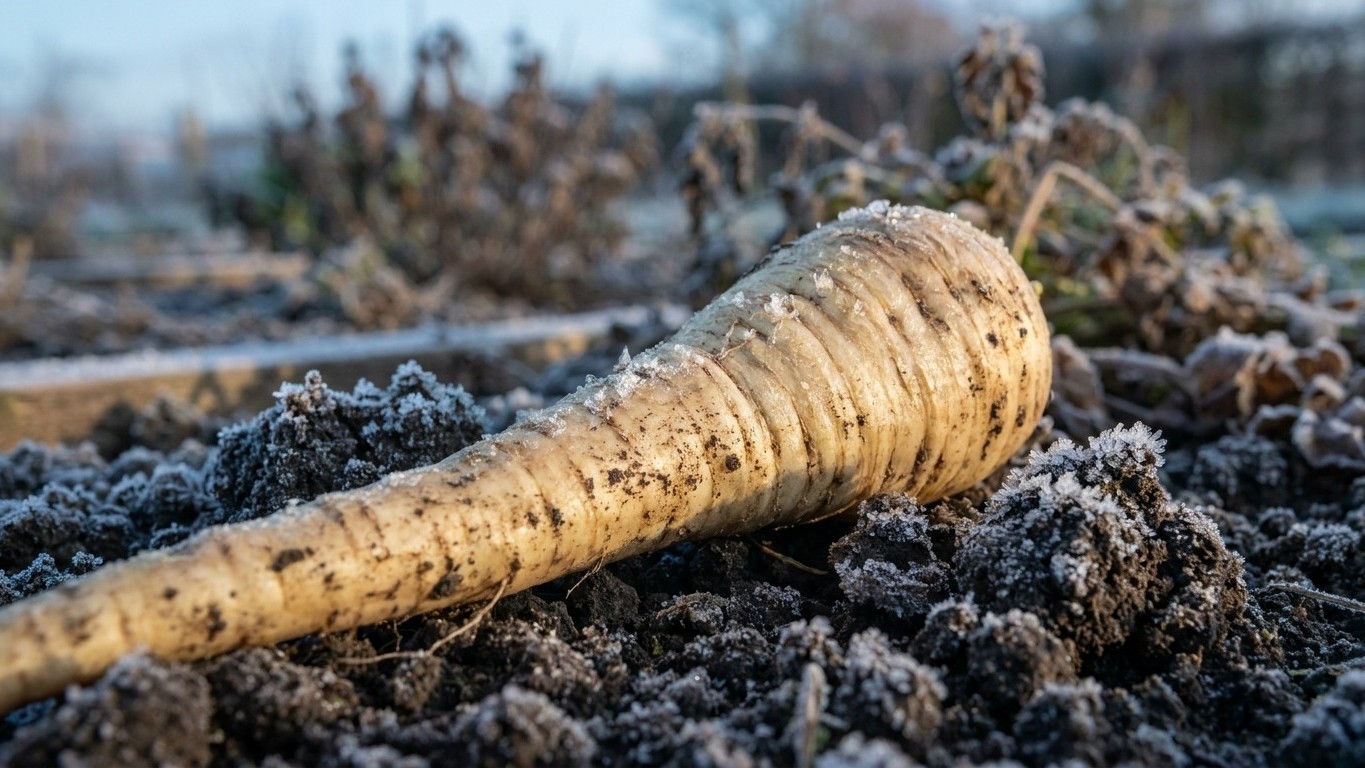

New Jersey gardeners searching for a parsnip-specific pest come up mostly empty. Rutgers NJAES Cooperative Extension documents ten garden pests for the state, and none of them are recorded as feeding on parsnip foliage or roots. That’s not a gap in the data. It reflects what a direct-sown, slow-growing root crop actually deals with here: heavy soil in parts of the state, a long wait between sowing and harvest, and a season shaped more by frost dates than by insect pressure.
Which pests attack parsnip in New Jersey
Rutgers NJAES Cooperative Extension documents ten pest species for New Jersey gardens: Bean leaf beetle, Colorado potato beetle, Common asparagus beetle, Mexican bean beetle, Spotted asparagus beetle, Spotted cucumber beetle, Spotted lanternfly (Lycorma delicatula), Striped cucumber beetle, Tobacco hornworm, and Tomato hornworm. That’s the full list this service tracks. It is not a parsnip list, and sorting through it makes that plain.
Bean leaf beetle and Mexican bean beetle stay on beans and other legumes; parsnip isn’t in that family, so they have no reason to be there. Common asparagus beetle and Spotted asparagus beetle are named for a reason, they feed on asparagus spears and ferns, not on root crops growing in the same bed. Colorado potato beetle, Tobacco hornworm, and Tomato hornworm all belong to the nightshade world, potatoes, tomatoes, eggplant, tobacco relatives, and parsnip, a member of the carrot family, isn’t on their menu. Spotted cucumber beetle and Striped cucumber beetle target cucurbits, squash, cucumber, melon, and while the spotted species is a generalist that will nibble many things, it isn’t documented as a parsnip feeder here. Spotted lanternfly is the outlier on this list, a sap-feeding insect drawn to tree of heaven and grapevines and other woody plants, not a chewing pest of root vegetable foliage.
Run through the list and the pattern holds: every species Rutgers documents for New Jersey has a preferred host family, and none of them is the carrot family that parsnip belongs to. Classic carrot-family troublemakers elsewhere, carrot rust fly, carrot weevil, parsnip webworm, simply don’t appear in this state’s documented list. That absence matters more than it might seem. A gardener who assumes their parsnip trouble must be one of these ten insects will spend time treating for something that was never there, while the real cause, often tied to soil, water, or timing, goes unaddressed.
None of this means insects never touch a parsnip bed in New Jersey. A wandering spotted cucumber beetle from a nearby squash hill, or a hornworm crossing from a tomato row, can land on parsnip foliage without it becoming a documented feeding relationship. The distinction is between incidental contact and an actual pest of the crop, and for parsnip in this state, the second category is currently empty.
When each one shows up, and what it does first
Because no species on the Rutgers list targets parsnip specifically, the calendar worth tracking is the crop’s own, not an insect’s. Parsnip is sown directly in place, and seeding happens roughly 2 to 3 weeks before the last spring frost, which in the Newark reference data falls between March 29 and April 6. That puts a typical New Jersey sowing date in early to mid March, though gardens away from the airport station often run a week or two behind that.
Once seed is in the ground, germination takes 14 to 21 days, and that wait is the first thing that trips people up. Bare, unsprouted soil for two or three weeks looks like nothing happened, and it’s tempting to assume something ate the seedlings before they emerged. Most of the time, nothing did. Parsnip seed is simply slow, and slower still in cool, heavy soil.
From emergence, the crop needs 100 to 120 days to mature, counted from seeding, not from the day it sprouts. That stretches a March sowing into a root that’s ready sometime in the back half of summer, but readiness for size isn’t the same as readiness for flavor. Parsnip only develops its sweetness after several weeks of frosty weather, which converts stored starch into sugar. In New Jersey, the first fall frost typically lands between November 4 and November 16 at the reference station, and gardens further from that station often see frost earlier. The practical result: roots that reach full size in September or October usually still taste bland and starchy until they’ve sat through real cold.
During the growing months, if chewed foliage does show up on a parsnip plant, it’s worth noting what’s growing nearby. A parsnip bed next to beans, cucurbits, or tomatoes is far more likely to catch a wandering generalist from those crops than to host feeding from an insect with no documented interest in the carrot family. The foliage damage, in that case, is real, but the story behind it usually points sideways, not at parsnip itself.
Telling the damage apart from everything else
Given how short the documented pest list is for this crop, most parsnip problems in New Jersey trace back to soil, water, or timing rather than insects. Two symptoms cause the most confusion.
Forked or split roots have two separate possible causes here, and they shouldn’t be lumped together. One is heavy or stony ground that physically blocks a straight taproot, which is why heavy soil needs to be double dug before parsnip goes in, deep sandy soil is what the crop actually wants. The other, distinct cause is overwatering, which encourages branching roots even in decent soil. Digging a test hole to check soil texture and reviewing recent watering habits separates the two faster than guessing.
Bland, starchy roots get blamed on disease or poor variety more often than they should be. The far more common explanation in New Jersey is simply that the roots were pulled before enough frosty weather passed to convert starch to sugar. This is not a hardiness zone question, a comfortable winter low doesn’t produce the same effect as several actual weeks of cold exposure on roots left in the ground.
| Symptom | Likely cause | What tells it apart |
|---|---|---|
| Forked, split root | Heavy/stony soil or overwatering | Check soil texture by digging; review watering frequency |
| Bland, starchy flavor | Harvested before enough frost exposure | Roots left through several frosty weeks turn sweet; early pulls don’t |
| Bare soil, no seedlings | Normal 14-21 day germination, or aging seed | Wait out the full window before assuming failure |
| Chewed foliage | Wandering generalist from a nearby crop, or mechanical damage | Check what’s planted next to the bed; look for actual insects present |
None of these signs confirm a diagnosis on their own. A county extension agent who can look at the actual bed, soil, and surrounding plants is the only reliable way to close the loop.
What actually works here, and what is a waste of time
Given a short list of documented pests and a crop whose real vulnerabilities are soil and timing, spending effort on insect control for parsnip in New Jersey is largely wasted. There’s no species on the Rutgers list with a documented reason to target it, so treating preventively for one is treating for a problem that isn’t there.
What actually pays off is soil preparation before seed ever goes in. Deep, loose, sandy soil is what parsnip needs, and heavy clay ground has to be double dug ahead of sowing rather than fixed after the fact. That single step prevents more forked and stunted roots than any pest response would.
Timing the sow date correctly matters just as much. Sowing 2 to 3 weeks ahead of the local last frost, and accounting for the fact that gardens away from reference weather stations often run behind the Newark data, keeps the 100 to 120 day clock working toward a harvest that lines up with New Jersey’s fall frost window instead of missing it. Leaving mature roots in the ground through several frosty weeks, rather than pulling them at first size, is what actually produces sweet parsnip, no product achieves that conversion faster than cold weather does.
Where a generalist pest does turn up, wandering in from a neighboring bean, cucurbit, or nightshade planting, a physical barrier like row cover placed early, before that neighboring crop draws activity, works better than reacting after foliage is already chewed. This site doesn’t recommend specific pesticides or active ingredients for New Jersey gardens; a county extension office is the only source that knows what’s currently labeled and legal to use in the state, and that’s who to ask if a real infestation is confirmed rather than suspected.
Where to check this for your own county
Rutgers NJAES Cooperative Extension is the source for everything documented on this page, and its county offices are where a state-level list turns into a garden-level answer. What’s tracked for New Jersey as a whole doesn’t mean every township sees the same pressure, a shore county with sandy soil and a northern county with heavy clay can have very different experiences even growing the same crop.
That gap between statewide documentation and a single backyard is exactly why a list showing no dedicated parsnip pest for New Jersey shouldn’t be read as a guarantee nothing will ever chew a leaf. It means the county office is the right place to confirm anything unusual, especially since pest presence and timing shift from one part of a state to another, sometimes by more than the week or two of frost-date variation already built into the reference data.
Before assuming an insect explains a parsnip problem in a New Jersey garden, the more useful step is usually a soil check and a look at the sowing date against the local frost window. If that doesn’t explain what’s showing up, the county extension office is the next call, not a general pesticide aisle.
Common questions
Does anything in New Jersey specifically eat parsnip?
Not according to Rutgers NJAES Cooperative Extension’s documented pest list for the state. The ten species tracked there all favor beans, asparagus, nightshades, cucurbits, or woody plants, none is recorded as targeting parsnip foliage or roots.
Why does my parsnip taste bland even though the roots are full size?
Full size and full flavor aren’t the same milestone. Parsnip needs several weeks of frosty weather after reaching maturity to convert stored starch into sugar. Pulling roots as soon as they’re big enough skips that step.
Why are my parsnip roots forked instead of straight?
Two separate causes produce this, and they’re not the same fix. Heavy or stony soil physically blocks a straight taproot, while overwatering can cause branching even in decent ground. Checking soil texture and recent watering habits separates the two.
My parsnip seedlings never came up. Did something eat the seed?
Possibly, but the more common explanation is that not enough time passed. Parsnip germination takes 14 to 21 days, longer than most garden seed, so bare soil at 10 days doesn’t mean failure yet.