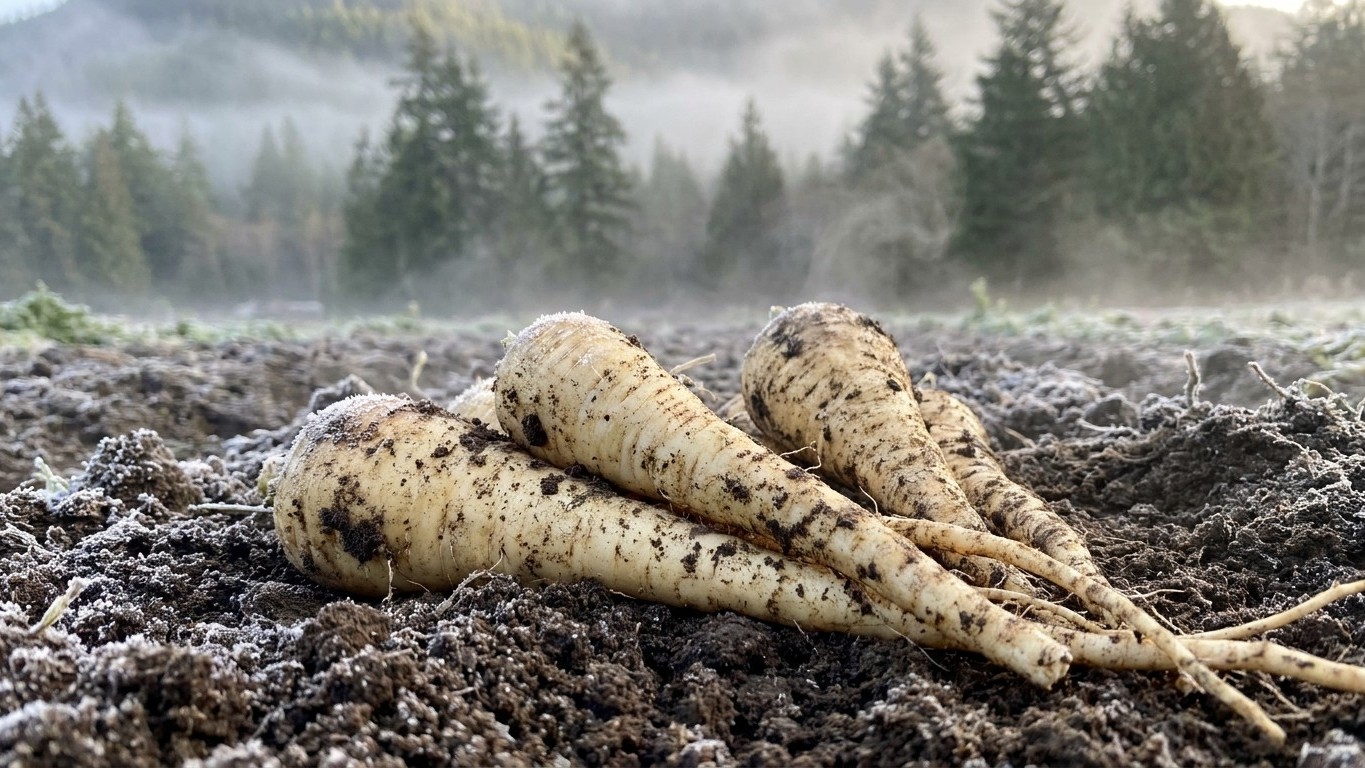

New Mexico State University Extension documents ten insect pests active in New Mexico vegetable gardens, but only about half of them have any real business on a parsnip bed. Aphids, beet leafhopper, grasshoppers, lygus bugs, and thrips are the ones that show up on parsnip foliage or roots, and each one keeps a different schedule tied to the state’s short, frost-bound growing season.
Which pests attack parsnip in New Mexico
New Mexico State University Extension lists ten insects documented in the state’s vegetable gardens: Aphids, Bagrada bug (Bagrada hilaris), Beet leafhopper (Circulifer tenellus), Corn earworm, Grasshoppers, Lygus bugs, Spotted cucumber beetle, Squash bug, Striped cucumber beetle, and Thrips. That’s the full documented roster for this territory, and it’s already a shorter list than a lot of gardening advice implies, so there’s no reason to pad it with anything else.
Not every name on that list has a reason to touch a parsnip planting. Spotted cucumber beetle, striped cucumber beetle, and squash bug are cucurbit specialists: they key in on squash, cucumber, and melon leaves and vines, and a root crop in the carrot family isn’t on their radar. Bagrada bug is a mustard-family feeder, drawn to cole crops like cabbage and broccoli, not to parsnip foliage. Corn earworm targets corn ears and the fruit of crops like tomato and pepper; it has no interest in a root vegetable’s leafy top or its underground taproot. That leaves five species that actually cross paths with parsnip in a New Mexico garden.
Aphids cluster on the undersides of new leaves and feed on plant sap, which stunts growth and can spread virus between plants in the process. Beet leafhopper feeds the same way but carries more weight in this state because it’s the vector for curly top virus, a disease that hits a wide range of broadleaf vegetables including root crops. Grasshoppers are generalist chewers that will eat foliage from almost anything green when their numbers build, and in dry years they build fast. Lygus bugs pierce and feed on tender new growth, distorting the tips of developing plants. Thrips rasp at leaf surfaces and leave behind a telltale silvery scarring.
None of these five is exclusive to parsnip. They move between crops in the same bed, which is exactly why a gardener who spots one on a nearby lettuce or bean plant should expect it on the parsnip row too, sooner rather than later.
When each one shows up, and what it does first
Parsnip is sown directly into the ground, not transplanted, and germination takes 14 to 21 days, a slow start that leaves seedlings exposed to early feeders longer than most vegetables. In the reference city used for this territory’s climate data, the last spring frost falls between March 31 and April 12, which is the anchor point for when seed goes in the ground and when the first pest activity begins. Gardens outside that reference station, especially at higher elevation or in outlying counties, often see frost linger one to two weeks longer, which pushes this whole calendar back.
Aphids and thrips tend to appear first, often while seedlings are still working through that 14-to-21-day germination stretch or just after they break the surface. Aphids show up as small clusters on the undersides of the earliest true leaves, sometimes with a sticky residue on the foliage below them. Thrips leave silvery, papery streaks across leaf surfaces along with tiny dark specks of frass, visible before any obvious wilting or stunting sets in.
Beet leafhopper and lygus bugs generally become noticeable a bit later, once plants have several sets of true leaves. Leafhopper feeding first looks like stippling or a faded, yellowish cast to the foliage; if curly top virus follows, the leaves curl inward and the plant stalls out entirely, which is the point at which it stops being a feeding issue and becomes a disease issue. Lygus bugs show up as distorted, puckered new growth at the shoot tips, sometimes with small dark pinpricks where they’ve fed.
Grasshoppers are the latecomers on this list. Their populations build through the heat of the season and peak as vegetation elsewhere dries out, pushing them toward whatever’s still green, which by late summer is often the vegetable garden. That timing puts the heaviest grasshopper pressure closer to the first fall frost window of October 29 to November 9, which also happens to be when parsnip roots are entering the stretch of cool weather that develops their sweetness. A gardener watching for grasshopper damage on parsnip tops in early spring is watching for the wrong pest at the wrong time.
Telling the damage apart from everything else
A ragged or discolored parsnip leaf doesn’t always mean an insect did it. New Mexico’s heavy clay soils and its long dry stretches between waterings produce symptoms that look a lot like pest damage but come from somewhere else entirely, and treating the wrong cause wastes a growing season that’s already tight.
A forked or twisted root has two separate possible causes here, and they shouldn’t get merged into one diagnosis. Heavy or stony ground stops a taproot from growing straight down, splitting it around obstructions, which is why Utah State University Extension recommends deep sandy soil, or double digging where the ground is heavy. Overwatering is the other cause, and it produces a similar forked shape through excess, uneven moisture rather than a physical obstruction. Neither of these has anything to do with an insect.
| Symptom | Likely cause | What tells them apart |
|---|---|---|
| Yellowing, stippled leaves | Beet leafhopper feeding, or nutrient deficiency | Pests leave visible insects or stippling patches; deficiency spreads evenly across the whole planting |
| Curled, stunted foliage | Curly top virus (via leafhopper), or drought stress | Virus curling is one-sided and doesn’t recover with water; drought stress reverses within a day or two of irrigation |
| Silvery scarring on leaves | Thrips | Look for tiny black frass specks alongside the scarring |
| Forked, split root | Heavy or stony soil, or overwatering | Dig a nearby test hole; rocky, compacted soil points to obstruction, consistently soggy soil points to overwatering |
| Chewed, ragged leaf edges | Grasshoppers, or mechanical damage from hail or wind | Grasshopper chewing is irregular and scattered; hail damage is more uniform and dated to a single storm |
A gardener who isn’t sure which column applies is better off with a photo and a call to the local extension office than with a guess. Some of these symptoms overlap enough on a single leaf that a visual check under better light, or a second opinion, changes the read entirely.
What actually works here, and what is a waste of time
Physical exclusion works better than almost anything else on a crop with this short a window. A floating row cover set over the bed at seeding, before the 14-to-21-day germination stretch even finishes, keeps aphids, thrips, and leafhoppers off the most vulnerable stage of the plant without needing to identify which one showed up first. The mistake is pulling that cover too early, right when seedlings look sturdy enough to fend for themselves; that’s exactly the point where lygus bugs and grasshoppers start moving in.
Hand removal and steady monitoring earn their keep here too. Checking the undersides of leaves once a week during the early weeks catches aphid clusters and thrips scarring before either one spreads through the row, and it costs nothing but a few minutes.
What doesn’t pay off is treating on a fixed calendar instead of watching the actual plants. New Mexico’s growing season is too short and too weather-dependent for a set-it-and-forget-it schedule; a treatment applied on a date rather than in response to a real symptom often lands after the damage is already done, or before the pest has even arrived. This site doesn’t name specific products or active ingredients for that reason: what’s registered and legal to use changes, and only the state’s extension service keeps that current. Any treatment beyond a physical barrier and hand removal is a conversation to have with that office directly, not a product to grab off a shelf.
Where to check this for your own county
Everything above comes from statewide documentation by New Mexico State University Extension, and statewide is not the same as a specific backyard. Pest pressure shifts with elevation, with soil, and with what’s growing in the yards nearby, so a county office is the only place that can say what’s actually active where a reader lives right now.
The frost dates used throughout this page come from a single reference station, and gardens away from that station often see frost arrive one to two weeks earlier in fall and later in spring, more at higher elevation. That gap matters for pest timing as much as for planting dates, since grasshopper pressure, for instance, tracks the length of the warm season in a given spot, not a statewide average.
The most useful next step is a direct call or visit to the county extension office, which can confirm current pest activity, look at a photo of actual damage, and point to what’s legal and effective to use in that specific county. That’s a better use of a gardener’s time than trying to match a symptom to a list from a different part of the state.
Common questions
Do I need to worry about squash bugs or cucumber beetles on my parsnip bed?
No. Both are documented pests in New Mexico, but they feed on cucurbits like squash, cucumber, and melon, not on carrot-family crops like parsnip.
Why does my parsnip seed seem to be taking forever to come up?
That’s normal. Parsnip germination runs 14 to 21 days, slower than most garden vegetables, so bare-looking soil for two to three weeks doesn’t mean the seed failed.
Will a colder winter make my parsnips sweeter?
Sweetness comes from exposure to several weeks of frosty weather after the roots mature, not from how cold the hardiness zone is on paper. A mild winter can still grow a fine root that never develops that characteristic sweetness.
My parsnip roots came out forked. Was that a pest?
Almost certainly not. Forked roots trace back to heavy or stony soil blocking the taproot, or to overwatering, not to insect feeding.