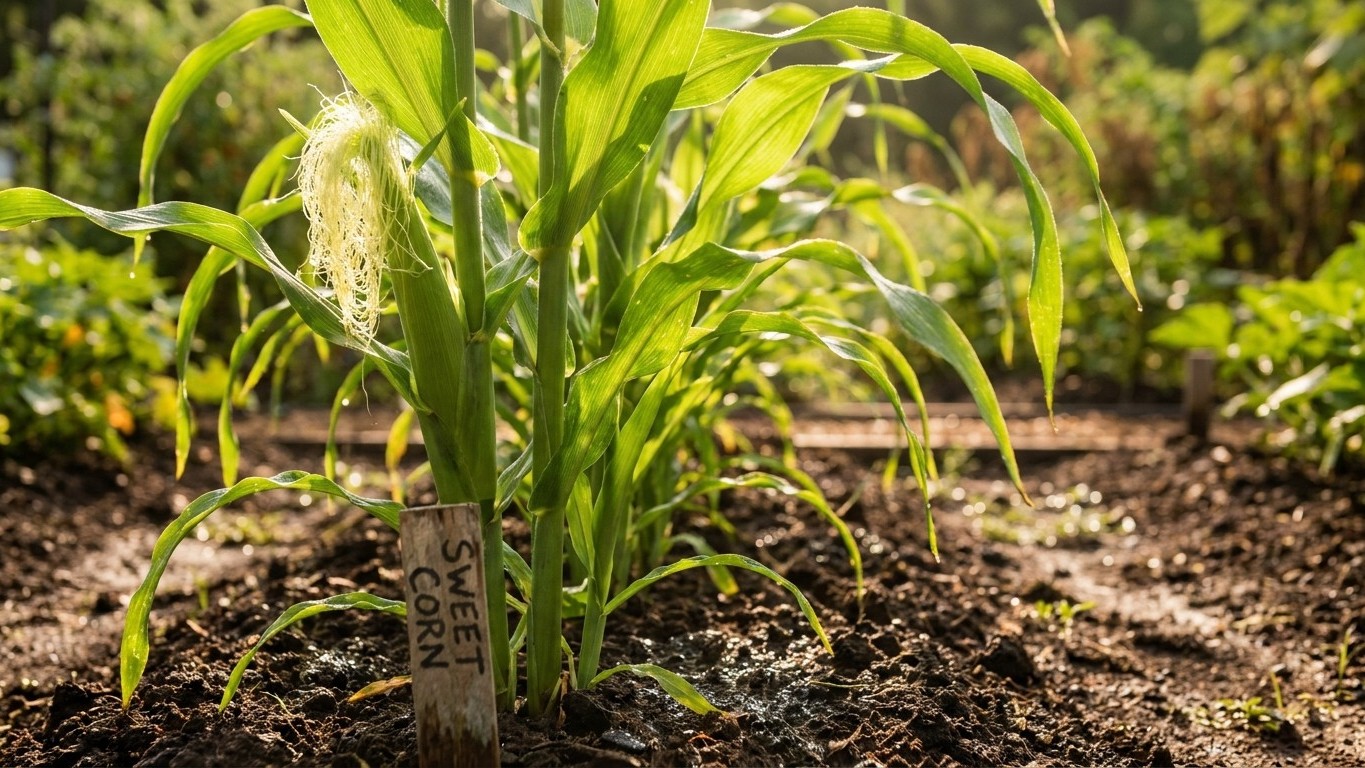

Yes, sweet corn ripens reliably across most of New Mexico. The state’s frost-free stretch, measured at the reference weather station, runs roughly 200 to 223 days between the last spring freeze and the first fall freeze, which comfortably covers the 60 to 90 days sweet corn needs once the soil is warm enough to germinate. The catch is timing that planting correctly and picking a variety that matches your county’s actual growing window, not the statewide average.
The short answer
Soil temperature, not the calendar date of the last frost, is what starts the sweet corn clock. According to Utah State University Extension, sweet corn needs soil above 60 F to germinate reliably and then 60 to 90 days to mature. That 60 F soil threshold arrives well after the air stops freezing at night. At the reference station used for New Mexico’s climate normals, the last spring frost typically falls between March 31 and April 12. Soil doesn’t jump to 60 F the moment that frost risk ends; it takes sustained daytime warmth, several weeks of it, before the top few inches of garden bed hold that temperature consistently. Gardeners who plant on the last-frost date instead of waiting for warm soil are often the ones who watch seed rot in the ground.
On the other end of the season, the reference station’s first fall frost lands between October 29 and November 9. That gives a frost-free window of roughly 200 to 223 days depending on where in that probability band your particular year falls. Subtract the weeks it takes soil to climb past 60 F after the last frost, and there’s still a long runway left, easily enough for a 60-day variety and, in most years, enough for a 90-day one too.
The wrinkle is elevation and local microclimate. The NOAA figures above come from one airport weather station. Suburban yards and rural properties typically see their last spring frost arrive later and their first fall frost arrive earlier than that station shows, often by one to two weeks, and considerably more once you climb into higher-elevation valleys and mountain communities. A gardener in a low desert basin might have nearly the full 200-plus day window; someone at elevation could be working with a season 20 to 30 days shorter. Check your own county’s frost history before you trust the statewide number.
Heat is the other half of the equation. The reference station averages 42.5 days a year at 90 F or above. That’s not the average summer temperature, it’s a measure of how many days push plants into real heat stress, driving up water demand and sometimes interfering with pollination during the hottest stretch of tasseling. A long season doesn’t help much if the crop’s silking window lands during the worst heat spike of July.
Does a late variety fit here?
A 60-day variety
A quick 60-day sweet corn is the safer bet almost anywhere in New Mexico. Even accounting for soil that takes weeks after the last frost to reach 60 F, and even trimming the season for a shorter, elevation-adjusted frost-free window, 60 days of growing time fits inside nearly every version of the local calendar. If your county’s frost dates run close to the reference station’s, you’ll likely finish harvest with a month or more to spare before the first fall freeze. If your property sits higher or further from that station, a 60-day type still gives you the most cushion of any option, which matters if a cool snap arrives early.
A 90-day variety
A full 90-day sweet corn is more sensitive to exactly when you can start. Using the reference station’s dates as a baseline, the frost-free season runs long enough, 200 to 223 days, that a 90-day crop fits with room left over, even after losing several weeks to soil warm-up. That’s the reassuring math for lower-elevation gardens close to the reference conditions. But the caution matters here: gardens with a later last frost, an earlier first fall frost, or both, common at elevation or in more rural spots, are working with a shorter window than the reference station shows. Stack a slow soil warm-up on top of a frost-free season that’s already 20 or 30 days shorter than the airport’s, and a 90-day variety can run right up against, or past, the first fall freeze. If you’re gardening at elevation, check your own local frost data before committing garden space to a full-season type; in many of those higher spots, it simply doesn’t fit.
What goes wrong here
- Soil sown too cold. Planting on the last-frost date instead of waiting for the soil itself to warm past 60 F is the most common failure. Seed sits in cold, often damp soil and rots before it germinates, or comes up weak and uneven. The fix is simple: use a soil thermometer instead of a calendar date, and wait until the top few inches hold steady above 60 F for several days running before you plant.
- A variety too late for the season. A 90-day type planted in a higher-elevation garden, or any garden where the local frost-free window runs shorter than the reference station’s, can miss ripening before the first fall freeze cuts the season short. The remedy is matching variety length to your actual local frost dates, not the statewide range, and leaning toward a 60-day type if there’s any doubt about how much season you really have.
- Sweetness lost to timing, not climate. This one has nothing to do with New Mexico’s weather. Sweet corn comes in different types, standard sweet (su), sugary enhanced (se), and supersweet (sh2), and if two different types tassel at the same time nearby, cross-pollination can ruin the sweetness and texture of the harvest. The fix is to plant only one type at a time, or stagger plantings so the tasseling windows don’t overlap, and to grow sweet corn in blocks of three or more rows rather than a single thin row, which improves pollination regardless of variety.
Common questions
Can I plant sweet corn right after the last frost in New Mexico?
Not if you want reliable germination. The last frost date only tells you when freezing air is unlikely; the soil itself needs additional weeks of warmth to climb past 60 F, which is the real trigger for sweet corn seed.
How do I know when my corn is actually ripe?
Look for three signs together: dry, browned silks, husks that are still moist and green, and milky juice when you puncture a kernel with a fingernail. Any one sign alone isn’t enough; all three should show up at once before you pick.
Is the 60-to-90-day maturity number the same as the days from silking to harvest?
No, and mixing them up leads to bad guesses. The 60-to-90-day figure counts from planting and tells you whether the crop fits your season at all. A separate, shorter window, generally cited as 17 to 24 days from when silks first emerge, tells you which week to actually start checking ears for the three ripeness signs.
Do I need to isolate different sweet corn types by a set distance?
Utah State University Extension’s guidance doesn’t publish a specific isolation distance for keeping sweet corn types apart. What matters, according to that source, is timing: su, se, and sh2 types lose their sweetness if they tassel at the same time. Stagger your plantings or stick to one type per season rather than relying on a distance figure that isn’t published.