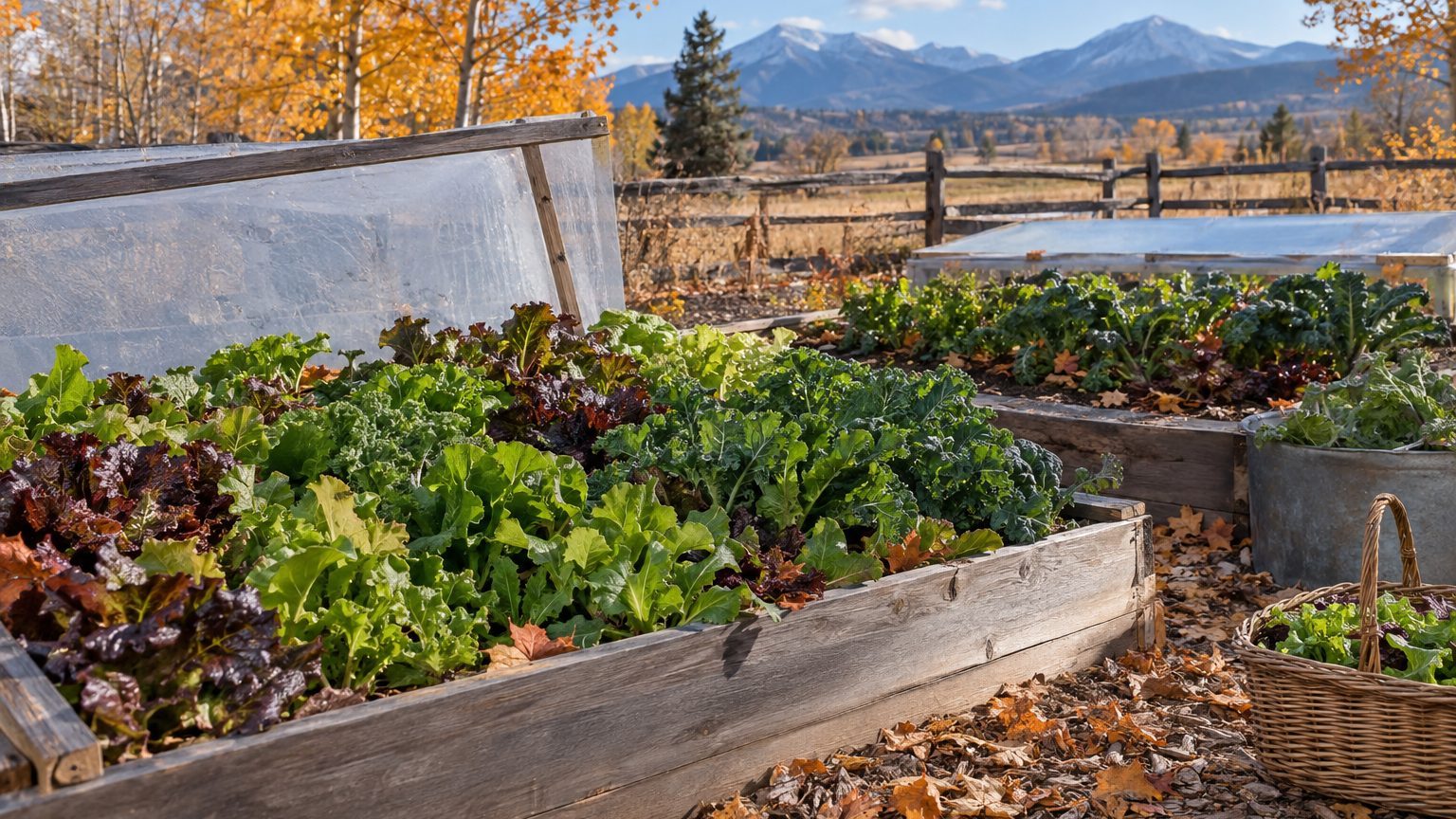

Growing winter salads in New Mexico is decided by cold, not by heat. At the Albuquerque airport station, the last spring freeze falls between March 31 and April 12, and the first fall freeze between October 29 and November 9. The coldest month averages a nightly low of 26.4 F. Between those dates there are roughly 200 to 223 days to work with, enough for staggered sowings if you match the type of green to your own county’s winters.
When the soil is warm enough in New Mexico
The date most gardeners ask about is the last spring frost. For the Albuquerque airport station, NOAA’s 1991-2020 Climate Normals put it between March 31 and April 12, the band where the odds of a 32 F freeze run from 30 to 70 percent. Treat that as a probability, not a promise. A late cold snap in mid-April would surprise nobody who has gardened here for a few years.
Frost is a stand-in, though. Salad greens care about the soil under them, and soil lags behind the air. It warms after the frost risk has passed, not on the day the last freeze occurs. Seed sown into cold, wet ground sits and rots or sprouts unevenly, while seed sown into soil that has had a few weeks of mild weather comes up together. A cheap soil thermometer pushed in at seed depth, checked mid-morning, tells you more than any calendar does.
The reference figure is a city figure. It comes from an airport weather station, and gardens in the suburbs and out in the country typically see the last spring frost later than that, often by one to two weeks, and more at elevation. New Mexico covers a lot of altitude. The USDA hardiness zone map (2023, built on 1991-2020 normals) lists the state as 4b to 9a, a spread of several zones that makes any single statewide date meaningless. Look up your own county’s normals before you commit to a sowing week.
For a winter harvest, the calendar really works backward from fall. Spring dates matter for a spring sowing of hardy greens, and for knowing when beds are workable. The cold-season crop is sown in late summer or early fall, into soil that is still warm, and it grows into the cool. That is the reverse of most vegetable timing, and it is why the soil question flips for these plants. In late summer the risk is soil too hot for lettuce-type seed to germinate well, so many gardeners water the seed row, shade it with a board or cloth until sprouts appear, and sow in the evening.
One rule holds all year on this site: salad here means beds, raised boxes and containers, sown from seed and cut at home. Nothing on these pages involves gathering greens from ditches, streams or roadsides. Wild plants and the water they grow in carry risks a garden bed does not.
Varieties are a local matter. Trial results for your elevation exist, and they come from New Mexico State University’s Cooperative Extension Service, so ask them for the cultivars that have been tested where you live.
How long the season lasts here
Subtract the dates and the frost-free window at the Albuquerque station comes out as follows:
| Scenario | Last spring freeze | First fall freeze | Days between |
|---|---|---|---|
| Shortest window | April 12 | October 29 | 200 |
| Longest window | March 31 | November 9 | 223 |
Two hundred days or more is a long run by national standards. Compare it with a northern state where the window can be half that, and the difference shows up in what you can plan. Here, the first sowing is not the only sowing. A gardener can put in a cool-season crop in spring, rest or replace the bed through the hottest stretch, and sow again in late summer for fall and winter cutting. Even a failed first attempt (seed that crusted over, seedlings that bolted early) leaves room for a second.
The length also changes the transplant question. In a short season, buying or starting transplants is worth the root disturbance, because every week counts and a seedling that starts two weeks ahead may be the difference between a harvest and none. With 200-plus days, direct sowing is usually the better bet for greens that dislike having their roots handled, and transplants are better reserved for the types that sulk when germinated in hot soil. Whether you choose the nursery six-pack or the seed packet is a decision about heat at sowing time, not about running out of calendar.
Remember the caution attached to these numbers. They describe the reference city. Rural and suburban gardens often see the last freeze one to two weeks later and the first one one to two weeks earlier, which could take 14 to 28 days off the window. At higher elevations the trimming is larger. Count from your own county’s dates, then use the same subtraction.
For spacing the sowings across that window, the succession sowing guide on this site lays out the rhythm week by week. Start with the earliest date you trust, and keep the later sowings small, because a late planting that never reaches useful size is a wasted bed.
Heat and water in New Mexico
Heat and rainfall matter to this crop, but this page does not carry a verified count of days above 90 F or a summer rainfall total for the Albuquerque station, so it quotes none. Guessing at them would be worse than leaving them out. For those figures, check your county’s NOAA normals or call the extension office. What can be said without numbers is that summer in much of the state is warm and dry, which means irrigation, mulch and shade for late-summer sowings. A cool, damp summer would bring mildew and slow ripening, and that is not the problem here.
The deciding figure on this page is the cold. The coldest month at the Albuquerque station has a mean daily minimum of 26.4 F. That is an average low, not a record, so individual nights go lower, and gardens at elevation or in cold-air pockets will run colder still. Averaged over a month, a nightly low in the mid-twenties sorts winter salads into three groups.
- Stand uncovered: the hardiest leafy types, such as spinach, many mustards, kale-type greens and mâche, usually hold through nights like that in the open, though growth slows to a crawl.
- Need a cover to stay edible: tender lettuces and similar soft-leaved types will often survive a low of 26 F but come out frost-burned and limp. A row cover, low tunnel or cold frame keeps leaves in cuttable condition.
- Cannot manage: basil-type and other warm-season salad plants, along with very tender seedlings, are finished by the first hard freeze.
The first fall freeze sets the other limit: how late a sowing can still reach useful size before the light fails. Winter growth is slow, because short days limit it more than the cold does. Most of the leaf you cut in December was grown in October, before daylight shrank. At the Albuquerque station the first freeze arrives between October 29 and November 9, so a sowing needs to be up and growing well before that band opens. A bed sown after it may just sit as small seedlings until spring, which can still work for hardy types but won’t give a winter harvest.
Water doesn’t stop in winter. Dry winters mean beds can go weeks without natural moisture, and cold, dry wind dries leaves faster than most people expect. Water in the morning on mild days, so moisture has time to drain from the leaf surface before night.
Which winter salads suit New Mexico
Start from the facts above. The long window gives room for the later types, and the real filter is a mean winter minimum of 26.4 F. So the first criterion is cold tolerance, sorted by whether a type stands uncovered or needs protection. The second is how it handles late-summer sowing in warm soil, where airflow and shade at the root decide whether seed germinates at all.
In practice that points to a few types. Hardy leafy greens, such as spinach, mustards, kale-type greens and mâche, suit the open bed and the widest range of counties. Tender lettuces and similar soft-leaved salad greens suit a cold frame or low tunnel, where cover can be added when nights drop. Quick, small leaf crops cut young suit containers that you can move or cover on short notice. And any type that bolts in warm weather belongs in the cooler end of the window, not the warmer one.
A short season would favor the earliest-maturing types, and a humid one would make disease resistance the first criterion. Neither describes the Albuquerque reference station, where the window is long and the dry climate keeps leaf disease down. In a county at higher elevation, with a shorter window and colder nights, the earliest types and covered beds matter more.
This page does not name varieties, and that is deliberate. A cultivar that thrives at one elevation can fail 50 miles away, and the only recommendations worth following are the ones trialled where you garden. Those trials live with New Mexico State University’s Cooperative Extension Service, which can point you to a county office and to varieties tested for your conditions. A made-up name on this page would be worse than none.
For neighboring territories with different trade-offs, see Winter Salads for Arizona Gardens and Winter Salads for North Carolina Gardens. The general principles are in Winter Salads: What Grows When Lettuce Will Not.
Common questions
What is the last spring frost date in New Mexico?
At the Albuquerque airport station, NOAA’s 1991-2020 normals put it between March 31 and April 12. That is a reference-city figure, not a statewide one. Suburban and rural gardens usually see it later, often by one to two weeks, and higher elevations later still.
How long is the growing season?
Using the Albuquerque station dates, the window runs about 200 days (April 12 to October 29) to about 223 days (March 31 to November 9). Your county’s own dates will shift those numbers.
Do winter salads need protection in New Mexico?
It depends on the type. The coldest month at the reference station averages a nightly low of 26.4 F. Hardy greens often stand uncovered, tender lettuces generally need a cover to stay edible, and warm-season salad plants cannot survive the cold.
Which varieties should I plant?
Ask New Mexico State University’s Cooperative Extension Service. Variety performance changes with elevation and local conditions, and this page does not have local trial results, so it does not name any.