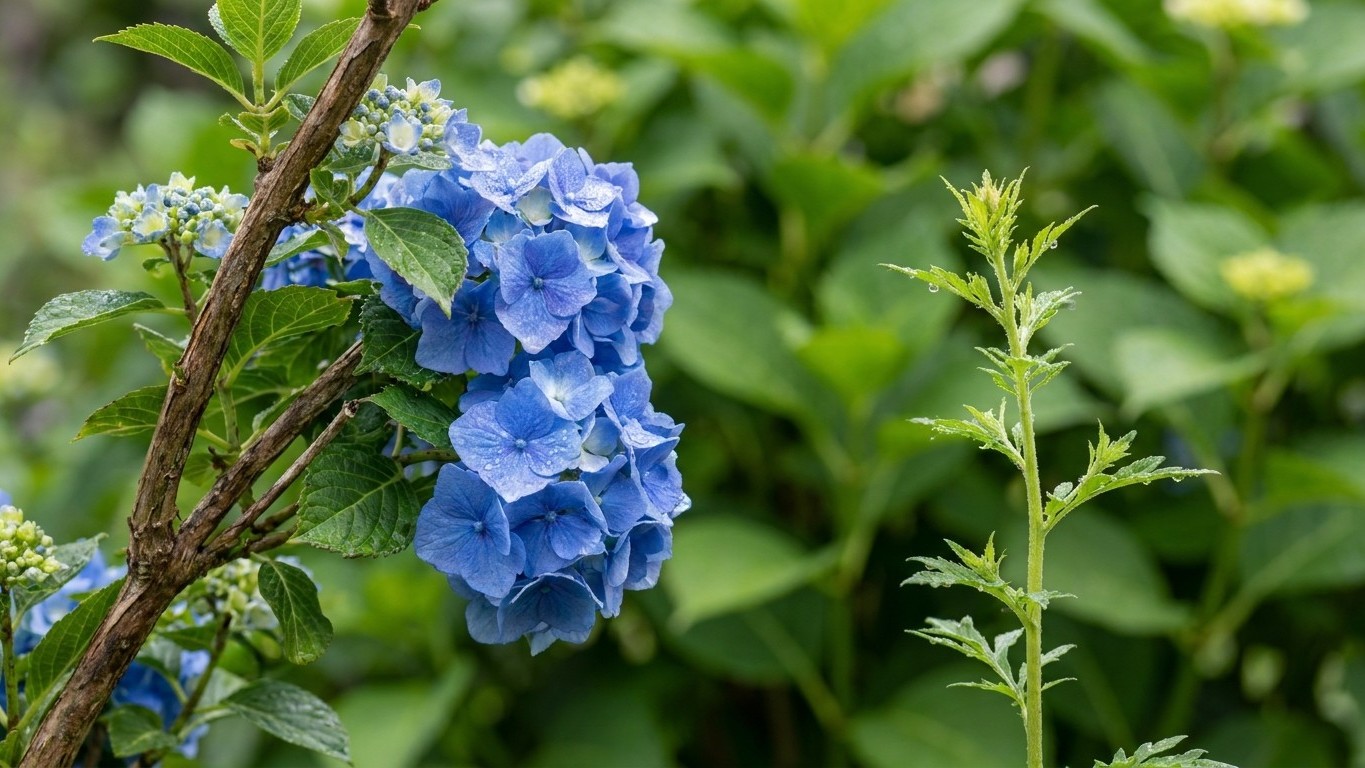

Most hydrangeas in New York get pruned at one of two times, and the shrub decides which, not the calendar. Types that bloom on last year’s stems get cut right after they flower in summer. Types that bloom on the current season’s growth get cut in late winter or early spring, before the leaves open. Guess wrong and you can snip off a whole season of flowers. For planting and general care, see growing hydrangeas in New York.
What this comes down to in New York

In New York City, the last spring freeze falls between March 23 and April 3, so new-wood hydrangeas get pruned in the weeks before that window closes, and old-wood types are finished by early August. The first fall freeze there arrives between November 14 and November 27. Both ranges come from the NOAA NCEI U.S. Climate Normals for Central Park, a dense urban site, so they describe the city and not the whole state. Upstate gardens freeze earlier in fall and later in spring.
The frost window matters because of when flower buds form. An old-wood hydrangea sets next summer’s buds on its stems in late summer and fall, then carries them through winter. Any cut made between those months and the following bloom removes buds. A new-wood hydrangea builds its flowers on shoots that grow after the last frost, so a winter cut only shortens the framework that those shoots grow from. A cut in late winter is safe for those plants. A cut in fall invites soft new growth that the first freeze then kills.
Which hydrangeas bloom on old wood?
Bigleaf hydrangeas (the mophead and lacecap types, such as Nikko Blue), mountain hydrangeas, and oakleaf hydrangeas all form buds the year before. Prune them right after the flowers fade, usually in July. Leave the stems alone from August through spring, other than removing wood that is plainly dead. In colder parts of New York, bigleaf stems often die back over winter, and the buds on them die too. That is why many gardeners in the north get leaves and no flowers from these types.
Which hydrangeas bloom on new wood?
Panicle hydrangeas, which carry cone-shaped blooms (Limelight is a familiar one), and smooth hydrangeas with round white heads (Annabelle is the classic) flower on growth made in the current season. Cut them back in late winter or very early spring while the stems are bare. Reblooming bigleaf types like Endless Summer flower on both old and new wood, so they forgive a mistake more than a standard bigleaf does, though a heavy cut still costs the first flush.
Working it out for your own garden
A date copied from a neighbor works until the winter is unusual. A method based on what the plant is doing works every year.
How do you tell which kind of hydrangea you have?
Start with the flower and the leaf. Cone-shaped blooms mean a panicle hydrangea. Large round white heads on thin, oval, light green leaves usually mean a smooth hydrangea. Thick, glossy, coarsely toothed leaves point to bigleaf, and leaves shaped like an oak’s, with deep lobes, mark an oakleaf. If the plant came without a tag, skip pruning for one year, apart from removing dead stems. Watch whether flowers open on last year’s stems or on shoots that grew this spring. That answer tells you the rule for the life of the shrub.
How do you work out the timing for a bigleaf hydrangea?
Take an old-wood bigleaf like Nikko Blue as the example. It blooms in early to midsummer, and its next set of buds forms over late summer. A common rule is to finish pruning by about the first week of August. That leaves roughly three and a half months for buds to form before the first fall freeze in New York City, which arrives between November 14 and 27. Count back the same way for your own garden: if freezes come earlier where you live, the pruning deadline moves earlier too. In a cold upstate garden, finishing in mid-July is the safer plan.
The spring check works the same way. Do not trim bigleaf stems for winter damage until buds swell and leaves start to open. Scratch a stem with a fingernail. Green underneath means the stem is alive, and brown and dry means it can go. In New York City that judgment usually comes after the last-frost window of March 23 to April 3, and in colder areas it comes weeks later.
How do you time a new-wood hydrangea like Limelight?
A panicle hydrangea is simpler. Its flowers grow on shoots that start from the stems you leave, so the only deadline is before buds break in spring. Cut when the plant is dormant, in late winter, and remove up to about a third of the height to keep the stems sturdy. There is no summer cutoff to count back from, which is why these types suit gardeners who want an easy schedule. Just avoid cutting in fall.
What changes across the state
New York has no single hydrangea calendar. The USDA Plant Hardiness Zone Map, which is built on the average annual extreme minimum temperature, places the state in zones 3b to 7b. That spread is large enough to change which hydrangeas bloom reliably and when pruning happens.
Long Island and New York City are the mildest parts of the state, thanks to the surrounding water and the warmth of dense development. Bigleaf hydrangeas there often keep their buds through winter, and spring pruning can start earlier. The Hudson Valley sits in the middle. Moving north and west, winters lengthen, and the Adirondacks, the Catskills, and the higher ground of the Southern Tier run noticeably colder than the valleys below them. Gardens at higher elevation can stay frost-prone well into spring, so the safe time to cut new-wood types or judge winter damage slides later.
The Great Lakes add a different effect. Areas near Lake Erie and Lake Ontario collect heavy lake-effect snow, and a deep, steady snow cover insulates the lower stems of a hydrangea from the worst cold. A garden under that blanket may do better than a drier one at the same latitude. Fall freezes near the lakes can come later than inland, since the water holds heat. The practical result is that gardeners in the colder parts of the state should favor new-wood types, which do not depend on buds surviving the winter.
The mistakes this state punishes

A common error is cutting a bigleaf hydrangea in fall or early spring. The plant looks untidy, so out come the shears, and the buds that would have produced next summer’s flowers go with the clippings. Wait until after flowering in summer, and in spring remove only what is clearly dead.
A warm spell in late winter causes the second mistake. A run of mild days in February or March tempts people to prune and uncover plants early, and the shrub may start to grow. A hard freeze that follows can then burn the new tissue. New York weather swings often enough that the last-frost window of March 23 to April 3 in the city, and a later one upstate, is worth respecting. Cut new-wood types while they are dormant, and hold back on judging or tidying bigleaf stems until buds show green.
A third mistake is pruning panicle or smooth hydrangeas in fall. The cut encourages tender growth right before freezing weather. It also takes away old flower heads and stems that give winter interest and some cover for the crown. Leave them standing and cut in late winter.
The fourth is cutting an old, overgrown shrub to the ground in one go when you do not know what type it is. That can wipe out a season of bloom and stress the plant. Instead, remove about a third of the oldest, thickest stems at the base each year over three years, and the shrub renews itself while still flowering.
Checking this against your county
The dates here start from New York City and describe the plant’s behavior across the state. They do not replace local knowledge. Your own last freeze depends on elevation, slope, and distance from water. The Cornell Cooperative Extension office in your county can tell you how your local weather compares and which hydrangeas have done well nearby. The state hydrangea guide covers the rest of the growing season.
Common questions
Can I prune hydrangeas in fall in New York?
Avoid it. Fall cuts on old-wood types remove buds that are already set, and on new-wood types they prompt soft growth just before the first freeze. Remove only dead or broken stems in fall, and leave the rest for winter and spring.
What if I do not know which type of hydrangea I have?
Look at the blooms and leaves, then watch the plant for a year. If flowers open on last year’s stems, treat it as old wood and prune right after bloom. If flowers appear on shoots that grew in spring, treat it as new wood and prune in late winter.
My bigleaf hydrangea looks dead in spring. Should I cut it down?
Wait. Stems that look lifeless in early spring often leaf out after the last frost. Scratch the bark to check for green, and cut only to a living bud. If new shoots come only from the base, expect few or no flowers that year and prune lightly.
How much can I cut back a panicle hydrangea?
Up to about a third of its height each late winter is a sound limit for keeping stems strong and flowers large. A heavier cut produces bigger heads on weaker stems that may flop in rain. Remove dead wood and crossing branches first, then shape the shrub.