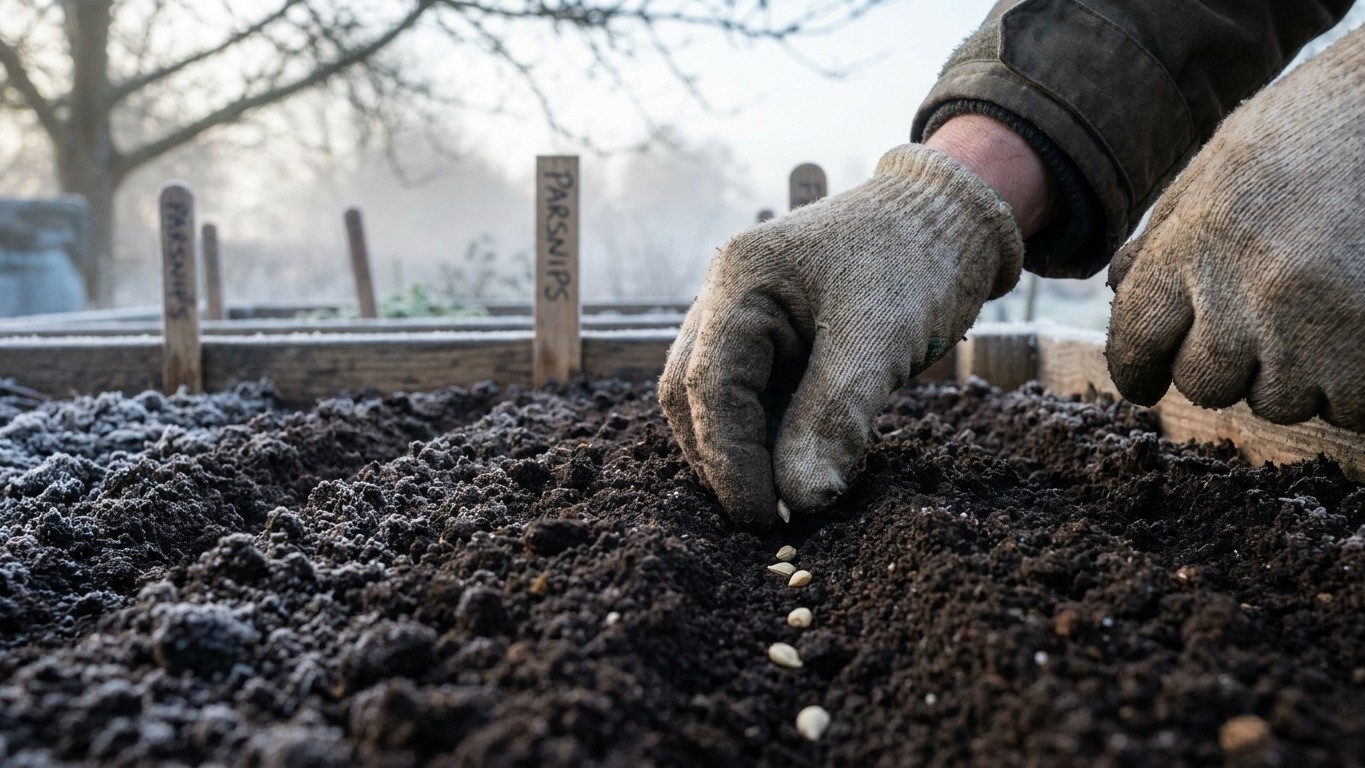

Sow parsnip seed directly into New York garden beds from early to mid-March, about 2 to 3 weeks before the last spring frost, which falls between March 23 and April 3 in the New York City area. Germination takes 14 to 21 days, so don’t panic and re-sow if nothing shows after a week. Because parsnips need 100 to 120 days from seeding, and this region’s frost-free stretch runs well past that minimum, gardeners get plenty of room to leave roots in the ground until frost sweetens them.
The short answer
Everything about parsnip timing in New York comes down to one question that has nothing to do with your hardiness zone: does the region actually deliver several weeks of sustained cold once fall arrives? A hardiness zone tells you what survives the winter. It says nothing about whether a root vegetable sitting in the soil gets cold enough, often enough, to turn its stored starch into sugar. That conversion is a frost-exposure event, not a zone event, and the two get confused constantly by gardeners who assume a “warm enough” zone rating means a mild, sweet-tasting harvest.
For the New York City reference station, the mean daily minimum temperature during the coldest month sits at 27.9°F, according to NOAA NCEI Climate Normals data. That figure is not the record low and not a single hard freeze. It’s the average low across an entire month, which means cold snaps well below freezing are routine, not occasional. A month that averages a minimum in the high 20s is a month delivering repeated, sustained frost exposure, night after night. That’s exactly the mechanism parsnips depend on.
So the short answer holds up: a parsnip left in New York soil through the fall and into early winter doesn’t just grow here, it sweetens here. The starch-to-sugar conversion that separates a bland, woody parsnip from one worth roasting needs that repeated cold, and the coldest-month numbers show this region supplies it reliably. The caveat worth carrying forward is that this 27.9°F figure comes from the New York City station specifically. Upstate counties and the Adirondacks run colder in both directions, frosting earlier in fall and later in spring, which likely means even more frost exposure for sweetening, not less, though no separate upstate figure is published here to confirm the degree.
What this means practically: don’t rush the harvest the moment roots reach size. Timing the pull to come after several hard frosts, rather than by the calendar alone, is what actually produces the sweeter parsnip New York’s climate is capable of delivering.
Does the season fit?
- Set the sowing window. Parsnips go in 2 to 3 weeks before the last spring frost. With the New York City area’s last frost falling between March 23 and April 3, that places sowing somewhere between roughly March 2 and March 20, depending on how the specific spring is running.
- Add germination time. Parsnip seed is notoriously slow, taking 14 to 21 days to sprout. Sowing in the first half of March means seedlings won’t visibly emerge until somewhere in the back half of March or the first days of April. Nothing has gone wrong if the soil looks bare for two full weeks.
- Count forward to minimum maturity. The crop needs 100 to 120 days from the seeding date, not from emergence. Counting 100 days from an early-March sowing lands in early June; counting the full 120 days from a mid-March sowing lands closer to mid-July. Either way, the earliest a New York parsnip crop reaches minimum maturity is late spring to midsummer.
- Compare against the first fall frost. The New York City area’s first fall frost arrives between November 14 and November 27. That leaves a gap of roughly four to five months between the earliest possible maturity date and the point where the first hard frost actually shows up.
- Read the slack, not just the fit. That four-to-five-month gap is not wasted time. Parsnips don’t need to be pulled the moment they hit 100 to 120 days; they can sit in the ground, continuing to develop, until the frosty weeks arrive to do the sweetening. In New York, the season doesn’t just fit the 100-to-120-day requirement, it comfortably outlasts it, which is what makes timing the harvest to frost rather than to the calendar realistic here.
- Adjust for upstate microclimates. Growers north of the city or in higher elevations should expect the whole window to shift earlier in fall and later in spring. The New York City dates above are specific to that reference station, and the general slack calculated here should shrink somewhat upstate, though it likely remains workable given how wide the margin is at the city benchmark.
What goes wrong here
- Forked roots from heavy or stony ground. Parsnips send a single taproot straight down, and anything that root hits, compacted clay, rocks, old root chunks, causes it to split into forks. New York’s clay-heavy pockets are common culprits. The remedy is deep, loose, ideally sandy soil, and heavy ground should be double dug well ahead of sowing so the taproot has a clear path down.
- Forked roots from overwatering. This is a separate cause from soil texture, and the two get lumped together too often. Excess moisture, especially inconsistent watering that swings from dry to soaked, can also cause the root to fork or branch even in decent soil. Keep watering even and moderate rather than heavy and irregular.
- Sowing too late and running the season short. Push sowing past the mid-March window and the crop can still hit 100 to 120 days, but it leaves far less slack before the first fall frost, and less opportunity to let the roots sit through multiple frosty weeks before pulling them. Stick to the 2-to-3-weeks-before-last-frost rule rather than sowing on a fixed calendar date regardless of conditions.
- Digging up seed beds too early. Because germination takes 14 to 21 days, a gardener checking after 7 or 10 days and seeing nothing often assumes failure and re-sows or tills the bed. That disturbs seed that simply hasn’t sprouted yet. Wait the full three weeks before deciding the sowing failed.
- Pulling roots before real cold arrives. A parsnip harvested the day it reaches size, before any sustained frost, will taste fine but flat, missing the sweetness the crop is known for. In milder pockets or unusually warm falls, the fix is patience: leave roots in the ground through several hard frosts, mulching if a deep freeze threatens to lock the soil, rather than pulling on a fixed date.
Common questions
Can I start parsnip seeds indoors and transplant them in New York?
Parsnips are grown from seed sown directly in place, not started indoors and transplanted. The long taproot doesn’t tolerate the disturbance of transplanting well, which is part of why the 100-to-120-day count begins at the seeding date in the actual garden bed.
What month should I sow parsnip seeds in New York?
Based on the New York City area’s last spring frost window of March 23 to April 3, sowing 2 to 3 weeks ahead lands in early to mid-March. Gardeners farther upstate should expect that window to shift later, though no separate upstate frost date is published here.
How do I know when to harvest for the best flavor?
Wait until the crop has been through several weeks of frosty weather after reaching the 100-to-120-day maturity mark. The sweetening comes from cold exposure, not from a specific calendar date, so roots left in the ground through repeated hard frosts will taste noticeably better than ones pulled the moment they’re sized.
Does the coldest-month temperature figure apply across all of New York?
The 27.9°F mean minimum cited here is specific to the New York City reference station. Upstate New York and the Adirondacks run colder, with earlier fall frosts and later spring frosts, so the actual frost exposure in those areas is likely greater, though a separate figure for those regions isn’t part of the data used on this page.