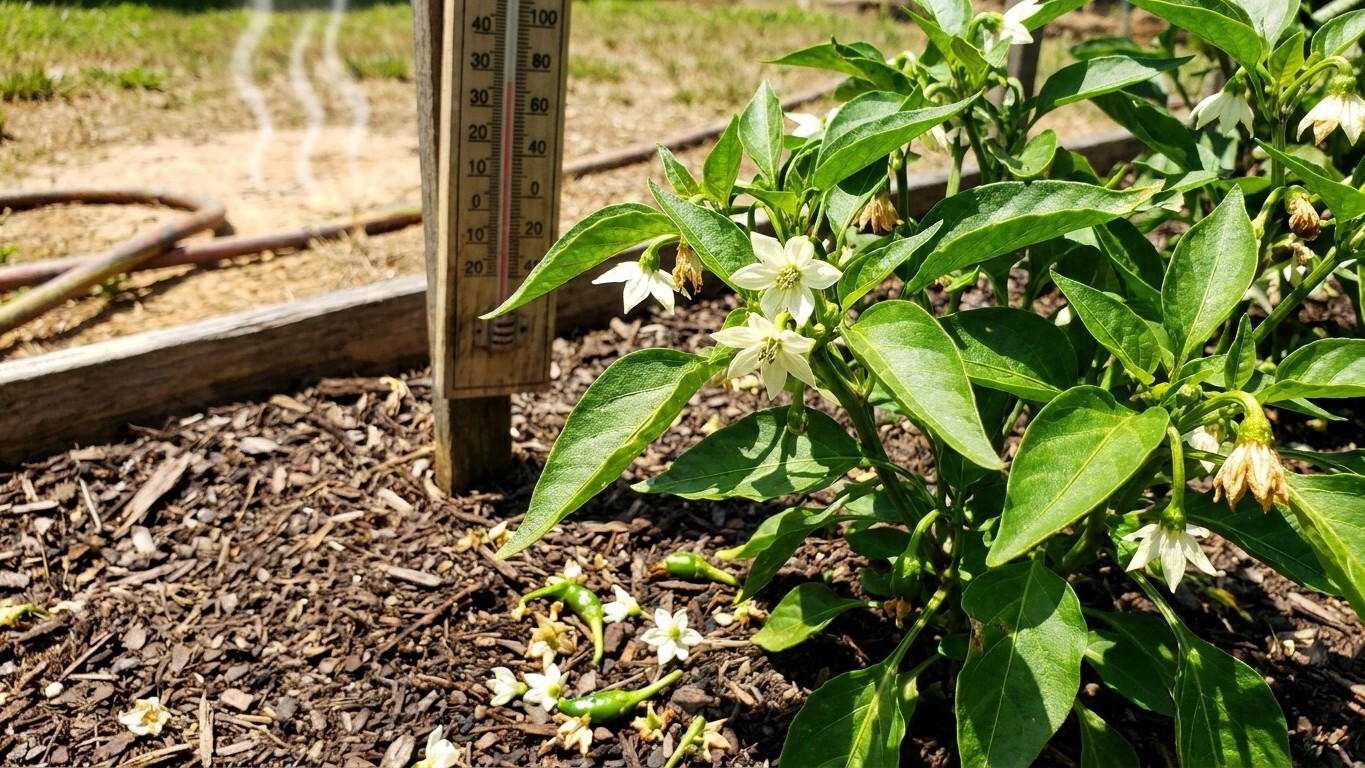

Peppers stall pollen the moment temperatures swing too far in either direction. A day at or above 90°F can abort blossoms before they open, and a night below 55°F does the same by making pollen too sluggish to fertilize the flower. New York’s official heat count sits at 12.2 days a year hitting that 90°F mark, which tells you the hot end is a real but occasional threat here, not a constant one. The cool end depends on your own yard, not on a statewide number.
The short answer
Start with the number that’s actually measured: New York City’s reference station averages 12.2 days a year at or above 90°F, based on NOAA’s 1991-2020 Climate Normals. That’s not a heat wave every week. It’s roughly a dozen scattered days, often clustered into two or three stretches between mid-July and mid-August. Each one of those days is a chance for pepper blossoms to drop before they ever become fruit, because pollen grown in extreme heat becomes non-viable and the plant simply sheds the flower rather than waste energy on a fruit that won’t develop.
What that 12.2-day figure means in practice: most New York gardeners will see a handful of short heat spikes, not a whole season lost. A plant that drops blossoms during a 90°F stretch in late July will usually recover and set a new flush once temperatures fall back into the 70s and 80s, which is where pepper fruit set works best. The problem shows up when a hot spell lines up with a plant that’s already stressed by drought, container heat, or crowding, because then the flower drop compounds instead of just pausing for a few days.
The other failure point is the one this data doesn’t cover. Pepper fruit set also fails when nights drop below 55°F, because cool night air slows pollen tube growth just as effectively as heat kills the pollen outright. This site tracks daytime heat load, the days-at-or-above-90°F count, but it does not carry summer overnight low temperatures for any New York location. That’s a real gap, and it matters here because New York’s geography runs from the warm microclimate of New York City to much colder valleys and higher elevations upstate and in the Adirondacks, where a 55°F night in July is far from rare.
The only reliable fix is to watch your own thermometer. A cheap outdoor min-max thermometer, checked each morning through July and August, will tell you more about your pepper crop’s fate than any regional average can. If you’re seeing repeated mornings under 55°F even in midsummer, that’s the ceiling on your fruit set, not the heat count. Do not assume a colder overnight low just because you’re farther north or at higher latitude within the state. Local terrain, water bodies, and elevation all shift night temperatures in ways that latitude alone won’t predict.
When to start seed here
Working backward from transplant date is the most reliable way to time pepper seed-starting anywhere, and New York is no exception. The math is the same math Utah State University Extension recommends for peppers generally: count backward from your safe transplant window by 8 to 10 weeks, since that’s how long pepper seedlings need indoors before they’re sturdy enough for the garden.
- Find your last spring frost date. For New York City, NOAA’s 1991-2020 Climate Normals put the 32°F freeze probability window at March 23 to April 3. That’s a Central Park figure from a dense urban site, and it runs earlier than what gardeners upstate or in the Adirondacks should expect, since those areas frost later in spring and earlier in fall.
- Wait for the soil, not just the calendar. Frost date alone isn’t enough. Extension guidance is clear that peppers should go into the ground only after soil temperature reaches 60°F, which in most New York gardens lands anywhere from one to three weeks after the last frost date, depending on how much sun the bed gets and whether it’s been mulched or left bare.
- Count back 8 to 10 weeks from that transplant date. If your soil hits 60°F in mid-May, for example, that puts seed-starting somewhere in early to mid-March. Gardeners farther upstate, where soil warms later, should push seed-starting back correspondingly, using their own local frost and soil-warming pattern rather than the New York City dates.
- Adjust for your own county. Because the NOAA frost window cited here is specific to the New York City reference station, gardeners elsewhere in the state should check their own local frost data before finalizing a seed-starting date. The same 8-to-10-week, 60°F-soil rule applies everywhere; only the calendar dates shift.
This backward count matters more for peppers than for many other vegetables, because pepper seedlings are slow starters. Rushing the timeline by starting seed too late leaves you transplanting small, underdeveloped plants that take longer to reach flowering size, which pushes fruit set into the hottest and least forgiving weeks of summer.
What goes wrong here
New York’s mix of occasional heat spikes, cooler upstate nights, and humid summer stretches creates a specific set of pepper problems. Each one has a workable fix.
- Blossom drop from a hot spell. When a run of 90°F-plus days hits, usually clustered within that 12.2-day annual average, flowers can drop before pollination. The remedy is patience and shade: a 30% shade cloth over the plants during the hottest afternoon hours reduces flower loss, and consistent watering keeps the plant from adding drought stress on top of heat stress. New flushes of blossoms typically appear once temperatures moderate.
- Blossom drop from a cool night. Because this site doesn’t track summer night minima, gardeners need to catch this one themselves. If mornings are consistently below 55°F even in July, especially likely in upstate valleys or higher elevations, blossom drop from cold isn’t a heat problem at all and shade cloth won’t help. Consider row cover removed daily, or a warmer microclimate like a south-facing wall, to buffer nighttime cooling.
- Sunscald on exposed fruit. Strong midsummer sun on peppers that have lost leaf cover, from pruning, wind damage, or disease, leaves pale, blistered patches on the fruit’s sun-facing side. Keeping the plant’s natural leaf canopy intact is the simplest prevention; avoid heavy pruning during peak sun months.
- Blossom-end rot. This shows up as a sunken, leathery brown patch on the fruit’s bottom end, caused by inconsistent watering that disrupts calcium uptake rather than a soil calcium shortage in most cases. Even, regular watering, especially during the hot stretches that push toward that 90°F mark, is the most effective fix.
Common questions
Do all pepper varieties Fail to Set Fruit at the same temperatures?
Utah State University Extension names several pepper varieties suited to home gardens but does not publish a heat tolerance rating, a days-to-maturity figure, or a size for any of them. There’s no verified basis for claiming one variety handles New York’s heat or cool nights better than another.
How long after a hot spell will my pepper plant start setting fruit again?
Once temperatures return to the range peppers prefer, generally the 70s and 80s, plants typically resume flowering within a week or two. Fruit itself follows 35 to 45 days after flowering, not after the plant resumes blooming, so the full recovery timeline runs longer than the flowering restart alone.
Should I transplant earlier to avoid New York’s hottest days?
Not at the expense of soil temperature and frost risk. Extension guidance is firm that peppers need soil at 60°F and frost-free conditions before transplant. Pushing transplant earlier than that risks stunted seedlings, which delays flowering and can push fruit set into the same hot stretch you’re trying to avoid.
Is there a published night-temperature threshold for New York I should use?
Not on this site. Summer overnight lows aren’t part of the data tracked here for New York locations. Gardeners should log their own morning temperatures through July and August rather than rely on a statewide or regional estimate.