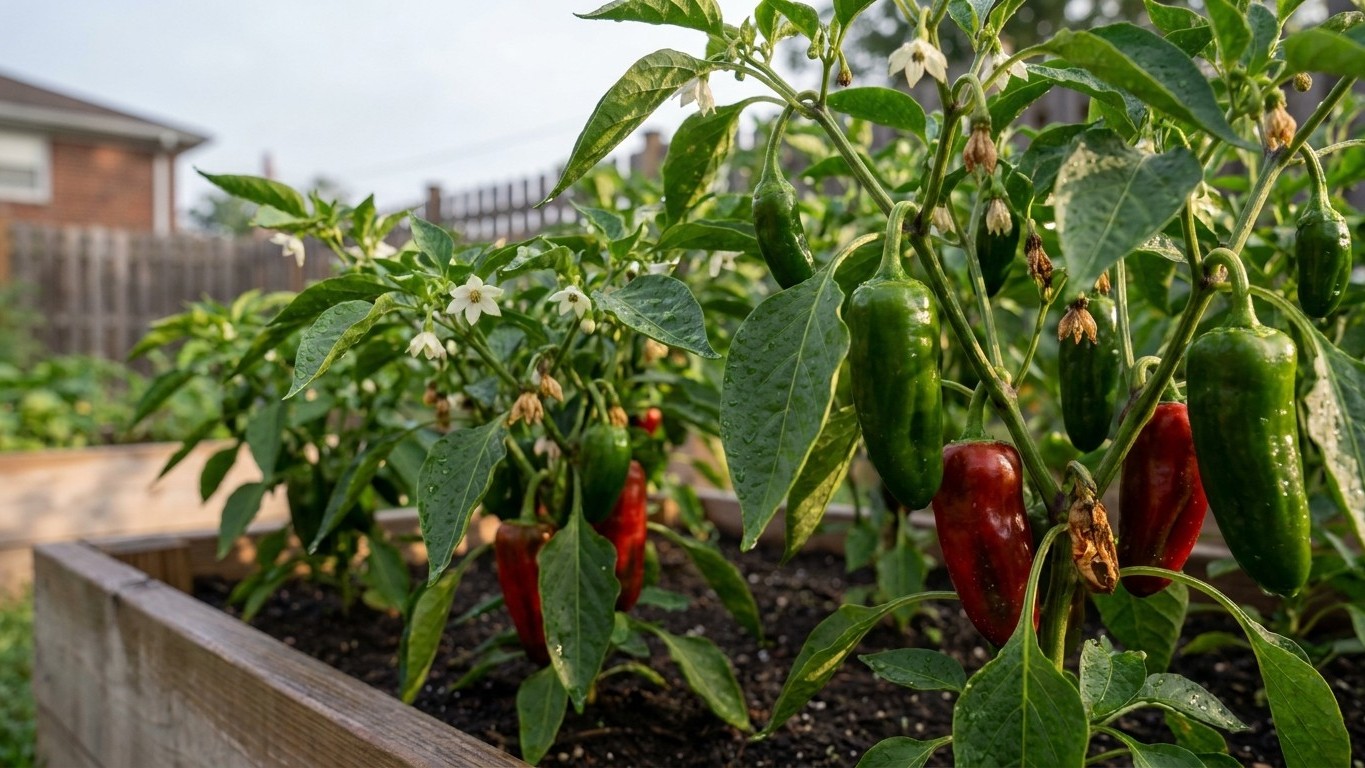

Peppers in New York face a narrow window: too cold at night and blossoms drop, too many days over 90 F and blossoms drop again. The state’s frost dates run late into March or even April, and its summer heat, while real, rarely holds long enough to threaten fruit set outright. Timing seed starting to the local frost date and soil temperature, then watching your own overnight lows through the season, is what actually decides whether a plant sets fruit or just sits there flowering.
The short answer

New York City’s reference station recorded an average of 12.2 days a year at or above 90 F, based on NOAA NCEI Climate Normals covering 1991 to 2020. That’s a useful number, but it needs context. Pepper fruit set stalls when daytime highs push past 90 F for a stretch, because the plant diverts energy into surviving heat stress rather than holding onto flowers. Twelve days a year isn’t nothing, but it’s also not the kind of relentless heat that growers deal with in the Southwest or the Deep South. In most New York summers, those 90-plus days arrive in scattered clusters, usually in July or August, rather than as a three-week wall of heat. That gives pepper plants room to recover fruit set once temperatures drop back into a normal range.
The bigger risk in New York usually isn’t the heat ceiling. It’s the other end of the fruit-set window, a topic covered in more detail in Why Peppers Fail to Set Fruit in New York. Peppers stop setting fruit when nighttime lows fall below 55 F, according to Utah State University Extension. Cool nights are common in New York in early June and again by late August or September, especially away from the coast and in valleys where cold air pools overnight. A stretch of 50-degree nights in early summer can hold a plant in flower without a single fruit forming, even while the days look perfectly warm and pleasant.
Here’s the limitation worth being honest about: this site tracks days at or above 90 F for New York, but it does not carry summer night minima for the state or for any county within it. There’s no substitute figure to lean on here, and guessing based on latitude or on winter cold would be a mistake, since summer night temperatures depend on elevation, distance from water, and local topography in ways that don’t track neatly with how far north or south a place sits. A backyard in the Hudson Valley can run several degrees cooler overnight than a yard twenty miles away near Long Island Sound. The only reliable fix is to watch your own nights with a simple outdoor thermometer through June and again in late summer, to notice whether flower drop lines up with a run of cool nights rather than wi, and to plan your planting schedule around When to Start Pepper Seed in New Yorkth anything else going on in the garden. Choosing among Pepper Varieties That Ripen in a New York Season can also help hedge against a short or unpredictable fruit-set window.
When to start seed here
Working out a start date for pepper seed is really just arithmetic run backward from the transplant date. In New York, that arithmetic has two anchors: the frost date and the soil temperature, and both need to be satisfied before plants go outside.
- Start with the frost window. NOAA NCEI’s 1991-2020 climate normals put New York City’s last spring frost, based on the 30 to 70 percent probability band for a 32 F freeze, between March 23 and April 3. That’s specific to the Central Park reference station, which sits in a dense urban heat pocket. Upstate New York, the Adirondacks, and rural valleys frost later in spring and earlier in fall, sometimes by several weeks, so this date should be treated as a New York City figure rather than a statewide one.
- Add the soil temperature check. Frost passing isn’t enough on its own. Utah State University Extension recommends transplanting peppers only once soil temperature reaches 60 F, since cold soil stalls root growth even when the air feels warm enough. In practice, this usually pushes the actual transplant date a bit past the last frost date, particularly in a cool, wet spring when soil warms slowly.
- Count backward 8 to 10 weeks for indoor seed starting. That’s the window Utah State University Extension gives for starting pepper seed indoors before it’s ready to go into the ground. If your working transplant date lands in early May because that’s when soil in your yard reliably hits 60 F, count back 8 to 10 weeks from that date, which puts seed starting somewhere in late February to early March.
- Adjust for your own county. Because the frost date above is a New York City figure, growers upstate or in colder valleys should push both the transplant date and the seed-starting date later by however many weeks their local frost typically lags behind the city. There’s no single statewide number that covers both a Long Island backyard and an Adirondack foothill garden.
One more detail worth holding onto: once flowering begins, Utah State University Extension notes it takes 35 to 45 days from that first flower to a harvestable fruit. That clock starts at flowering, not at the seed-starting or transplant date, so a plant that flowers in early June under good conditions should be producing fruit by mid to late July, weather permitting.
What goes wrong here
- Blossom drop from a hot spell. When a run of days climbs above 90 F, plants often drop open flowers rather than setting fruit, since the stress of high heat interferes with pollen viability. There isn’t a way to force fruit set during the hottest days; the fix is patience and, where possible, light afternoon shade cloth to take the edge off the worst afternoons, so flowers that open during a cooler stretch afterward have a better shot.
- Blossom drop from a cool night. The flip side shows up when nighttime temperatures drop under 55 F, which happens in New York in early season and again as fall approaches. Flowers can abort even though the days look warm and inviting. Since this site doesn’t track night minima, the only real defense is watching your own thermometer and expecting a lull in fruit set during any stretch of unusually cool nights, rather than assuming something is wrong with the plant itself.
- Sunscald on exposed fruit. Where the sun is strong and foliage is sparse, either from pruning or from a plant that never bushed out well, fruit exposed directly to afternoon sun can develop pale, papery patches. Keeping foliage full enough to shade the fruit, and avoiding heavy pruning during the hottest weeks, cuts down on this.
- Blossom-end rot. This shows up as a dark, sunken patch on the bottom of the fruit and traces back to inconsistent watering, which interrupts the plant’s ability to move calcium into developing fruit. Steady, even watering through hot stretches, rather than letting soil dry out and then soaking it, is the most direct fix.
Checking this against your own county
Everything above is built on statewide and single-station data. It’s a starting point, not a substitute for what’s happening in your specific yard. Soil warms at different rates depending on drainage and sun exposure, frost lingers longer in low-lying spots, and a garden three miles from the coast can run a very different overnight temperature than one thirty miles inland.
The most reliable next step is contacting Cornell Cooperative Extension, which maintains county-level offices across New York and can speak to local frost timing, soil conditions, and pepper varieties that have performed well in your specific area. Extension staff often track microclimate patterns that never show up in statewide normals, and they can tell you whether your county tends to run warmer or cooler at night than the New York City figures cited here.
Common questions
Can peppers set fruit during a heat wave in New York?
Fruit set typically stalls once daytime highs push consistently above 90 F, since heat stress affects pollen viability. New York averages 12.2 such days a year at the New York City reference station, usually scattered rather than continuous, so fruit set generally resumes once temperatures ease back down.
Why are my pepper plants flowering but not setting fruit?
The two most common causes are nights that dip below 55 F or days that climb above 90 F. Since this site doesn’t track summer night minima, check your own outdoor thermometer overnight to see whether cool temperatures line up with the drop in fruit set.
When should I start pepper seeds indoors in New York?
Count back 8 to 10 weeks from your expected transplant date, which itself depends on your local last frost date and on soil reaching 60 F. In New York City, the last frost typically falls between March 23 and April 3, but upstate and rural areas run later.
How long does it take a pepper flower to become a ripe fruit?
Utah State University Extension puts it at 35 to 45 days from the point a flower opens, not from when the seed was started or the plant transplanted. That timeline holds as long as nights stay above 55 F and days stay below the 90 F threshold that stresses fruit set.