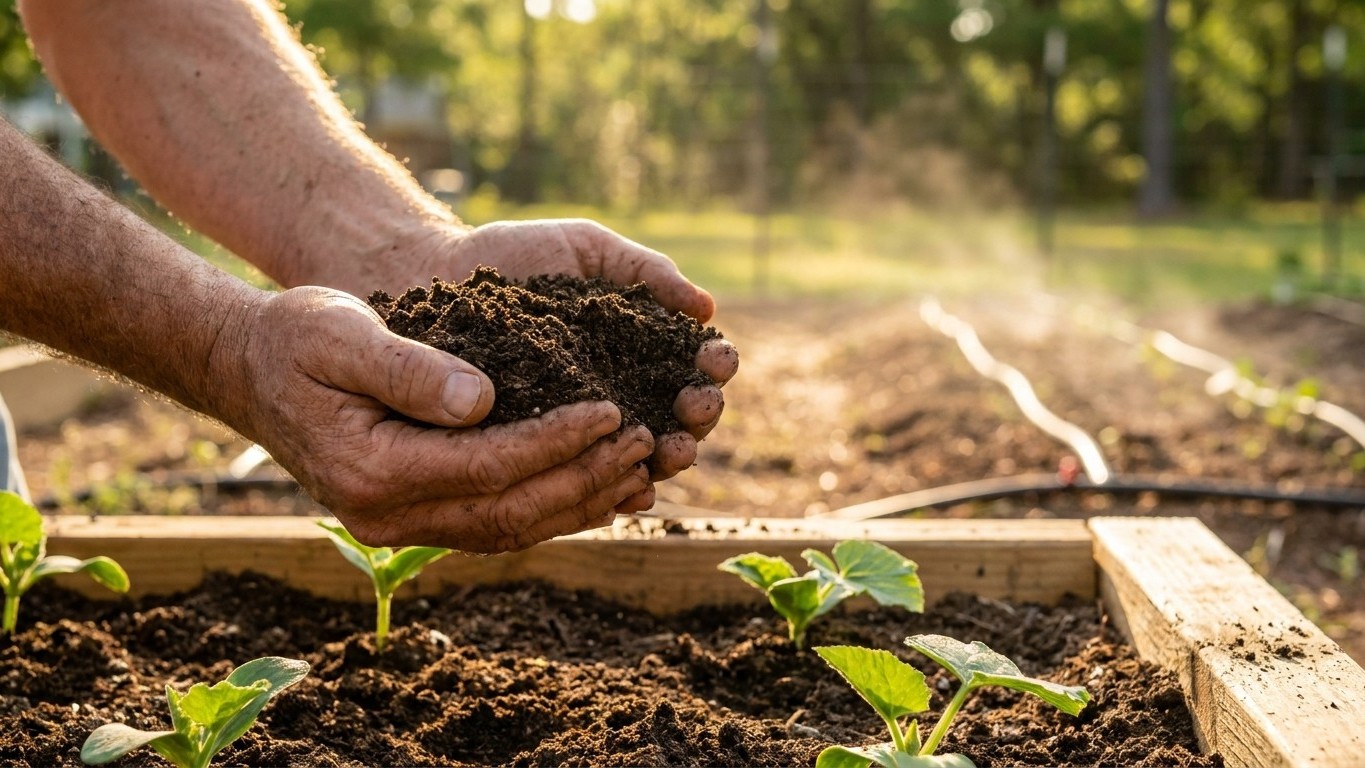

Summer squash goes into New York gardens once the soil itself has warmed, not simply once frost risk has passed, and that gap between “safe from frost” and “warm enough to grow” is where most transplant shock and stalled seedlings come from. In the city, that generally means early-to-mid May; upstate and in higher elevations, later still. From there, heat load, summer rainfall, and disease pressure decide which type of squash actually performs.
When the soil is warm enough in New York

At Central Park, the reference weather station for New York City, the last spring freeze at 32°F falls somewhere between March 23 and April 3, according to NOAA’s 1991-2020 Climate Normals, which describe a 30-to-70 percent probability band rather than a fixed date. That means even inside that window, a freeze is neither guaranteed nor ruled out on any single day, it’s a probability, not a promise.
That date matters less for summer squash than most gardeners assume. Frost is a proxy for something else entirely: soil temperature. Summer squash seed germinates poorly, and transplants sulk, in soil that’s still cold from winter, even on a day with zero frost risk. The ground typically needs another two to three weeks past the last frost date to shake off that chill, particularly in a shaded or heavy-clay bed that holds cold longer than a sandy, sun-facing one. Pushing seed into cool soil doesn’t save time, it usually costs it: the seed sits, rots, or produces a stunted plant that a later, warmer sowing will outgrow within weeks.
The Central Park figure is a New York City number, not a state-wide one. Central Park sits in a dense urban heat island, and the caution built into NOAA’s own data is explicit: upstate New York and the Adirondacks freeze earlier in fall and later in spring than the city does. A gardener in Buffalo, the Finger Lakes, or the high country north of Albany should expect the safe planting window to open later than early-to-mid May and close earlier in autumn than the city figures below suggest.
That regional spread is also why USDA’s Plant Hardiness Zone Map places New York across a striking range, zone 3b to 7b, built on the single measure of average annual extreme minimum winter temperature. That range spans nearly the entire zone scale used across the continental United States, which tells you this is not one growing climate but several stacked on top of each other. For any dated recommendation, like when to expect warm-enough soil, the city’s own station data, not the statewide zone range, is the number to anchor to; a gardener elsewhere in the state should check the frost and freeze data for their nearest station rather than borrow the city’s dates outright.
How long the season lasts here
Run the two Central Park frost windows together and the frost-free season in New York City stretches from roughly early April through mid-to-late November, somewhere between about 225 and 249 days depending on which end of each probability band you use: last frost as early as March 23 or as late as April 3, first fall frost as early as November 14 or as late as November 27. Either way, that’s a long window by summer squash standards, well over seven months.
What that length allows matters more than the exact figure. Summer squash moves from seed to first harvest quickly, and a season this long in the city means a single spring sowing isn’t the only option. A second sowing in early-to-mid summer, timed to mature before fall’s disease pressure and shortening daylight take hold, is realistic in a season this generous, and it often outproduces a single planting that declines under summer’s squash bugs and powdery mildew by August. The site’s succession sowing guide walks through how to stagger those plantings so the second round isn’t competing with the first for the exact same harvest window.
A long season also changes how much a transplant matters. Where the frost-free window is short, getting a head start indoors and setting out sturdy transplants, checked for a healthy, unwound root system rather than a rootbound tangle, can be the difference between a real harvest and none at all. In New York City’s roughly eight-month window, direct-seeding once soil has warmed is perfectly workable and skips the transplant shock that squash, with its sensitive taproot, tends to sulk over anyway. Upstate gardeners working with a shorter effective season, given later spring warmth and earlier fall frost, are the ones for whom that transplant head start earns its keep.
Heat and water in New York

New York City averages 12.2 days a year at or above 90°F, per NOAA’s 1991-2020 Climate Normals for the city’s reference station. That’s a modest count, not an extreme one, which matters directly for squash: pollen loses viability fast once temperatures push into the high 90s, so a handful of scorching days causes occasional blossom drop and misshapen fruit rather than a season-long failure to set. Most of a New York summer sits comfortably in the 70s and 80s, where pollination proceeds normally.
Rainfall tells a more nuanced story. Summer here brings roughly 13.7 inches of rain across June, July, and August, broken down as 4.54 inches in June, 4.6 in July, and 4.56 in August, the driest month being June by a narrow margin. On paper, that’s a reasonably wet summer, more than an inch a week on average. But squash doesn’t experience an average, it experiences whatever fell yesterday and whatever’s falling today. Summer rain in this region tends to arrive as thunderstorms rather than steady drizzle, and a heavy downpour on compacted or clay soil mostly runs off instead of soaking down to the root zone, while the same storm on sandy soil drains through within a day.
That combination, a modest but real count of hot days plus rainfall that’s ample on paper but uneven in practice, means the two open threats to a New York squash plant are dry spells between storms and the humidity those same storms leave behind. Squash’s broad leaves transpire heavily, and a shallow root plate can’t always keep pace during a stretch with no rain, so checking soil moisture by hand between storms, and watering deeply at the base rather than lightly overhead, does more for the plant than the monthly rainfall total suggests it should need. That same humidity, especially with morning dew lingering on those big leaves, is what invites powdery and downy mildew, which show up here more reliably than heat stress does. A rain gauge on the actual plot, not the regional average, is what tells a gardener whether this week needs a hose.
Which summer squash suit New York
None of this points to one squash variety, and this page won’t name one. The reasons are specific to the numbers just covered: New York City’s long, roughly eight-month frost-free window means an early-maturing type isn’t a strict requirement here the way it would be in a short-season territory, though it remains the safer bet upstate and at elevation, where the effective season runs shorter than the city’s. The moderate heat load, just 12.2 days above 90°F, means pollination reliability matters less here than it might in a hotter territory, but airflow around the base of the plant still helps, since a crowded, humid microclimate at soil level is exactly what invites the mildew that this region’s rainfall pattern already sets up.
That mildew risk is the deciding factor for most New York gardens. With ample but uneven summer rain and humid stretches between storms, a squash type bred or selected for resistance to powdery and downy mildew will simply outlast one that isn’t, regardless of which frost dates or heat numbers apply to a given county. Bush-type and vining-type squash both exist with meaningful disease resistance bred in, and the choice between them is more about garden space than climate.
The specific varieties trialled and recommended for New York’s growing conditions, tested across the state’s actual range of microclimates from the city to the Adirondacks, are maintained by Cornell Cooperative Extension. That’s deliberate, not a dodge: a name that performs well in a Long Island trial plot may behave differently in a shorter, cooler upstate season, and a statewide article can’t responsibly promise a cultivar it hasn’t sourced against local trial data. Checking with the county extension office nearest a specific garden is the one step that turns these regional numbers into an actual planting decision.