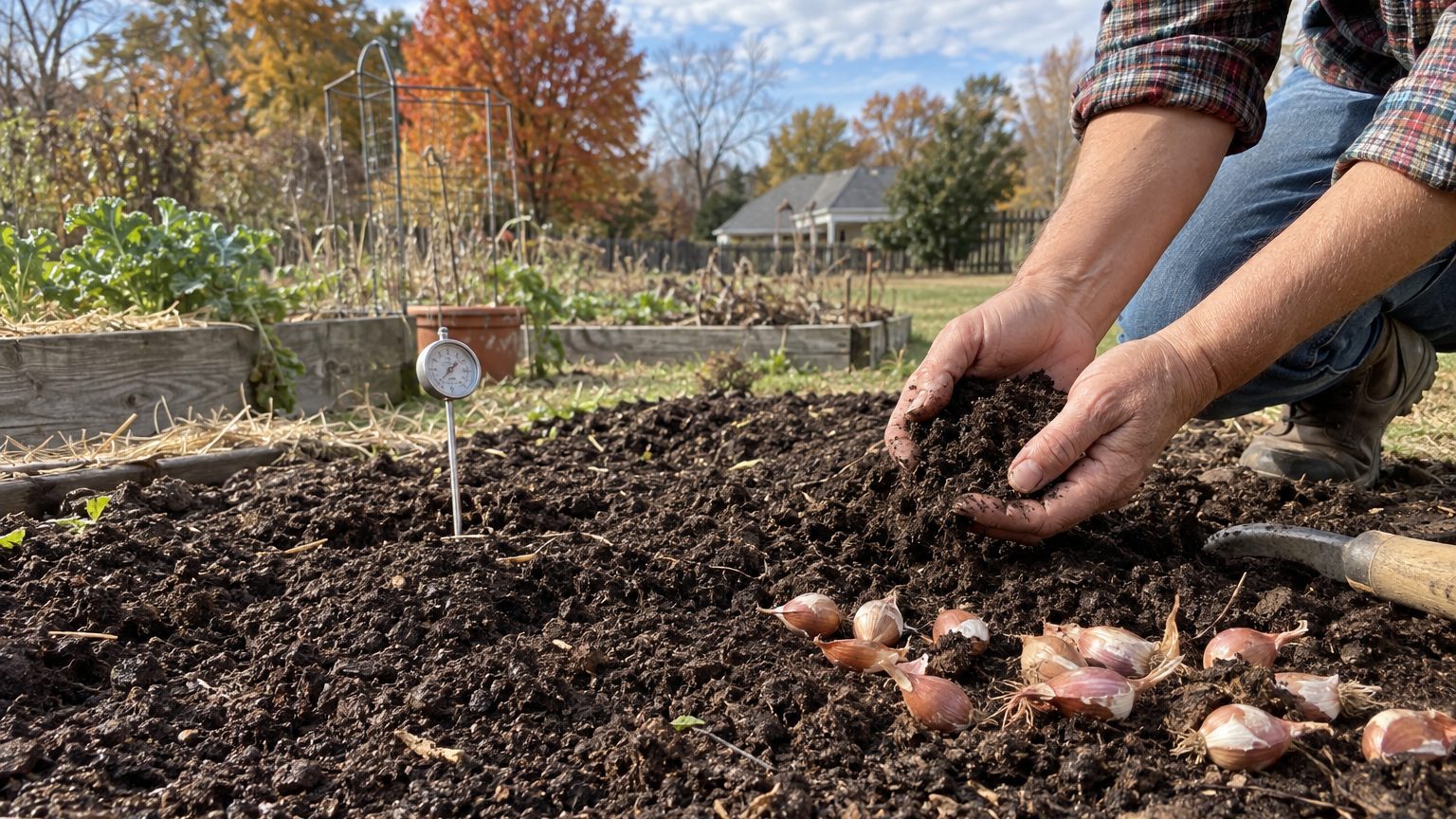

Plant shallots in Newfoundland and Labrador once the soil has dried enough to crumble and the cold, sodden stage has passed. At the St. John’s airport station that usually lands in early June, after the average last spring frost of May 30. Spring planting is the safer call across most of the province. Fall planting works only where winters are mild and drainage is excellent.
When the soil is warm enough in Newfoundland and Labrador
The last spring frost at the St. John’s A station averages May 30, according to Environment and Climate Change Canada’s 1981-2010 Climate Normals. That is a mean date, so in one year out of two the last frost comes later. It is the midpoint of a window. Treat it that way, and note that Canadian normals cover 1981-2010, a different span from the 1991-2020 figures used for US states.
Shallots do not wait for the frost date itself. They wait for soil, and soil lags the air. Cold ground in a foggy coastal spring can stay wet and slow well after the last frost has passed. Shallot sets tolerate cool conditions better than most garden crops, and a light frost will not kill green tops. But a set pushed into saturated, cold ground can sit and rot before it roots. The sensible target is a few days after the frost risk fades, when the bed is workable.
How can you tell the bed is ready without a thermometer?
Squeeze a handful from planting depth. If it holds together briefly and then breaks apart, the bed is workable. If it smears or drips, wait. Push a finger down a few inches. The soil should feel cool, not icy, and there should be no frozen layer below. A cheap soil thermometer helps, but the squeeze test catches the bigger risk, which is waterlogging.
Where you live matters as much as the date. The St. John’s station sits on the Avalon Peninsula, and a province is not one climate. Northern and upland districts, and Labrador in particular, run weeks behind it. A gardener in Labrador West or on the Northern Peninsula should shift the whole calendar later and watch the ground instead of the St. John’s date.
Shallots share much of their care with garlic: autumn planting, curing, storage and allium rotation all work the same way. What differs for shallots is that one planted set multiplies into a cluster of bulbs, so each one is smaller and each needs checking at harvest. For the planting basics, start with Growing Shallots: One Bulb In, a Handful Out.
How long the season lasts here
The reference station has a mean last spring frost on May 30 and a mean first fall frost on October 17, but these are midpoints of a window, not safe dates. Both dates come from the same Environment and Climate Change Canada normals for St. John’s A. Both are midpoints, so the window can be shorter in a bad year.
That is a moderate window by North American standards, and it settles several questions. A second sowing of shallots is not realistic. They are not a quick succession crop like radishes or lettuce, and a late planting simply runs out of summer. The first planting is the planting. For the shallot-adjacent crops that do suit repeat sowings, such as bunching onions, stagger them across June and July.
Is starting shallots from seed or transplants worth the trouble?
With one shot at the season, an early start matters. Seed-grown shallots begun indoors in late winter gain several weeks on seed sown outdoors. The catch is the root check. Seedlings kept too long in small cells circle their roots and stall when they hit cold ground. Handle them gently, harden them off over a week or so, and transplant before the roots wrap. Sets avoid the problem entirely. They are mature bulblets with a food reserve, and they go straight into the bed. For most home gardeners here, sets are the simpler and more forgiving route.
The short fall also squeezes the end of the season. Shallots are ready when the tops yellow and fall over, and the bulbs then need dry, airy conditions to cure. A cool, rainy September in a maritime climate makes this the hard part. Lift the clusters on a dry day and bring them under cover with good airflow rather than leaving them on wet ground. Frost before harvest does not ruin the crop outright, but it shortens the curing time you have.
Inspect every bulb before it goes into storage. The neck should be thin, dry and tight, the skins papery, and the base clean and firm. A soft neck or a moldy base ends the question. Discard that bulb, because a bulb that looks fine from the outside can still be breaking down inside, and it will spread rot to its neighbors. Check the crop regularly and use the clusters with any doubtful bulbs first.
Heat and water in Newfoundland and Labrador
Heat stress is rarely the problem on this coast. Summers are cool and maritime, and hot spells are exceptions that a shallot grower does not plan around. The hot-climate worry of bulbs bolting or scorching in July belongs to places like the Deep South, as covered in Growing Shallots in Alabama. Here the pressures run the other way.
Cool, damp summers bring slow ripening, and a crop that ripens slowly runs into the curing problem described above. They also bring fungal disease. Downy mildew and neck rot thrive in wet foliage and humid air, and fog and frequent rain keep leaves wet for long stretches. Raised beds, wide spacing and a site open to the wind do more here than any extra watering. Water at the base if the weather turns dry, and ease off as the tops begin to yellow.
The winter is what decides between autumn and spring planting. The mean daily minimum of the coldest month at St. John’s is -8.7 °C (16.4 °F), and Natural Resources Canada places the city in Canadian hardiness zone 6a. That is the Canadian system, built on several climate variables, and it does not convert to a USDA zone. It describes the reference city only. Inland and northern districts are far colder, and the ground freezes harder and stays frozen longer.
Should you plant shallots in fall or spring in Newfoundland and Labrador?
Where the ground freezes hard and stays wet, fall-planted sets rot or heave out of the soil during repeated freezing and thawing. Spring is the safer call. A milder winter, with well-drained soil, gives the larger, earlier bulbs that fall planting is grown for. A gardener in a mild, sheltered coastal spot with sandy or raised beds could try a small fall trial under a thick mulch. Do not stake the whole crop on it.
| Factor | Fall planting | Spring planting |
|---|---|---|
| Winter risk | Rot or heaving in wet, freeze-thaw ground | None, since the bulbs are not in the ground |
| Bulb size and timing | Larger and earlier when the winter is mild | Smaller and later, but reliable |
| Drainage needed | Excellent | Good |
| Best fit | Mild, sheltered coastal sites | Most of the province, and Labrador |
For a contrast with a region where mild, wet winters make fall planting routine, see Growing Shallots in Washington.
Which shallots suit Newfoundland and Labrador
Choose by type before anything else. A moderate window with a cool, slow-ripening summer favors the earliest-maturing types. Look for shallots described as early, and avoid long-season types bred for warmer places, because they may never finish ripening before the autumn rains.
A damp, humid climate makes disease resistance the first criterion. Ask suppliers about tolerance to mildew and neck rot, and buy certified, disease-free sets rather than saving clusters from a diseased bed. Between sets and seed-grown types, sets suit a short season because they start with a head start. Seed-grown shallots reward gardeners who will manage the transplanting. Heat-oriented traits, such as shade at the root and airflow around the bulb, matter far less on this coast than good drainage and open spacing.
A variety that thrives in one province’s trials can fail in another’s, and the only recommendation that means anything is one tested in local conditions. The Newfoundland and Labrador Department of Fisheries, Forestry and Agriculture is the place to ask which shallots and onion-family crops have been trialled in the province, and which suppliers carry stock suited to a cool, short season.
Rotation applies to shallots as it does to garlic and onions. Keep the whole allium family out of the same bed for several years, because disease carries over in the soil. Shallots simply join the same rotation plan.
Common questions
When should you plant shallots in Newfoundland and Labrador?
Plant sets in spring, a few days after the frost risk fades and once the soil is workable and not waterlogged. At St. John’s A the average last frost is May 30, so early June is a sensible target. Northern and upland districts and Labrador run weeks later.
Can you plant shallots in the fall?
Only in mild, sheltered, very well-drained spots. Where the ground freezes hard and stays wet, fall-planted sets rot or heave. A small trial under thick mulch is reasonable, but spring planting is the dependable choice.
Does Labrador have a long enough season?
Labrador’s season is shorter and its winters colder than the St. John’s reference figures. Start from the earliest-maturing types, favor sets, and check with the provincial department about what has worked in northern gardens.
How do you know shallots are safe to store?
Inspect each bulb after curing. The neck should be dry and tight, the skins papery and the base firm and clean. A soft neck or a moldy base means discard the bulb. Check stored shallots regularly.