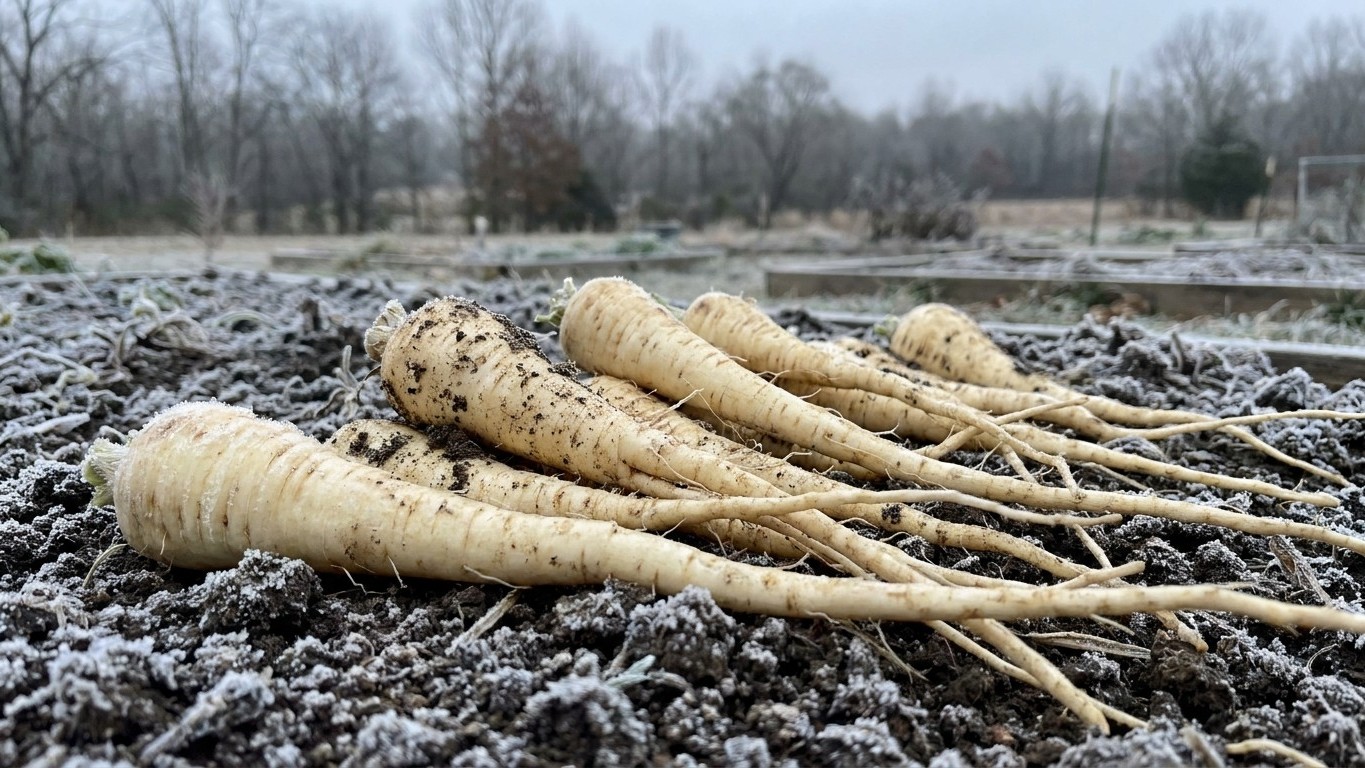

North Carolina’s Piedmont delivers enough frosty nights each winter to sweeten parsnips properly, not just grow them to size. The deciding factor is exposure to cold after the roots mature, and the mountains, foothills, and coastal plain each handle that differently enough to change your timing.
The short answer
The number that actually answers this question isn’t a hardiness zone. It’s the mean daily minimum temperature for the coldest month, and for the Charlotte area that figure sits at 31.8°F, based on NOAA NCEI Climate Normals from 1991 to 2020. That’s not a record low or a monthly average temperature. It’s what a typical night looks like during the coldest stretch of winter, and 31.8°F tells you something specific: nights in that coldest month routinely dip below freezing, not just once or twice, but as a recurring pattern across several weeks.
That distinction matters because parsnip sweetness doesn’t come from surviving winter. It comes from repeated exposure to freezing temperatures while the root is still in the ground. Cold triggers the plant to convert stored starch into sugar as a kind of natural antifreeze response. A single light frost barely touches this process. What you need is a run of cold nights, week after week, so the conversion has time to build.
A mean daily minimum of 31.8°F in the coldest month means the Piedmont clears that bar. Nights in the upper 20s and low 30s aren’t rare exceptions here, they’re the winter norm for weeks at a stretch. That’s different from asking whether North Carolina is “cold enough” to be a certain hardiness zone, which measures whether perennial roots survive winter dormancy, not whether an annual root vegetable sweetens in the ground.
So the plain answer: yes, parsnips grown in the North Carolina Piedmont, and left in the ground through several weeks of the coldest weather, will sweeten. Roots pulled right after the first light frost, before the cold has had time to accumulate, will grow just fine but taste flatter and starchier. The payoff comes to gardeners willing to wait.
One caution worth repeating: the Blue Ridge Mountains to the west run colder and later in the season, while the coastal plain runs milder and earlier. The 31.8°F figure and the frost dates that follow in this article are Piedmont numbers, tied to the Charlotte reference station. If you garden in Asheville or Wilmington, treat this as a starting comparison, not your own forecast.
Does the season fit?
Parsnips are sown directly in the ground, not started indoors and transplanted, and Utah State University Extension puts the timeline at 100 to 120 days from that seeding date, with sowing itself happening 2 to 3 weeks before the last spring frost. Here’s how that lines up against the Piedmont’s frost calendar.
- Last spring frost: NOAA NCEI puts this window at March 23 to April 5 for the Charlotte reference station. Sowing 2 to 3 weeks earlier lands somewhere between roughly March 2 and March 22.
- Germination lag: Parsnip seed is slow. Utah State’s guidance and general parsnip growing practice put emergence at 14 to 21 days after sowing, so seedlings won’t show above ground until roughly mid-March to mid-April. Don’t dig up the row and re-sow if nothing’s visible after a week, that’s normal for this crop.
- Maturity window: Counting 100 to 120 days from the seeding date itself, not from emergence, the earliest sowings mature around mid-June and the latest around late July.
- First fall frost: NOAA NCEI puts this at October 30 to November 8 for the Piedmont reference station. That’s roughly three to four months after the roots reach maturity.
- The gap: That three-to-four-month cushion is not wasted time. Mature parsnip roots hold perfectly well in the ground, still gaining size, until the fall frost season arrives and starts the starch-to-sugar conversion.
The Piedmont’s season fits comfortably, with slack to spare. The tight part isn’t the growing window, it’s discipline: resisting the urge to pull parsnips in August just because they look ready, when the real reward comes after several nights near or below freezing later in the year.
What goes wrong here
- Forked roots from heavy or rocky Piedmont clay: Compacted red clay and buried stones split the taproot as it pushes down, giving you a stubby, branched mess instead of a single long root. Utah State University Extension recommends deep sandy soil and, where that’s not available, double digging the bed 12 to 15 inches deep and clearing out rocks before sowing.
- Forked roots from overwatering: This is a separate cause from soil texture, not the same problem with a different name. Soggy, saturated soil encourages the root to branch rather than drive straight down. Water evenly and moderately, and let the top inch or two dry between waterings rather than keeping the bed constantly wet.
- A season that runs out before frost: Sowing late, past the recommended 2-to-3-week window before last frost, pushes maturity later and shrinks the cushion before fall frost arrives. Stick to the early-March sowing window and track germination patiently rather than delaying because nothing has emerged yet.
- Pulling roots too early for real sweetness: Digging parsnips right at the 100-day mark, before any real cold has set in, gives you a starchy root instead of a sweet one. Leave mature roots in the ground through the first hard frost and into several subsequent cold nights before harvesting, digging before the ground freezes solid enough to make lifting them difficult.
Before you touch a parsnip plant with bare hands on a sunny day, know this: North Carolina State Extension’s Plant Toolbox states plainly that “all parts of this plant contain furocoumarins which can make skin sensitive to light causing burns so be sure to wear gloves, long sleeves and long pants when dealing with it.” That’s not limited to the leafy tops. It covers the whole plant, roots included.
What makes this risk easy to miss is the mechanism behind it. The burn doesn’t come from the sap alone. It comes from sap on the skin combined with sunlight afterward. Brush against parsnip foliage while harvesting or clearing tops on an overcast afternoon and you may see nothing at all. Do the same job under direct sun, and the sap reacts with UV light to produce a burn that often doesn’t show up until hours later, sometimes as blistering or discoloration well after you’ve finished in the garden and moved on to something else.
That delayed onset is exactly why this catches gardeners off guard. There’s no sting at the moment of contact to warn you. And because the reaction depends on sunlight exposure, washing your hands after the fact doesn’t undo damage that’s already reacted with the sun earlier in the day. The protection has to come before you touch the plant, in the form of gloves, long sleeves, and long pants, not after.
Checking this against your own county
Every figure in this article is tied to the Charlotte reference station and describes Piedmont conditions specifically. If you’re gardening in the mountains, along the coast, or anywhere the local microclimate runs noticeably warmer or cooler than Charlotte, treat these numbers as a comparison point rather than your own forecast.
The most reliable next step is contacting your local office of North Carolina Cooperative Extension, part of the land-grant university extension system coordinated through NC State. County agents can confirm local frost dates, soil conditions, and whether your area’s winter delivers the same kind of sustained cold the Piedmont sees. You can find your county’s office through the NC State Extension directory at ces.ncsu.edu. A five-minute call before you plant beats guessing after a disappointing harvest.
Common questions
Can I grow parsnips in coastal North Carolina?
The coastal plain runs milder than the Piedmont figures used in this article, with an earlier first fall frost and a shorter run of sustained freezing nights. Coastal gardeners should check local frost data through their county Extension office before assuming the same sweetening timeline applies.
What variety of parsnip should I plant in North Carolina?
The sourced guidance from Utah State University Extension used for this article doesn’t name a specific variety, so none is recommended here. Check with your local Extension office or a seed catalog suited to your region for variety options.
Can I leave parsnips in the ground over winter in North Carolina?
In the Piedmont, roots can generally stay in the ground through the early cold weeks that follow the first fall frost, since that exposure is what builds sweetness. Dig them before the ground freezes solid enough to make lifting the roots difficult.
Do I need to wash parsnip sap off my skin right away?
Washing after contact doesn’t address the actual mechanism, since the burn results from sap combined with sunlight exposure. The reliable protection is wearing gloves, long sleeves, and long pants before handling any part of the plant, as NC State Extension advises.