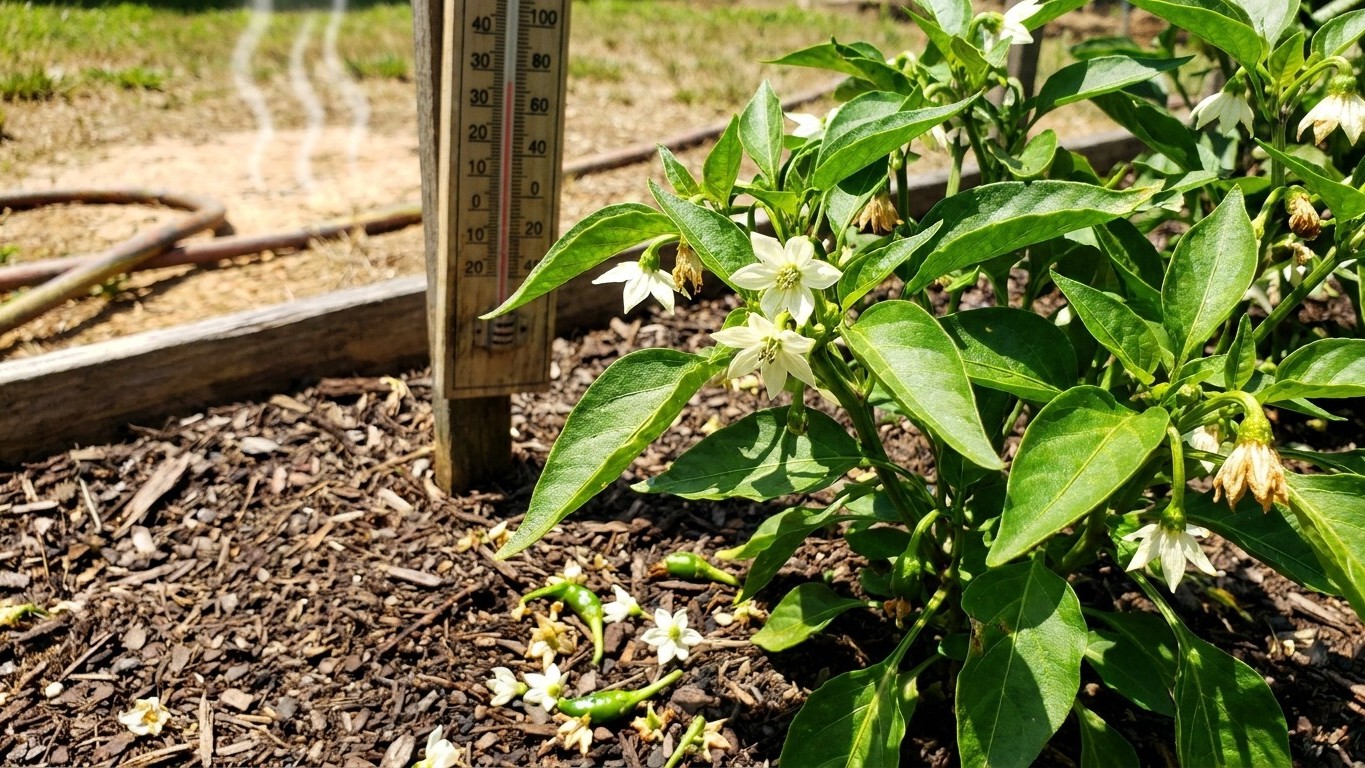

Pepper flowers stop setting fruit when nights drop below 55 F or when days climb above 90 F, and both edges matter in North Carolina. The Piedmont around Charlotte averages 35 days a year at or above 90 F, which is enough heat to stall pollen viability in mid-summer. The cool side depends on your specific nights, which this guide can’t measure for you but which you need to track closely from bloom onward.
The short answer
Thirty-five days a year at or above 90 F is the measured average for the Charlotte reference station, covering the period from 1991 to 2020. That’s not a handful of scorching afternoons in late July. It’s more than a month’s worth of days, scattered mostly through June, July and August, when pepper flowers are trying to set fruit. Pepper pollen becomes sluggish and less viable once daytime highs push past 90 F, especially when that heat arrives alongside high humidity, which the Piedmont delivers in spades most summers. Flowers may open, look healthy, and drop off the plant within a day or two without ever producing a pepper. Gardeners often blame disease or a watering mistake. Most of the time it’s simply heat.
The other side of the equation gets less attention, but it’s just as real. Pepper flowers also abort when nighttime temperatures fall below 55 F. That threshold can show up in North Carolina in spring, when a transplant goes into the ground a little early and gets hit with a string of chilly nights, or in fall, when the first cool snaps arrive while plants are still trying to finish a late flush of fruit.
This is where a reader has to do their own homework. This site tracks days at or above 90 F for various Territories, because that figure comes from a fixed climate record. Summer night minimums are a different animal. They vary block by block depending on elevation, tree cover, pavement, and whether cold air pools in a low spot in your yard. Nobody publishes a reliable “average summer night low” for a home garden the way NOAA publishes a 90 F day count. So the practical move is to watch your own thermometer once flowering starts, rather than assume your nights based on how far south or north you happen to be.
Put those two thresholds together and the message is straightforward: North Carolina pepper plants have a workable window, but it isn’t the whole summer. Early flowers set before the heat piles up. Late flowers set once nights cool back down in early fall. The stretch of peak heat in between is often the least productive part of the season, even though the plants look lush and green.
When to start seed here
Working out a seed-starting date for peppers means counting backward from two fixed points: the last spring frost and the day your soil reaches 60 F. Here’s how that arithmetic plays out for the Piedmont, and how to adjust it for your own county.
- Find your last frost window. For the Charlotte area, the 32 F freeze probability data from NOAA NCEI’s 1991-2020 Climate Normals puts the last spring frost between March 23 and April 5. If you garden west toward the Blue Ridge, push that date several weeks later, since elevation delays spring there. If you’re closer to the coastal plain, the last frost tends to arrive earlier than the Piedmont figure.
- Wait for 60 F soil, not just frost-free air. Utah State University Extension’s guidance on peppers is specific: transplant only after frost has passed and soil temperature has reached 60 F. Air can feel warm on a sunny March afternoon while the soil ten inches down is still cold from winter. A soil thermometer pushed a few inches into the bed, checked over several mornings, is the only way to know for sure.
- Count back 8 to 10 weeks for indoor seed starting. That same Extension guidance calls for starting pepper seed indoors 8 to 10 weeks before that transplant date. If your soil hits 60 F in the second half of April, for example, counting back 8 to 10 weeks lands your seed-starting date somewhere in the middle to latter part of February.
- Build in a buffer for a slow spring. Piedmont springs don’t warm in a straight line. A stretch of cool, wet weather can hold soil temperature below 60 F even after the calendar frost date has passed. Starting seed on the early side of your 8-to-10-week window gives transplants a bit more size and root development if the ground takes its time warming up.
Redo this math for your own address rather than borrowing the Charlotte dates outright. A gardener in the mountains west of Asheville and a gardener near Wilmington on the coast are working with genuinely different calendars, even though both are technically in North Carolina.
What goes wrong here
The state’s climate produces a specific, repeatable set of pepper problems. Here’s what tends to show up, and what actually helps.
- Blossom drop during a hot spell. When daytime highs push past 90 F, which happens on average 35 days a year around Charlotte, flowers open and fall without setting fruit. There’s no fix for the heat itself, but afternoon shade cloth over the row during the hottest stretch, along with consistent soil moisture, keeps plants from adding drought stress on top of heat stress. Plants that stay evenly watered through a heat wave tend to resume setting fruit faster once temperatures ease.
- Blossom drop from a cool night. A late-spring or early-fall night below 55 F can knock flowers off just as effectively as extreme heat does. Since this varies by yard and this site doesn’t track summer night lows, keep an eye on your own overnight forecast during bloom, especially in the weeks right after transplanting and again as fall approaches. Floating row cover pulled over plants on a night when a cool snap is expected can buy a few degrees of protection.
- Sunscald on exposed fruit. North Carolina’s summer sun is strong enough to scald pepper fruit that gets suddenly exposed, often after aggressive pruning or after a storm strips leaves off one side of the plant. The fruit develops a pale, papery, sunken patch on the side facing direct sun. Leaving foliage in place to shade developing peppers, rather than pruning plants back hard mid-summer, prevents most of this damage.
- Blossom-end rot. This shows up as a dark, leathery patch on the bottom of the fruit, and it’s driven by inconsistent watering that disrupts calcium uptake, not by a lack of calcium in the soil itself. Piedmont summers that swing between heavy thunderstorm downpours and dry stretches are a classic setup for this problem. Mulching to hold soil moisture steady and watering on a regular schedule, rather than waiting for plants to look wilted, is the most effective remedy.
Common questions
Do all pepper varieties struggle the same amount with North Carolina heat?
Utah State University Extension names several pepper varieties in its guidance but does not attach heat ratings, days-to-maturity figures, or fruit size to any of them. Without that data published, it isn’t accurate to claim one named variety handles Piedmont heat better than another. What’s well established is the mechanism itself: any pepper flower is vulnerable once days pass 90 F or nights drop below 55 F, regardless of variety name.
How long after a flower sets does it become a pepper I can pick?
Utah State University Extension’s guidance places fruit development at 35 to 45 days measured from flowering, not from when the seed was sown or the transplant went into the ground. That distinction matters for planning a harvest: a flower that sets in early July, avoiding the worst heat, still needs that full stretch of time on the plant before the fruit is ready.
Can I do anything about nighttime temperatures in my own yard?
Not in a way that changes the regional pattern, but you can moderate the effect. Floating row cover on a night when a cool dip is forecast, or choosing a planting site that avoids the lowest, coldest part of your yard where cold air settles, both help. Since this site doesn’t publish summer night minimums, tracking your own overnight lows with a simple outdoor thermometer during bloom is the most reliable approach.
Is it worth planting a second round of peppers for fall in North Carolina?
Many Piedmont gardeners do, timing a second flush of flowers to set as the worst heat of August breaks and nights start cooling toward September. Given that fruit needs 35 to 45 days from flowering to reach harvest, and that the region still carries decent growing weeks after the hottest stretch passes, a fall set is often realistic, provided nights haven’t already dropped below that 55 F threshold by the time those later flowers open.