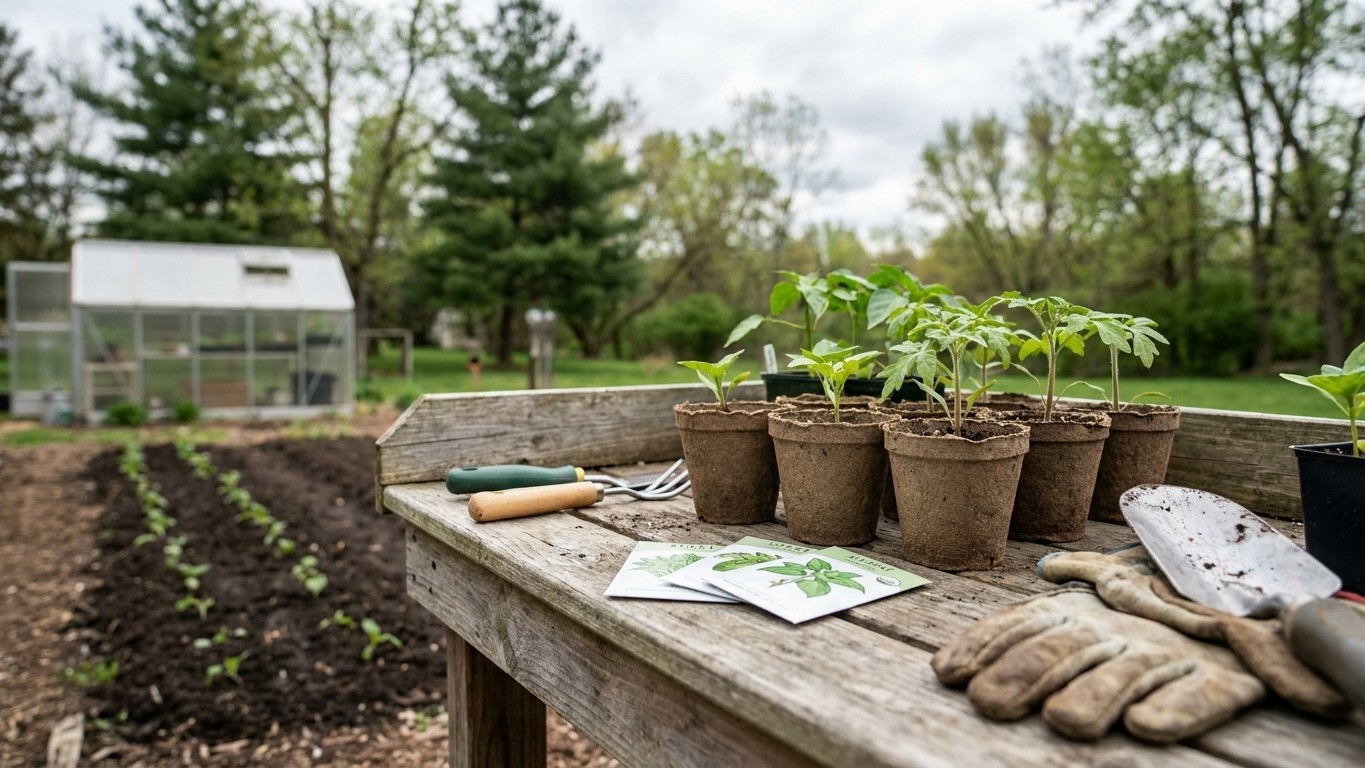

By April, most of North Carolina’s Piedmont has cleared its last frost window (March 23 to April 5, per NOAA climate normals for Charlotte), which means this is the month cool-season crops finish up and warm-season planting cautiously begins. Peas, greens, and root vegetables go in freely; tomatoes and peppers wait for soil to warm, not just air.
What goes in the ground in April

The frost window itself is the deciding factor here, not the date on the wall. NOAA’s 1991-2020 climate normals put Charlotte’s last spring freeze (32°F) somewhere between March 23 and April 5. That means the Piedmont typically clears its frost risk right around the start of this month, the coastal plain clears it earlier, and the Blue Ridge counties to the west often run several weeks behind. If you garden in the mountains, treat everything below as a week or two premature.
For the Piedmont and points east, April is when the safe list gets long. English peas, spinach, lettuce, kale, Swiss chard, carrots, beets, and radishes can all go directly into the ground now, and they should have been in already if you’re following a fall-frost-to-spring-frost planting rhythm. Onion sets and shallots still go in through early April if the ground is workable. Cabbage, broccoli, and cauliflower transplants that were hardened off under cover can move outside now too, since all of these tolerate a light frost even if the calendar surprises you with one.
Warm-season crops are the gamble. Beans and sweet corn can be direct-sown toward the back half of April in the Piedmont and coastal plain once soil has had a few weeks to warm past the frost window, but tomatoes, peppers, squash, cucumbers, and melons are better held as transplants and set out only after the local frost risk has genuinely passed, not just after a few warm afternoons. USDA places most of North Carolina between zones 5b and 8b, with Charlotte as a mid-range reference point, so a gardener in the mountains and a gardener on the coast are working from very different clocks even though both call it April.
Potatoes are the middle ground: seed potatoes planted in March in most of the state are already up by now, and any that weren’t can still go in early in the month while soil stays workable and cool-loving.
What to start under cover
Work backward from the frost window instead of a fixed date. Tomatoes and peppers, which typically need six to eight weeks indoors before transplanting, should already be started by the time April opens in the Piedmont, since they’re meant to go outside right around or just after that March 23 to April 5 window closes. If you haven’t started them, you can still sow now for a later transplant date, just expect a later first harvest.
What actually gets started under cover during April is the next wave: cucumbers, summer squash, and melons, which need only three to four weeks indoors before they go out, timed for transplanting once the soil has had real time to warm past that frost window. Starting them too early, back in February or early March, leaves you with rootbound, leggy seedlings sulking in small pots long before the ground is ready for them. Starting them too late, past mid-to-late April, means they go into the ground behind schedule and the growing season runs short before fruit sets.
Succession sowing under cover also matters here. A second round of lettuce and brassica seedlings started now, under a cold frame or on a bright windowsill, gives you transplants ready for the ground in three to four weeks, right as the earliest spring crops are heading toward harvest and freeing up space. Mountain gardeners should shift this whole calendar back by two to three weeks to match their later frost clearance.
What is ready to pick
April harvests skew toward what survived winter and what got an early start. Asparagus beds established in prior seasons begin sending up spears this month, and they’re ready to snap once they reach 6 to 8 inches, before the tips loosen and start to fern out. Overwintered kale, collards, and spinach are often at their sweetest right now, but they’re also racing toward bolting as days lengthen, so harvest hard rather than letting them linger.
Radishes sown in March are usually ready three to four weeks later, which puts many of them on the table by mid-to-late April, and you can tell they’re ready by the shoulder of the root pushing up through the soil surface. Baby lettuce and other cut-and-come-again greens sown earlier in spring are also cycling into harvest, and cutting them regularly actually extends how long the plants keep producing.
It’s also worth a walk through the root cellar or pantry. Stored potatoes and onions from the previous season start sprouting or softening as temperatures climb, and any winter squash still on the shelf should get a squeeze test: soft spots near the stem end mean it’s time to use it now, not later. Culling these early keeps rot from spreading to the rest of the stock.
The jobs that matter this month
Soil preparation done now sets the tone for everything that follows. Working compost into beds before the warm-season transplants go in gives roots something to grow into immediately, rather than making them wait weeks for amendments to break down. Testing soil pH and nutrient levels is also worth doing before, not after, you commit to a planting layout, since correcting a deficiency mid-season rarely catches up.
Staking, mulching, and watering rhythm
Peas and any early climbing crops need staking or trellising installed now, before they sprawl and tangle into a mess that’s hard to untangle without snapping stems. Mulch goes down once the soil has warmed a bit, both to conserve the moisture that April’s rain showers bring and to head off the first flush of weeds before they establish. As temperatures climb through the month, watering shifts from occasional to a steadier rhythm, especially for seedlings and transplants that haven’t built deep roots yet.
Succession sowing is a discipline worth building into April specifically: putting in a small new row of lettuce, radishes, or spinach every two weeks keeps harvests coming instead of hitting one glut and then a gap. Pest scouting also starts in earnest now. Aphids cluster on new growth fast in warm, humid Piedmont springs, and flea beetles go after young brassica leaves before you’ve even noticed they’ve arrived, so a few minutes checking undersides of leaves each week catches problems while they’re still small.
Spring-flowering shrubs that have finished blooming can be pruned now, and dividing overcrowded perennial clumps while they’re still small gives them a full season to re-establish. None of these jobs are flashy, but skipping them in April usually means paying for it in June.
What not to do in April
The most common mistake is reading warm air as warm soil. A run of 75°F afternoons in early April feels like permission to set out tomatoes and peppers, but soil several inches down often lags well behind air temperature, especially right after the Piedmont’s typical frost window closes in late March or early April. Cold soil stunts warm-season transplants even if a hard freeze never touches them, leaving them stalled and yellowing for weeks. Wait until the soil itself has had sustained warmth, not just a good weekend.
The second mistake is uncovering cold frames, row covers, or mulch too early after a mild stretch. North Carolina’s frost window is a range, not a hard stop, and a warm few days in late March or early April can be followed by a return to frost, particularly in the mountains where the season runs weeks behind the Piedmont. Pulling protection off too soon exposes tender growth right when it’s most vulnerable.
The third mistake is nitrogen timing. Heavy nitrogen applications on warm-season lawns before they’ve fully greened up push soft, weak growth that struggles against the very temperature swings this month still delivers. Feed once green-up is underway and steady, not the moment you spot the first blades turning.
Checking this against your own county
A state-wide April guide is a starting point, not an instruction sheet. Elevation changes everything here: the Blue Ridge counties clear their last frost weeks after the Piedmont, while the coastal plain often clears it before the Piedmont does. A garden at 3,000 feet and a garden at sea level are not on the same calendar even though both sit inside North Carolina’s borders. For a planting window tuned to your actual county, check with NC State Extension, which maintains local frost data and planting calendars specific to your region.
Common questions
Is it too late to plant potatoes in April in North Carolina?
No. Potatoes planted early in the month still have plenty of season ahead, particularly in the Piedmont and mountains where soil is only just warming up past the frost window.
Can I plant tomatoes outside in April in North Carolina?
Only once the local frost window has genuinely passed, which runs March 23 to April 5 in the Piedmont around Charlotte, and later in the mountains. Set transplants out after that window closes, not on the first warm afternoon.
What vegetables can I direct-sow in April in North Carolina?
Peas, spinach, lettuce, carrots, beets, radishes, and Swiss chard all direct-sow well this month across most of the state, with beans and corn following toward the back half of April once soil has warmed further.
Why does the mountain region run so far behind the Piedmont?
Elevation delays warming. Higher ground in the Blue Ridge holds cold air longer into spring, which pushes the last frost date weeks later than in Charlotte and the rest of the Piedmont.