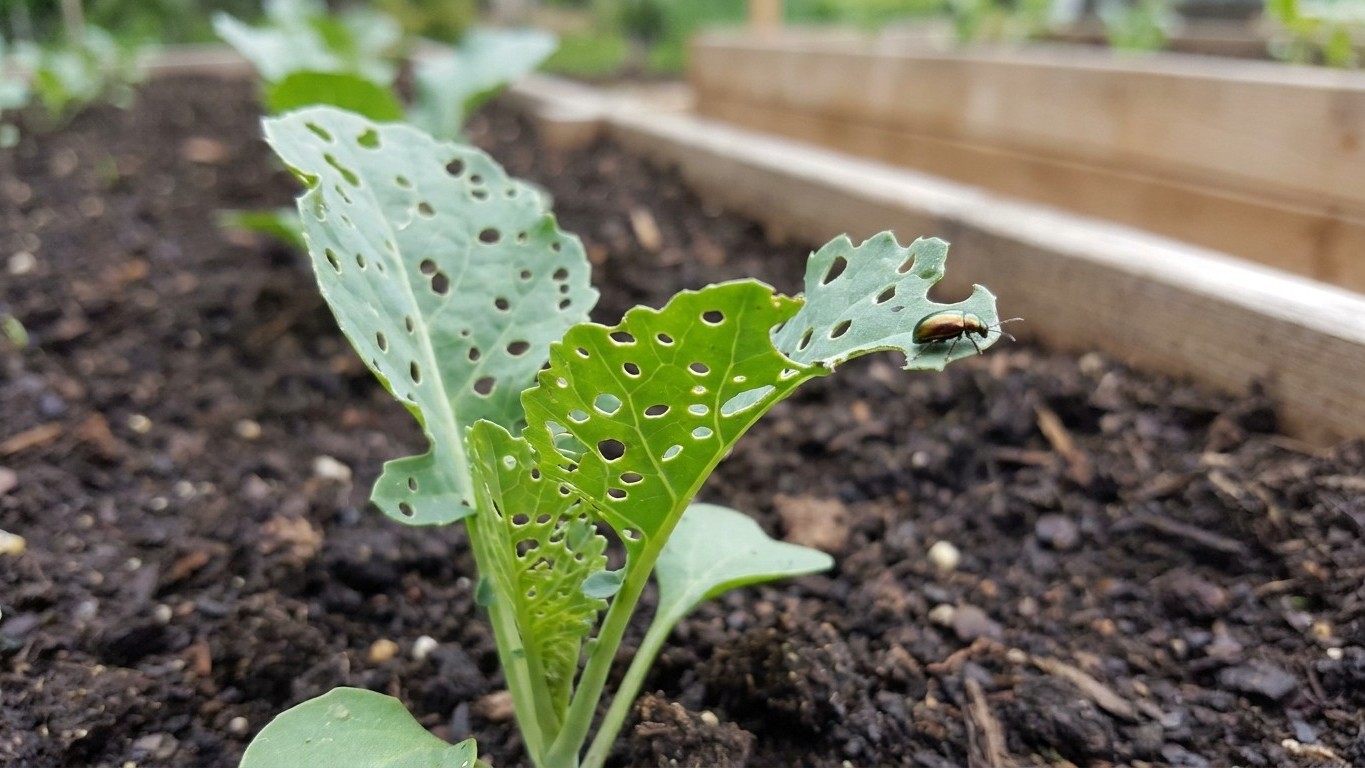

Flea beetles start chewing through North Carolina gardens as early as mid-March in the coastal plain and as late as early May in the mountains, and they don’t let up until the first hard frost. The tiny black or bronze beetles that jump like fleas when disturbed target seedlings hardest, riddling leaves with pinhole-sized “shotgun” damage that can kill young plants before they get a foothold. Row covers timed to your local last-frost date, combined with delayed transplanting and a couple of targeted sprays, stop most infestations before they spread.
When Flea Beetles Show Up Across North Carolina

Timing depends heavily on where in the state you garden. In the coastal plain, around Wilmington, New Bern, and the Outer Banks region, soil warms fast and flea beetles emerge from leaf litter and soil cracks as early as mid-March, sometimes even late February during a mild winter. The piedmont, covering Charlotte, Raleigh, and Greensboro, typically sees activity ramp up in early to mid-April. Mountain counties around Asheville and Boone lag behind by three to four weeks, with beetle pressure not building until late April or early May because cooler soil temperatures delay their spring emergence.
Flea beetles overwinter as adults, tucked into soil, leaf debris, or the base of perennial weeds. Once daytime temperatures hold steadily above 50°F for several days running, they wake up hungry and head straight for the nearest tender seedling. That first wave is almost always the most destructive because young transplants and direct-seeded crops have so little leaf tissue to spare.
A Second and Third Generation
North Carolina’s long growing season means most flea beetle species complete two to three generations before winter. The second generation typically appears in June, often overlapping with fall garden prep for cole crops. A third wave can show up in September, catching gardeners off guard just as they’re planting collards, turnips, or fall lettuce. This is why flea beetle pressure in North Carolina isn’t a one-time spring event. It’s a recurring problem that tracks the planting calendar almost exactly.
Which Flea Beetles Are Common in North Carolina Gardens
Several species show up across the state, and they don’t all target the same plants. The crucifer flea beetle (Phyllotreta cruciferae) is the one most gardeners meet first, attacking cabbage, kale, broccoli, radishes, and other brassicas. It’s small, shiny, and often black with a slight metallic sheen. The eggplant flea beetle (Epitrix fuscula) targets eggplant and, to a lesser degree, tomatoes and peppers, and it’s especially aggressive in the piedmont’s warmer microclimates. Potato growers in western North Carolina deal with the potato flea beetle (Epitrix cucumeris), which also has a taste for tomato foliage.
Tobacco flea beetles remain a concern for the state’s remaining tobacco acreage, concentrated in counties like Pitt, Wilson, and Johnston, where the crop still shapes local agriculture. Home gardeners growing tomatoes near old tobacco ground sometimes see spillover pressure from this species, since it isn’t picky about which nightshade family plant it lands on.
Spotting the Damage Before It Spreads
The telltale sign is small, round holes scattered across leaves, giving foliage a look like it’s been hit with fine buckshot. On brassicas, damage concentrates on young leaves near the growing tip. On eggplant and potato, you’ll often see damage on both leaves and, less commonly, the skin of developing tubers or fruit. A heavily infested seedling can look lace-thin within 48 hours, and that kind of leaf loss on a plant with only two or three true leaves is often fatal.
Adult beetles are easy to miss because they’re fast. Brush a leaf and watch for tiny insects springing away like fleas, that jumping reflex comes from enlarged hind legs and is the single fastest way to confirm you’re dealing with flea beetles rather than another leaf-chewing pest. Larvae, which feed on roots underground, cause less visible but still real damage, particularly to radishes and turnips where root quality matters for harvest.
What Actually Stops Flea Beetles in North Carolina Gardens
Control works best as a layered approach rather than a single fix. No single method eliminates flea beetles completely, but stacking a few strategies together drops damage to a manageable level in most home gardens.
Timing Your Planting Around Emergence
Delaying transplant dates by even two weeks past the typical spring emergence window in your region can mean the difference between a thriving seedling bed and a decimated one. Coastal plain gardeners who hold off on setting out brassica transplants until early April, rather than mid-March, often see far less damage simply because plants have more established leaf tissue by the time beetle populations peak. This single adjustment costs nothing and requires no products.
Physical Barriers
Floating row covers remain the most reliable non-chemical control. Installed at planting and sealed tightly along the edges with soil or landscape staples, they block adult beetles from reaching seedlings entirely. The catch is timing: covers need to go on before beetles arrive, and they need to come off (or be lifted for pollination) once flowering crops like eggplant need insect access. For brassicas that don’t require pollination, covers can stay on through most of the vulnerable seedling stage.
Trap Crops and Companion Planting
Planting a sacrificial border crop that flea beetles prefer over your main crop pulls pressure away from what you actually want to harvest. Mustard greens and radishes work well as trap crops for brassica plantings, since flea beetles tend to favor them over slower-growing cabbage or broccoli. Some North Carolina growers report success interplanting aromatic herbs like cilantro or dill near eggplant and tomato beds, though this works better as a supplement to other methods than as a standalone fix.
Cultural Practices That Reduce Overwintering Populations
Because adult flea beetles overwinter in garden debris and weedy borders, fall cleanup matters more than most gardeners realize. Removing spent brassica and nightshade plants promptly after harvest, rather than leaving them to decompose in place over winter, reduces the local population that emerges the following spring. Tilling exposed soil in late fall can also disrupt overwintering sites, though this needs to be balanced against soil health goals if you’re managing organic matter carefully.
Crop rotation helps too. Moving brassicas to a different bed each year, ideally with at least a two-year gap before returning to the same spot, keeps beetle populations from building up in the soil around a consistent host.
Biological and Chemical Options
Beneficial nematodes applied to soil in early spring can reduce flea beetle larvae before they mature into damaging adults, particularly useful for root crops like radishes and turnips where larval feeding affects the harvested part directly. For active adult infestations, insecticidal soap and neem oil offer lower-impact options that work best with repeat applications every five to seven days during peak activity.
Spinosad-based products, derived from soil bacteria and approved for organic use, provide stronger knockdown for heavier infestations without the broader toxicity of synthetic pyrethroids. Whatever product you choose, timing applications for early morning or evening protects pollinators that might be visiting flowering crops nearby. Reading and following label rates matters more with flea beetles than with slower-moving pests, since underdosing tends to just push beetles to jump elsewhere rather than killing them.
Regional Notes Worth Knowing
North Carolina’s climate diversity, from the barrier islands to the Blue Ridge, means flea beetle pressure varies more within the state than in many others. Sandy coastal soils warm quickly and drain fast, conditions that favor early and heavy flea beetle emergence. The piedmont’s clay soils retain more moisture and buffer temperature swings slightly, which can delay peak activity by a week or two compared to the coast. Mountain gardens benefit from a shorter window of vulnerability overall, but the compressed growing season means gardeners there have less room to simply wait out an infestation before planting.
Humidity plays a role too. The state’s average relative humidity, often sitting well above 60% for much of the growing season according to National Weather Service climate normals, keeps soil surfaces damp enough to support both beetle activity and the fungal issues that can follow when flea-beetle-damaged leaves let in secondary infections. Watching leaf damage closely in humid stretches, rather than assuming it’s just cosmetic, catches compounding problems early.
Gardeners who track their own local emergence date year to year, noting the first jump-and-scatter beetle sighting each spring, build a more accurate planting calendar than any statewide guideline can offer. Microclimates within a single county, shaped by tree cover, slope, and soil type, can shift emergence by a week or more from one garden to the next just a few miles away.