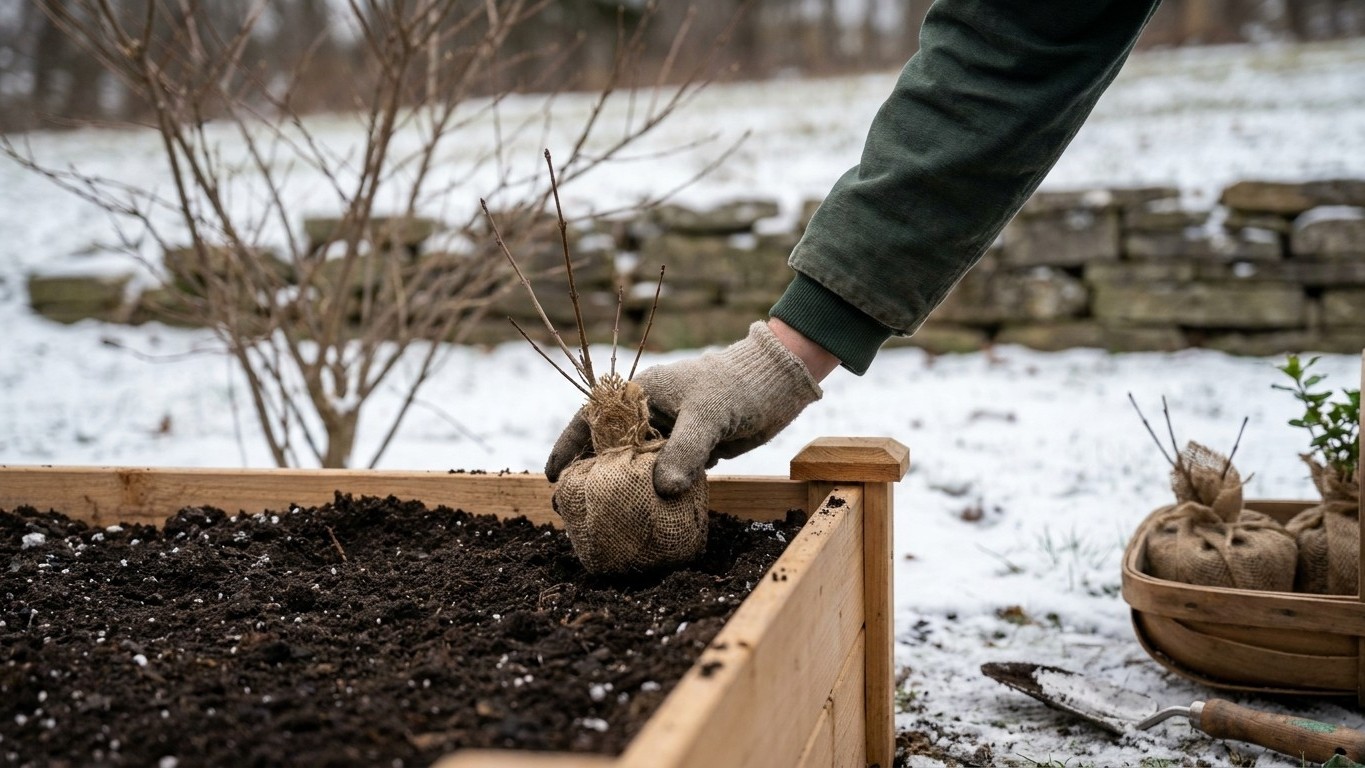

December in North Carolina sits weeks past the first fall frost across most of the Piedmont, so the open garden is largely closed for direct sowing. What still works: garlic and shallot cloves in workable soil, bare-root fruit stock, cold frames and low tunnels for greens, and forcing rhubarb or chicory indoors. Everything else waits on the calendar to turn toward spring.
What goes in the ground in December

The frost window, not the date on the wall, decides what survives outdoors. NOAA’s 1991-2020 climate normals put Charlotte’s first fall freeze between October 30 and November 8, so by December the Piedmont has already logged a month or more of sub-32°F nights. That single fact rules out almost every direct-sown vegetable for the open garden this month. Mountain counties in the Blue Ridge run colder still, while the coastal plain lags a bit warmer, but nowhere in the state is this a planting month in the way April or September are.
Say it plainly: nothing tender goes into open ground in December here. What does still work is narrower but real. Garlic and shallot cloves can still go in if the soil isn’t frozen or waterlogged, pushed an inch deeper than usual to buffer against heaving during freeze-thaw cycles. Bare-root fruit trees, berry canes, and roses can be planted while they’re dormant, provided the hole isn’t fighting standing water. Cold frames and low tunnels extend the season for spinach, mâche, and claytonia that were sown back in fall; they aren’t new plantings so much as protected holdovers, but they count as “in the ground” work that pays off.
Indoor forcing fills the gap
Forcing crops indoors is the one genuine December planting move. Rhubarb crowns lifted and set in a dark, cool spot with a bucket over them will push pale, tender stalks within weeks. Belgian endive (witloof chicory) roots, dug and stored, can be forced the same way in a box of sand in a basement or root cellar. Neither needs sunlight to start, which makes them the rare December crop that doesn’t depend on the weather at all.
What to start under cover
Seed-starting math in December runs backward from the last spring frost, which NOAA’s normals place between March 23 and April 5 for the Piedmont. Count back roughly 8 to 10 weeks for onions and leeks, and those seeds should be started under lights sometime in January, not this month, in most of the state. December’s real job under cover is different: it’s about setting up the system, not filling every tray.
That means checking grow lights and heat mats before they’re needed, ordering seed-starting mix and clean trays, and testing that timers and fans still work after a season in storage. Gardeners in the warmer coastal counties, where the last frost arrives earlier, have a little more room to start a first tray of onions or early lettuce late in the month. Everyone else risks the first failure mode: starting too soon, ending up with leggy, rootbound seedlings weeks before the garden can take them.
The second failure mode matters just as much and gets less attention. Waiting too long to order seed means the popular disease-resistant tomato varieties and the reliable pepper lines sell out before January is over. December is the month to place that order, even if the tray stays empty until the new year. Buying seed now and starting it later costs nothing; needing seed in February and finding it gone costs a season.
What is ready to pick
Outdoors, the harvest is thin in December, and there’s no point pretending otherwise. Kale, collards, and leeks that were planted in late summer keep giving through the cold if they were mulched well, and a hard freeze actually sweetens their flavor by converting starches to sugar. Brussels sprouts left standing on the stalk hold in the garden better than almost any other crop this time of year, and a light frost improves them the same way. Anything under a cold frame, spinach, mâche, arugula, is fair game for cutting on the milder days.
Indoors, sprouts and microgreens are the most reliable December harvest of all, ready in one to two weeks from seed with nothing more than a sunny windowsill or a shop light. They don’t care what the thermometer outside is doing.
Checking the root cellar
Stored crops need a hands-on check this month, because one soft squash or onion can start a chain reaction in storage. Winter squash should feel firm all over; any give near the stem end means it’s breaking down and should be used first, not left to spread rot to its neighbors. Potatoes that have sprouted eyes or gone green from light exposure need pulling and either using promptly or, if green, trimming generously before cooking. Onions that have gone soft at the neck or started growing a green shoot are past their storage life and belong in the next meal, not back in the bin.
The jobs that matter this month
December carries more real deadlines than the empty garden beds suggest. Dormant pruning of apple, pear, and peach trees can start once the leaves are fully down and the sap has stopped running, and doing it now, rather than waiting for a warm day in late winter, reduces the risk of cutting into a tree that’s already beginning to wake up. Bramble canes (blackberries and raspberries) get the same treatment: remove the canes that fruited, thin the rest, and the plant channels its energy into fewer, stronger canes come spring instead of a tangle.
Soil work belongs on this month’s list too. A soil test taken now, while the ground is idle, gives results back in time to amend before spring planting, and NC State Extension can run that test through the local county center. Turning the compost pile keeps it breaking down through winter instead of stalling into a frozen brick, and a load of shredded leaves worked in now feeds the pile exactly when it needs carbon.
Mulch matters more in December than almost any other month, because it’s protecting dormant roots and garlic cloves from the freeze-thaw heaving that heaves shallow plantings right out of the soil. A few inches of straw or shredded leaves over garlic beds and around the base of young fruit trees does that job. Tool maintenance rounds out the list: cleaning soil off pruners and shovels, sharpening blades, and oiling metal parts before they sit unused for weeks is the kind of hour that saves a frustrating spring morning spent fighting a rusted hinge or a dull edge.
What not to do in December
The most common mistake this month isn’t planting the wrong crop, it’s trusting a warm afternoon. A run of 60-degree days can feel like an invitation, but the soil several inches down stays cold for days after the air warms, and seeds sown into it either rot or sit dormant well past when they’d normally germinate. Air temperature and soil temperature are not the same measurement, and this is the month that gap causes the most damage.
Uncovering cold frames or pulling row cover after a mild stretch is the second trap. NC’s Piedmont sees freeze-thaw swings through the winter, not a steady decline into cold, so a plant hardened off during a warm week can be caught by the next hard freeze with no protection back in place fast enough. Leave the cover on longer than feels necessary; removing it costs nothing to delay, but replacing frost-killed seedlings costs the whole planting.
Nitrogen fertilizer is the third mistake, and it’s a timing error more than a dosage one. Feeding nitrogen to garlic, fruit trees, or overwintering greens this month pushes soft new growth right when the plant should be conserving energy in its roots, and that tender growth is exactly what a hard freeze kills first. Hold nitrogen until active growth resumes in spring; if soil needs amending now, compost and a balanced amendment based on a soil test do the job without forcing growth the plant can’t yet use.
Checking this against your own county
A state-wide December calendar is a starting point, not an instruction. North Carolina’s hardiness zones span 5b to 8b under the USDA’s 2023 map, built from average annual extreme minimum temperatures, and that range alone means a garden in the Blue Ridge mountains and one on the coastal plain are working from different playbooks in the same month. Elevation shifts frost timing by weeks, not days, and the frost window cited here (October 30 to November 8 for the fall freeze, March 23 to April 5 for the last spring freeze) reflects the Piedmont, specifically the Charlotte area, not the whole state.
For a planting calendar tuned to a specific county, NC State Extension is the reference to check before acting on any date in this piece.
Common questions
Can I still plant garlic in North Carolina in December?
Yes, if the soil is workable and not frozen solid or waterlogged. Plant cloves a bit deeper than usual and mulch heavily to protect against freeze-thaw heaving through the rest of winter.
Is it too late to start seeds indoors this month?
For most vegetables started under lights, yes, since the last spring frost in the Piedmont falls between March 23 and April 5 and onions or leeks are typically started 8 to 10 weeks before that, meaning January. December’s job is preparing equipment and ordering seed, not filling trays yet.
Why do my overwintering greens taste better after a frost?
Cold triggers many brassicas and leafy greens (kale, collards, Brussels sprouts) to convert stored starches into sugars as a natural antifreeze response, which is why a frost-touched harvest often tastes sweeter than one picked in warm weather.
Should I prune my fruit trees now or wait until late winter?
Once leaves have fully dropped and the tree is dormant, pruning can begin. Doing it in December, rather than waiting for a warm day close to spring, lowers the risk of cutting into wood that’s already starting to break dormancy.