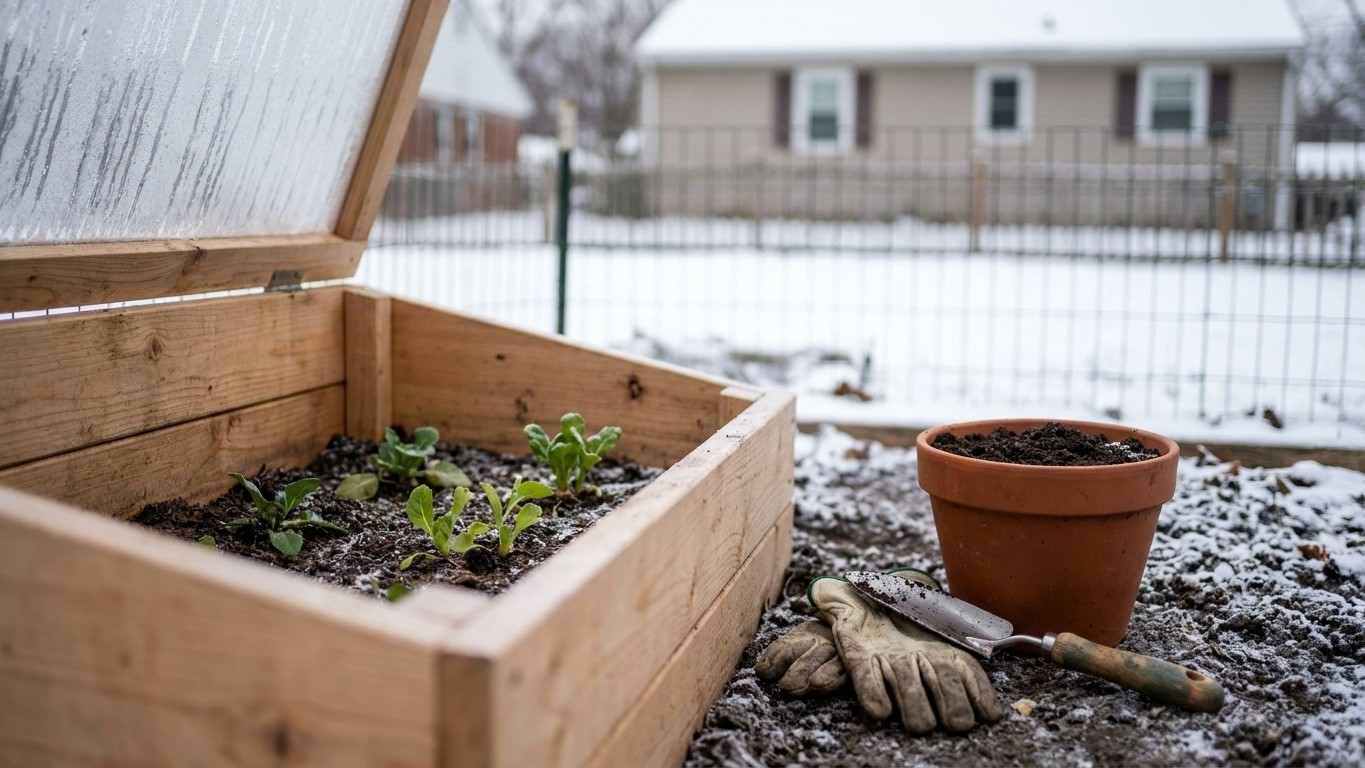

In the North Carolina Piedmont, nothing tender goes into open ground in January. The last spring frost doesn’t arrive until March 23 to April 5, so this month sits ten to fourteen weeks ahead of that window. The exceptions: garlic and shallots, bare-root trees and roses, and anything you can tuck under a cold frame or low tunnel.
What goes in the ground in January

Soil temperature decides this month, not the date on the wall. Charlotte, the reference point for the Piedmont climate data, sits in USDA Hardiness Zone 8a within the state’s broader 5b to 8b range, and even in a mild zone like that, January soil rarely warms enough to sprout a seed reliably outdoors. With the last frost still ten-plus weeks away, direct-sowing anything tender here is a bet against the calendar you will usually lose.
That doesn’t mean the ground sits empty. Garlic and shallots can still go in during a workable stretch of soil if fall planting didn’t happen, though earlier is always better for bulb size. Bare-root fruit trees, blueberry bushes, and cane fruits like raspberries and blackberries are typically sold and shipped dormant this month, and planting them now, while they’re still asleep, gives roots a head start before spring growth kicks in. Asparagus crowns fall into the same category if you’re establishing a new bed.
Cold frames and low tunnels extend what “in the ground” means. Hardy greens like spinach, mache, and claytonia can be direct-sown under cover where the frame traps enough heat to keep soil workable even when the air outside sits near freezing. Peas are a borderline call: in the mildest, most sheltered Piedmont gardens, an early sowing under row cover can work, but it’s a gamble most years, not a safe bet.
Indoors, this is also the month to force rhubarb or chicory. Digging a dormant rhubarb crown and forcing it in a dark, warm spot produces tender stalks weeks before anything outdoors would be ready, and Belgian endive forced from chicory roots works the same way. Neither needs open ground at all, which makes them the most reliable “planting” project available this month.
The honest summary: outside of garlic, shallots, bare-root dormant stock, and anything under protective cover, the open garden bed stays closed for business until the frost picture changes.
What to start under cover
Seed-starting math works backward from the frost window, not forward from January 1. With the last frost landing March 23 to April 5, count back from that range for each crop rather than picking a date off a seed packet meant for a colder or warmer state.
Onions and leeks grown from seed need roughly ten to twelve weeks of indoor growth before they’re ready to transplant, which puts a January start squarely in range for Piedmont gardens. Cole crops like broccoli, cabbage, and cauliflower typically need six to eight weeks before transplanting, so a late-January start lines up for a transplant date in mid-to-late March, right as the frost risk starts easing.
Peppers are trickier. They need eight to ten weeks indoors before transplant, but they also can’t go outside until the soil has warmed well past the last frost date, not right at it. Starting peppers too early in January means several extra weeks of babying leggy, rootbound seedlings on a windowsill before conditions outside are actually pepper-friendly.
Tomatoes follow the same trap. Six to eight weeks before last frost is the right count, which points to a February start for this region, not January. Jumping the gun by a month produces sprawling, weak stems and roots circling a too-small pot long before the garden is ready to receive them.
The two failure modes worth naming plainly: start too early and you get leggy, stressed transplants that struggle after they go in the ground; start too late and the plant never reaches transplant size before the safe window closes. Onions and leeks reward a January start. Tomatoes and peppers punish it.
What is ready to pick
Outdoors, January offers little in most Piedmont gardens, and it’s worth saying so directly rather than padding the list. But “little” isn’t “nothing.”
Overwintered kale, collards, and leeds that made it through fall frosts often taste better after a cold snap, since the plant converts starches to sugars as a defense against freezing. Spinach and Swiss chard that were established before the first fall frost (October 30 to November 8) can still be picked in mild stretches, especially with row cover pulled over the bed on the coldest nights.
Cold frames do the heavy lifting for fresh greens this month. Lettuce, mache, and claytonia growing under glass or plastic can be harvested a few leaves at a time all winter, as long as the frame is vented on sunny days to keep the plants from cooking.
Indoors, sprouts and microgreens fill the gap when the outdoor garden isn’t producing much. A tray of pea shoots or sunflower sprouts on a kitchen counter takes one to two weeks from seed to harvest, which makes it the fastest “crop” available in any month.
Storage crops need a check-in now too. Winter squash should feel firm with no soft spots; a squash that’s starting to give under light pressure needs to be used immediately, not stored further. Potatoes kept in a dark, cool spot should be checked for sprouting or green tinting near the surface, both signs to sort them out and use them first. Onions with soft necks or a strong smell are on their way out and belong in the kitchen this week, not back in the bin.
The jobs that matter this month
January carries real deadlines even without much happening in open soil.
Dormant pruning tops the list. Apple and pear trees, and cane fruits like raspberries and blackberries, are pruned while fully dormant, before buds swell, so the plant isn’t losing energy it’s already invested in new growth. Wait too long and you’re cutting into live wood the plant meant to use.
Seed ordering has its own clock. Popular varieties, especially heirloom tomatoes and specialty peppers, sell out from smaller catalog companies well before spring, and a January order beats the scramble in March when the good stuff is already gone.
This is also the natural point to sketch out crop rotation for the coming season. Deciding now which bed grew tomatoes last and shouldn’t again, or where beans can fix nitrogen ahead of a hungry crop, is a five-minute task in January and a forgotten one by April.
Soil testing fits here too. A test done now gives results back with time to amend before spring planting, rather than guessing at lime or fertilizer needs under time pressure later. Turning the compost pile, even a cold, slow-working one, keeps decomposition moving and gives you finished compost sooner for spring beds.
Tool maintenance is unglamorous but pays for itself: a sharpened hoe or pruner cuts cleaner, which means less plant stress and less disease entry at the cut. Repairing raised bed frames, fixing sagging fence sections, and patching the spots deer got through last season are all easier to do now, while nothing is growing to work around.
Finally, walk the storage shelves. Squash, potatoes, and onions that are starting to turn need to be pulled and used before they spread rot to the rest of the batch.
What not to do in January
The classic mistake this month is reading a stretch of 60-degree afternoons as a green light. A mild spell in the Piedmont doesn’t move the last frost date; it still sits at March 23 to April 5, and a hard freeze can follow a warm week with almost no warning. Planting tomatoes, peppers, or squash outdoors because the air felt like spring is a fast way to lose a whole tray of seedlings overnight.
Uncovering cold frames or pulling back mulch too early after a warm stretch is the same mistake in a different form. Mulch protecting perennial roots or a cold frame sheltering greens is doing its job precisely because cold is still coming back. Pull it too soon and the next frost hits exposed, unprepared plant tissue.
Feeding nitrogen this month is also off-timing. Dormant plants and trees aren’t using nitrogen for growth right now, and a feeding this early can push soft, tender growth right before a freeze damages it, or simply wash away before roots are active enough to use it. Save nitrogen applications for when growth is actually resuming.
One more: don’t work wet soil. Digging or tilling a bed while it’s saturated compacts the structure and can take a full season to undo. If a handful of soil forms a slick, sticky ball rather than crumbling, it’s not ready to be worked, no matter how urgent the seed order sitting on the counter feels.
Checking this against your own county
A statewide month is a starting point, not an instruction. The frost dates and zone figures here are anchored to the Piedmont, using Charlotte as the reference point, and North Carolina’s geography stretches from Blue Ridge elevations that push spring weeks later than the Piedmont, to a coastal plain that typically warms earlier. Zone 5b in the mountains and zone 8b near the coast are both part of the same state’s 5b to 8b range, and neither behaves like Charlotte’s zone 8a.
Before finalizing anything based on this page, check it against North Carolina State University’s Cooperative Extension Service, which publishes county-level guidance that accounts for local elevation and microclimate.
Common questions
Can I plant grass seed in North Carolina in January?
Cool-season grass seed needs soil temperatures well above what January typically offers in the Piedmont, and the better windows are early fall or, for a smaller push, early spring closer to the last frost range of March 23 to April 5. January seeding usually just sits dormant or washes out.
Is it too late to plant garlic in January in North Carolina?
It’s later than ideal, since fall planting gives bulbs more time to establish roots before winter, but garlic can still go in during a workable soil stretch in January. Expect somewhat smaller bulbs than a properly timed fall planting would produce.
What vegetables can survive frost in a North Carolina winter garden?
Kale, collards, spinach, and leeks are the sturdiest performers, often surviving temperatures well below freezing, especially with row cover or a cold frame for extra protection on the coldest nights.
When should I start seeds indoors for a North Carolina spring garden?
Count backward from the March 23 to April 5 last-frost window using each crop’s own timeline: onions and leeks (ten to twelve weeks before transplant) are ready to start in January, cole crops (six to eight weeks) in late January to early February, and tomatoes and peppers (six to ten weeks, plus extra time after frost passes) generally wait until February.