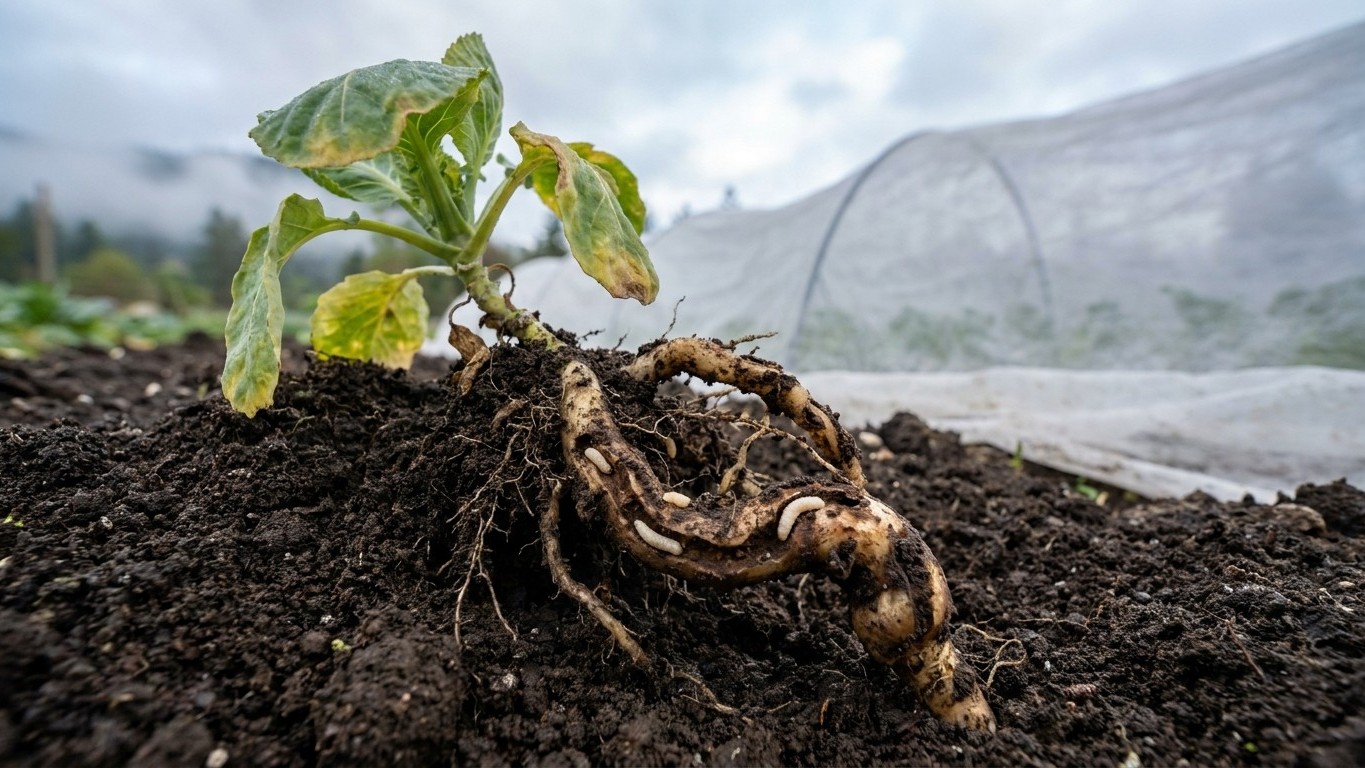

Plant sweet potato slips in North Dakota after the last spring frost is behind you and the soil has warmed: late May at the earliest, and early June for most gardens outside town. This is a tropical crop asked to finish inside a short northern season, so the planting date matters more here than in most states. Go too early and you lose slips. Go too late and you lose roots.
The short answer for North Dakota
Transplant slips once the May 4 to May 15 window has closed, and in many gardens a week or two after that. Those dates come from the NOAA NCEI U.S. Climate Normals for 1991-2020 at the Fargo airport station. They are built from freeze probabilities: the 30 to 70 percent band for a 32°F freeze. Inside that stretch, one more freeze is still a real possibility, roughly a coin flip. They do not mark a day after which frost is impossible. The first fall freeze falls between September 25 and October 5 by the same measure.
Reading the dates for a garden that is not at the airport
These are reference-city figures, not a state-wide guarantee. Suburban and rural gardens typically see the last spring frost later and the first fall frost earlier than an airport station does, often by one to two weeks, and by more at elevation. Shift the spring date to roughly May 22 to May 29 for the later end of that range. Shift the fall date to mid-September in a cold spot.
Run the arithmetic and the squeeze shows. From May 15 to September 25 at the airport is about 19 weeks. A garden that gets the full two-week penalty at both ends, planting around May 29 and facing frost around September 11, has about 15 weeks. That is the number to hold against any variety’s days to maturity. The overview of Growing Sweet Potatoes in North Dakota covers the full season. This page sticks to the calendar.
Why the date is only half the answer
Slips set into cold ground do not die dramatically. They sit there, leaves purpling or yellowing, and the weeks they lose are weeks the crop cannot spare. Waiting until the freeze window has closed is the minimum. Soil that feels genuinely warm is the real signal, and in a cool, windy May that can lag the calendar by days. If the date is reached but nights are still raw, hold the slips in a bright, sheltered spot and wait.
What will not work here
Planting on the first warm weekend in early May is the classic failure. A stretch of 70°F afternoons feels like permission, but Fargo’s own normals say a 32°F freeze is still a live possibility until at least May 15, and later in the country. One cold night can kill a bed of exposed slips. Even without frost, cold soil stalls them.
Slow, long-season sweet potatoes fail for the same reason. Sweet potato varieties are sold with days-to-maturity figures, and a variety that needs most of a Georgia summer will not finish in a 15 to 19 week window. The Best Sweet Potatoes to Grow in North Dakota sorts the fast types from the slow ones. Take the days-to-maturity number on the tag seriously, and subtract a couple of weeks of slow establishment before you trust it.
Banking on heat that does not come
At the Fargo reference station, the average year reaches 90°F or more on only 11.7 days. That is a measure of summer heat load, and for tomatoes or lettuce it means gentle weather. For sweet potatoes it means a shortage. A crop that thrives in sustained warmth gets little of it here, which is why growers in cool northern places lean on black plastic mulch or low tunnels to warm the soil. A cool, cloudy summer will give you vines but skinny roots, and nothing on a calendar fixes that.
The water side is more nuanced. The same station averages about 10.0 inches of rain over June, July and August (23.9 inches for the year): 4.29 in June, 3.07 in July and 2.6 in August. Rain tapers off just as the roots are bulking up. A fixed weekly watering schedule ignores that, and so does assuming rain will cover it. Soil matters too. An inch on heavy clay stays for days and can leave a sweet potato bed soggy, while the same inch on sandy ground drains within the day. Summer thunderstorms also tend to run off hard soil rather than soak in. These are normals, not a forecast, and a cheap rain gauge on your own plot settles what your garden actually gets.
Last, the October dig. Waiting for the first freeze to tell you it is time is a gamble. With the first fall freeze as early as September 25 at the airport, and earlier in cold pockets, plan to be digging by then. Check the forecast through mid-September.
What changes across North Dakota
North Dakota is not one garden. The USDA Plant Hardiness Zone Map (2023 edition, based on 1991-2020 normals) places the state in zones 3a to 4b. That spread means there is no single answer for the whole state. The zone system rests on one variable, the average annual extreme minimum temperature. That is a useful sign of how cold a place gets, but it says nothing direct about how warm the summer runs, and warmth is what sweet potatoes want.
Still, the spread is a reliable hint at direction. Colder zones mean later springs and earlier falls, so a gardener in the northern part of the state, or on higher ground, should expect to shift every date on this page later in spring and earlier in fall. Practically, that means choosing the quickest varieties, using plastic to preheat the bed, and setting slips out in the later part of the window rather than the front of it. Even within a single county, a low spot where cold air pools can be a week or more behind a south-facing slope.
No page can tell you which zone your garden sits in. Look up your own location on the official USDA Plant Hardiness Zone Map and check what zone it shows for your ZIP code. Then treat the Fargo dates here as the reference point and move them toward your zone: later for colder, a bit earlier for milder. A zone is a rough guide, and your own frost history is better.
Where to check this for your own county
The best source for your own place is NDSU Extension, North Dakota’s land-grant extension service. It has county offices staffed by people who watch local growing conditions year after year. Two things are worth looking for. The first is a local planting calendar or frost-date information for your county, ideally for warm-season vegetables. The second is any variety trial results for sweet potatoes in North Dakota or nearby, which show what actually produced under local conditions rather than what a catalog claims.
If the website does not have a sweet potato page, call or visit the county office and ask. Staff can tell you when gardeners near you typically get their last frost, whether anyone has trialed sweet potatoes in your area, and what the soil is like. That last point matters because rain and drainage change how the figures on this page play out.
A county recommendation beats a state one, and this page is the state one. It rests on a single airport station and a range of zones. Extension knowledge from your own county will always be more precise than a general planting window.
Checking this against your own garden
Your own observations outrank every date above. Three are worth watching, and none needs any equipment beyond your hands and eyes.
- Soil warmth by feel. Push a bare hand a few inches into the bed in mid-morning. If it feels cool or clammy, the soil is not ready, whatever the calendar says. A bed that feels warm earlier than a neighbor’s tells you that you have a sheltered, sunny microclimate.
- The first male flowers on squash or cucumbers. If you grow these, the first male blooms signal that heat has built up. When they appear early compared with other years, your garden is running warm. When they appear late, expect to lag behind this page’s dates.
- First true leaves on transplants. New leaves on your slips a week or two after planting show that roots have taken hold. If growth stalls, the soil is probably too cool. That is a sign to add plastic next year or plant later.
Write the dates down each year: when you set slips out, when the first frost struck, and when you dug. After two or three seasons, that notebook will tell you more than any station normal.
Common questions
Can I plant slips in early May if the forecast looks clear?
It is a gamble. The Fargo reference window for the last 32°F freeze runs May 4 to May 15, and gardens outside town often see it later. A clear 10-day forecast does not rule out a late cold snap, and cold soil stalls slips anyway.
Is there a date that is too late to plant?
This page has no verified cutoff date. The arithmetic is simple, though: every week of delay comes out of a margin that is only about 15 to 19 weeks wide. Compare your variety’s days to maturity against the weeks left before your expected first fall frost.
Do I need to water every week?
Not by a fixed schedule. The reference station averages about 10.0 inches of rain from June through August, with August the driest month at 2.6 inches. How much that helps depends on your soil, and a rain gauge on your plot tells you more than a rule.
When should I dig before fall frost?
Plan to be done by the early part of the September 25 to October 5 reference window, and earlier in a cold or elevated garden, where the first frost can come one to two weeks sooner. Check your forecast through mid-September rather than waiting.