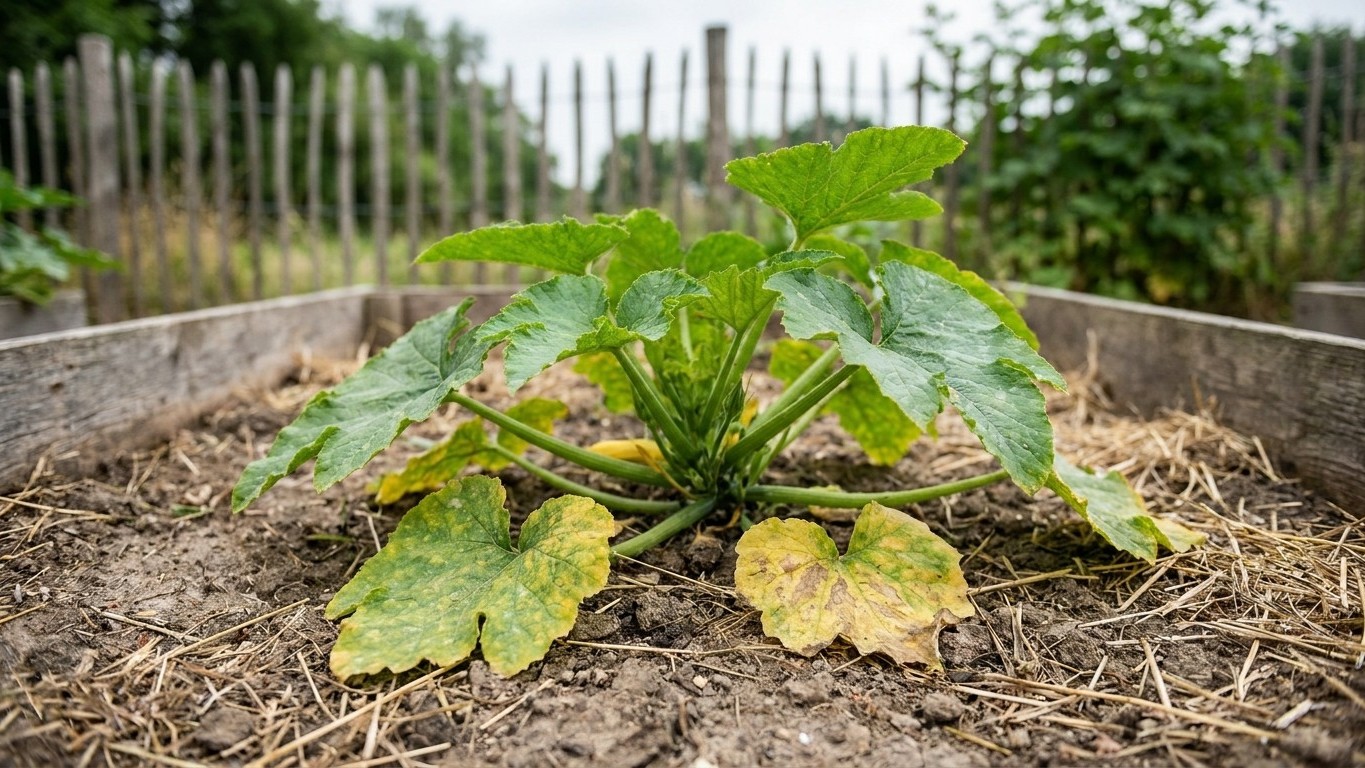

North Dakota gardeners get a narrow window for winter squash: wait until the last spring frost risk has passed at your location, then direct-seed or transplant once the soil has warmed. At the Fargo reference station, that frost risk clears sometime between May 4 and May 15, and that date is only a 30 to 70 percent probability band, not a guarantee.
The short answer for North Dakota
Winter squash is frost-tender from the moment it germinates, which makes the spring frost date the single most important number for planting it. At the Fargo airport weather station, the National Weather Service’s 1991-2020 climate normals put the last 32F freeze somewhere between May 4 and May 15 in a typical year. That range is a probability band, not a promise: it means a freeze has roughly a 30 to 70 percent chance of occurring on any given day inside that window, tapering off as the calendar moves toward mid-May. Planting squash seed into cold, wet soil in early May does not just risk frost damage, it also invites rot, since squash seed wants soil in the mid-60s or warmer to germinate reliably.
The practical move is to treat the tail end of that frost window as your target rather than the earliest edge. The last week of May is a reasonable date to circle for direct-seeding or setting out transplants in most North Dakota gardens, once the worst of the frost probability has passed. Gardeners who started squash indoors under lights three to four weeks earlier can move transplants out around the same time, hardening them off over several days rather than moving them straight from a warm windowsill into open ground.
Working backward from the other end of the season matters just as much. The first fall frost at the same reference station arrives between September 25 and October 5, which sets a hard ceiling on how long any squash vine has to flower, set fruit, and cure before cold shuts things down. That gives Fargo-area gardens a frost-free window that runs, in an average year, from somewhere in the 130s to the low 150s in total days. Winter squash varieties bred for shorter seasons fit inside that window with room to spare; varieties bred for longer, milder growing regions often don’t ripen fully before frost cuts them off. The state does not have a single “safe” variety list published in these figures, so treat the season length itself as the filter, and check your own county’s extension calendar for named cultivars that have been trialed locally.
What will not work here

The math on North Dakota’s growing season rules out a category of winter squash before you even get to variety names. Between a last frost in the May 4-15 range and a first fall frost in the September 25-October 5 range, the frost-free stretch at the Fargo reference station runs as short as 133 days in a tight year. Surrounding rural and suburban gardens typically see the last spring frost later and the first fall frost earlier than an airport station records, sometimes by one to two weeks, which can shave that number down further. A winter squash that needs a long, hot, uninterrupted stretch to mature and cure its rind simply does not have the runway here. Slow-to-mature, large-fruited types that are bred for longer growing regions are the ones most likely to get caught green by an early frost.
Heat load is the second thing that trips people up, though in the opposite direction from what gardeners in warmer states worry about. North Dakota averages only 11.7 days a year above 90F at the reference station, which is a modest heat load compared with much of the country. Squash varieties that depend on sustained high heat to push growth and ripen fruit quickly will lag here, using up days of the short season just getting established rather than filling out fruit.
Watering on autopilot fails for a different reason. Summer rainfall at the reference station averages about 10 inches across June, July, and August, but it is not spread evenly: June brings 4.29 inches, July drops to 3.07, and August, right when squash fruit is sizing up and vines are under the most stress, falls to just 2.6 inches. A gardener who waters on a fixed weekly schedule based on June’s rainfall will be under-watering by August, exactly when the plant needs the most consistent soil moisture to avoid blossom drop and stunted fruit. On sandy soil that gap shows up even faster, since rain moves through sand within a day rather than lingering the way it does in clay.
What changes across North Dakota
North Dakota is not one climate, and the USDA Plant Hardiness Zone Map reflects that directly: the state spans zones 3a to 4b, based on the average annual extreme minimum winter temperature recorded from 1991-2020. That’s a wide spread for one state, wide enough that a garden at the cold end of the range can see winter extremes many degrees colder than a garden at the warm end, which in turn shifts spring soil-warming and the practical start of the squash-growing season.
Because hardiness zone is built on winter extreme cold and not on spring warming or frost timing, it doesn’t map perfectly onto planting dates, but it’s a useful proxy for how much the state varies internally. Gardens sitting in the colder zone bands should expect the frost-free season described above to run shorter than the Fargo reference figures, not longer, and should lean toward the more conservative end of any planting window rather than the earlier one. Gardens in the milder zone bands have a bit more margin, but not enough to justify planting weeks ahead of the frost data.
An individual property’s zone band depends on exact location, and North Dakota’s range covers real ground between 3a and 4b. The USDA Plant Hardiness Zone Map is the tool built to answer that question at the address level, and it’s worth checking before locking in a planting date, especially for anyone gardening near a river valley, a wooded lot, or higher ground where cold air behaves differently than it does at an open airport weather station.
Where to check this for your own county
The state’s land-grant extension service, North Dakota State University Extension, publishes county-level guidance built on local trial data rather than one statewide average.
Two things are worth pulling from that resource before finalizing a planting date. First, look for the local vegetable planting calendar for your specific county, since frost timing across a state that spans zones 3a to 4b can differ from one county office’s recommendation to the next, sometimes by a week or more compared to the Fargo-based figures used here. Second, look for winter squash varieties that NDSU or a county office has actually trialed in North Dakota conditions, since a variety that performs well in a seed catalog’s regional test may still fall short of maturing before your local first fall frost.
A county-level recommendation will always outrank a state-level one, which is useful for understanding the general pattern across North Dakota but not a substitute for what your own county extension agent has watched happen in local gardens over multiple seasons. If your county’s calendar and the regional dates disagree, trust the county figure, since it accounts for local terrain and microclimate in a way that a single airport station cannot.
Checking this against your own garden
Every date here is built from averages, and your own garden will tell you something more current than any climate normal can. Soil temperature is the first and most reliable signal: press a bare hand into the top few inches of planting soil, and if it feels cool rather than mildly warm to the touch, squash seed is likely to sit and rot rather than germinate, regardless of what the calendar says.
The second signal comes from the plant itself, once it’s up. Winter squash produces male flowers before female ones, often by a week or two, and that first flush of male blooms is a sign the plant has moved from establishing roots to reproductive growth. If those first flowers show up unusually early relative to when you planted, it may mean your particular spot runs warmer than the general area, a detail worth noting for next year’s planting date.
Third, watch how fast true leaves appear after the first seed leaves unfold. Slow, stalled growth in the first couple of weeks, even with warm-enough air temperatures, usually points to soil that’s colder than it feels on the surface, often because of shade, heavy clay, or a low spot that holds cold air. The first true leaf is the marker worth tracking season to season, since a garden that consistently produces it early or late relative to the regional dates cited here is telling you something about its own microclimate that no weather station average can capture.
If you follow the almanac, here is when to plant winter squash by the moon. It is a tradition, not a proven method.