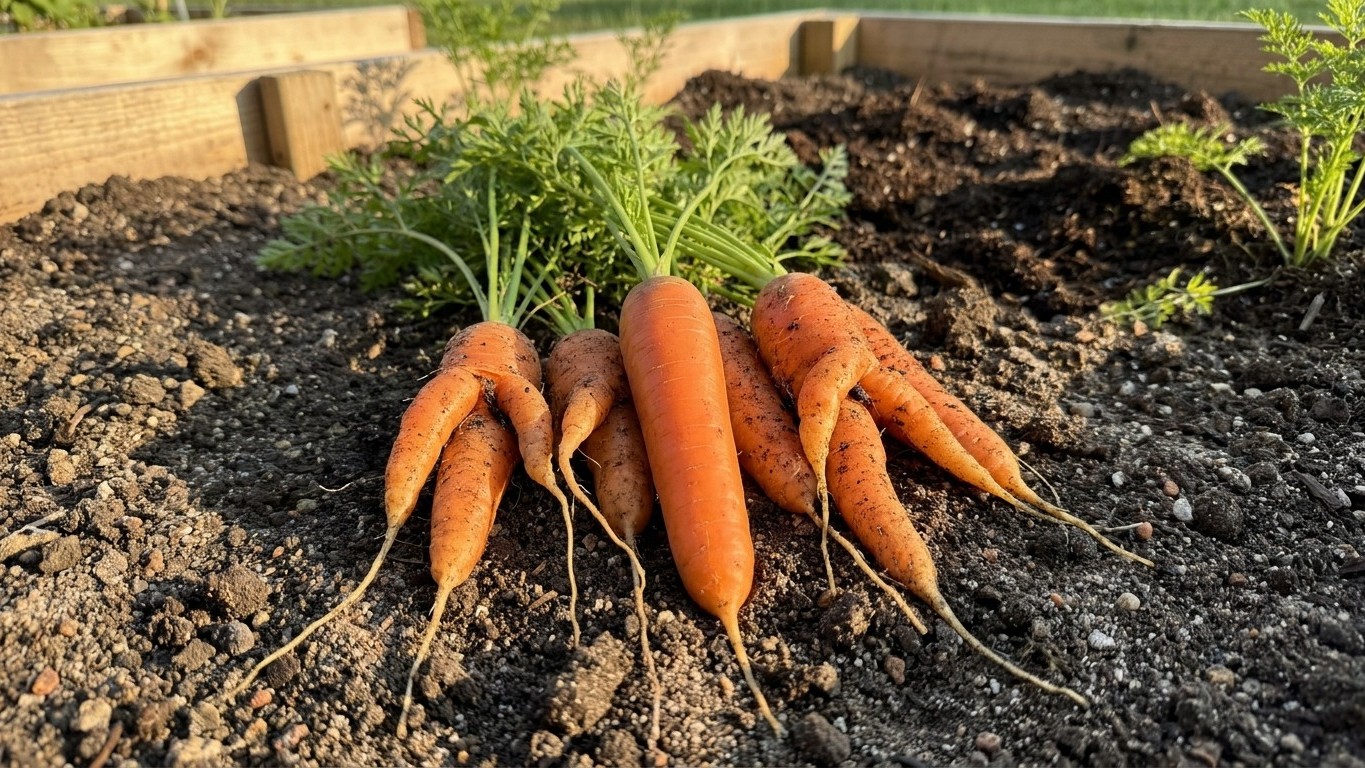

Count 70 to 100 days from the day the seed went into the ground, then pull a test carrot and judge by the root rather than the calendar. Clemson Extension puts harvest at about 65 to 75 days after planting, so start checking at the early end. Storage hinges on one step: cut the tops off first. Bunched carrots hold 10 to 14 days, while trimmed roots kept at 33 °F with high humidity last far longer.
The short answer
What the ground tends to be
The dominant soil in the Northwest Territories is a Cryosol, meaning permafrost sits within the profile and the ground thaws only to a shallow active layer each summer. It covers 99 percent of the mapped surface, with Regosolic the next soil order on the list. The typical surface horizon is loam to silt: 55 percent sand, 6 percent clay and 39 percent silt, with organic matter around 2.4 percent and good drainage. That comes from Agriculture and Agri-Food Canada’s Canadian Soil Information Service, which maps soil components rather than naming one official state-style series. No median pH is published for the mapped surface, so any pH you read online for the territory is a guess.
Will a carrot fork in that? Clay is the usual villain, and at 6 percent there’s very little of it. Utah State University Extension says carrots want deep, sandy, well-drained soil rich in organic matter, and that heavy or rocky ground makes the root fork. The typical NWT profile ticks the sandy and well-drained boxes. Forking is a lesser worry here than shallow thaw, stones and compacted spots. Where your ground is heavier or stony, plenty of compost and double digging is the fix, or a raised bed filled with loose mix. A different seed won’t solve it. The Will Carrots Fork in Northwest Territories Soil? page goes deeper on that.
One caution matters here. A territory spans hundreds of soils, and the survey covers the agricultural regions, so the far north is not represented. River bottoms, muskeg and any lot a builder has scraped or filled can look nothing like this median. Treat it as a starting point, not a diagnosis. The next section shows how to settle it in your own garden.
When to pull
Carrots are sown in place, so there is no transplant date to count from. The 70 to 100 days start at seeding. A cool spring that stalls germination pushes everything later, so keep your own sowing date written down. Around the early end of the window, ease one carrot out and look at it. If the shoulder is full and the color is deep, you can start pulling. If it’s pencil-thin, leave the rest.
How to keep them
Clemson Extension’s advice is to store carrots at 33 °F and high humidity to prevent wilting, and that bunched carrots (tops on) keep about 10 to 14 days. That 33 °F is just above freezing, not a cellar temperature. A carrot held at 50 °F will sprout and soften in a fraction of the time. Cut the tops off first, because the leaves keep drawing moisture out of the root. That is the whole reason bunched carrots last days and trimmed ones last months.
The test that settles it in your own garden
The state profile is an average of other people’s dirt. Your bed is what counts, and you can read it in an afternoon with a spade and a hose. Do this before sowing, or at least before you decide whether to build up a raised bed.
- Dig a test hole where the carrots will go, as deep as your spade allows and a bit beyond with a trowel. Carrots need loose ground for their full length, so you are checking how far down the soil stays workable. In permafrost country, note where the spade hits frozen ground or stops against hard layers.
- Look at the walls of the hole. Count the stones, and look for a color change, a hard pan or a smeared, shiny layer. Stones and hard layers bend a root sideways. A clean, crumbly wall all the way down is what you want.
- Squeeze a handful of moist (not wet) soil. Sandy soil falls apart as soon as you open your hand. Loam holds a loose shape and crumbles when poked. Clay stays in a slick, sticky lump and takes a thumbprint like modeling clay. Roll a bit between your fingers and see whether it makes a long ribbon. The longer the ribbon, the more clay you’re dealing with.
- Soak the hole and watch. Fill it with water, let it drain, then fill it again. Well-drained ground swallows the second filling quickly. If water is still standing hours later, you have a drainage problem. Over frozen ground, that standing water can be the thaw line holding it up.
- Check the surface after rain or watering. A crust that bakes hard will block tiny seedlings. Work compost into the top layer if yours does.
- Send a sample for testing if you want a number. Since no median pH is published for the territory, a lab test is the only way to get yours.
Read the results together. Deep, stone-free, crumbly ground that drains fast needs only some compost. Stony, tight or shallow ground calls for double digging or a raised bed. If you hit frozen ground close to the surface, a raised bed also gives the roots room that the native soil can’t. The main Growing Carrots in Northwest Territories guide covers the rest of the season.
What goes wrong here
The typical NWT profile is forgiving in some ways and unforgiving in others. Sandy, quick-draining ground and a short, intense growing season produce a particular set of failures. Here are the ones to watch for.
- Forked or stubby roots. Stones, compacted spots and shallow thaw are the cause, not clay in most gardens, since the typical profile holds only 6 percent. Utah State University Extension ties forking to heavy or rocky soil. Loosen the bed deeply with a digging fork or double dig it, pull out the stones, and add plenty of compost. If the ground below stays frozen or hard, build a raised bed deep enough for the full root.
- Patchy germination in a hot spell. Carrot seed is slow and small, and a crust that dries out in warm, bright weather leaves gaps in the row. Water the seedbed lightly and often until the seedlings are up, and lay a board or strip of burlap over the row to hold moisture (lift it as soon as you see green). Resow gaps rather than waiting. The days to harvest count from the day of seeding, so a late patch simply comes later.
- Splitting from uneven water. A well-drained loam dries out fast, then a heavy rain or a hard soak makes the root swell and crack. Keep moisture even instead of alternating drought and flood. A layer of mulch over the soil slows the swings, and compost mixed into the bed helps it hold a steadier supply.
- Chewed or tunneled roots. Damage from insects opens the door to rot, and damaged carrots never store well. Eat those first. See What Eats Carrot in Northwest Territories, and When for what to look for and when.
- Limp roots in storage. The tops are the cause. Left on, they keep pulling moisture from the root, so the carrot wilts. Twist or cut the leaves off, then store the roots cold and humid. Clemson Extension’s figure is 33 °F with high humidity, and bunched carrots with tops on keep only 10 to 14 days.
- Sprouting and softening in storage. Warm storage does this. A root kept at 50 °F can sprout and go soft in a fraction of the time it would last at 33 °F. A basement or a root cellar that feels cool to you may be much too warm for carrots, so check with a thermometer, and keep them clear of freezing too.
Most of these failures trace back to timing and moisture rather than any mystery about the soil. Keep notes on the sowing date, the first pull and what the weather did in between, and next year’s count gets much easier.
Common questions
How do I know a carrot is ready to pull?
Count from seeding, since carrots are sown in place, and start testing early in the 70 to 100 day window. Clemson Extension’s harvest figure is about 65 to 75 days after planting. Pull one carrot, check that the shoulder has filled out and the color is deep, and pull more if it looks right. If it’s thin, wait a week and test another.
Will carrots fork in Northwest Territories soil?
The typical profile is loam to silt with 55 percent sand, 6 percent clay and 39 percent silt, and it drains well, so it leans in carrots’ favor. Rocky, compacted or shallow ground still forks roots, and your garden may not match the median. Dig a test hole, then add compost and double dig, or build a raised bed if the ground is heavy.
Why cut the tops before storing carrots?
The leaves keep drawing moisture out of the root, so the carrot goes limp. That’s why bunched carrots keep about 10 to 14 days and trimmed ones keep months. Cut the tops off first, then store the roots at 33 °F with high humidity.
Is a cellar cold enough to store carrots?
Only if it actually sits near 33 °F, which is just above freezing. A cellar at 50 °F will cost you carrots to sprouting and softening in a fraction of the time. Put a thermometer in the spot for a few days before you commit a harvest to it.