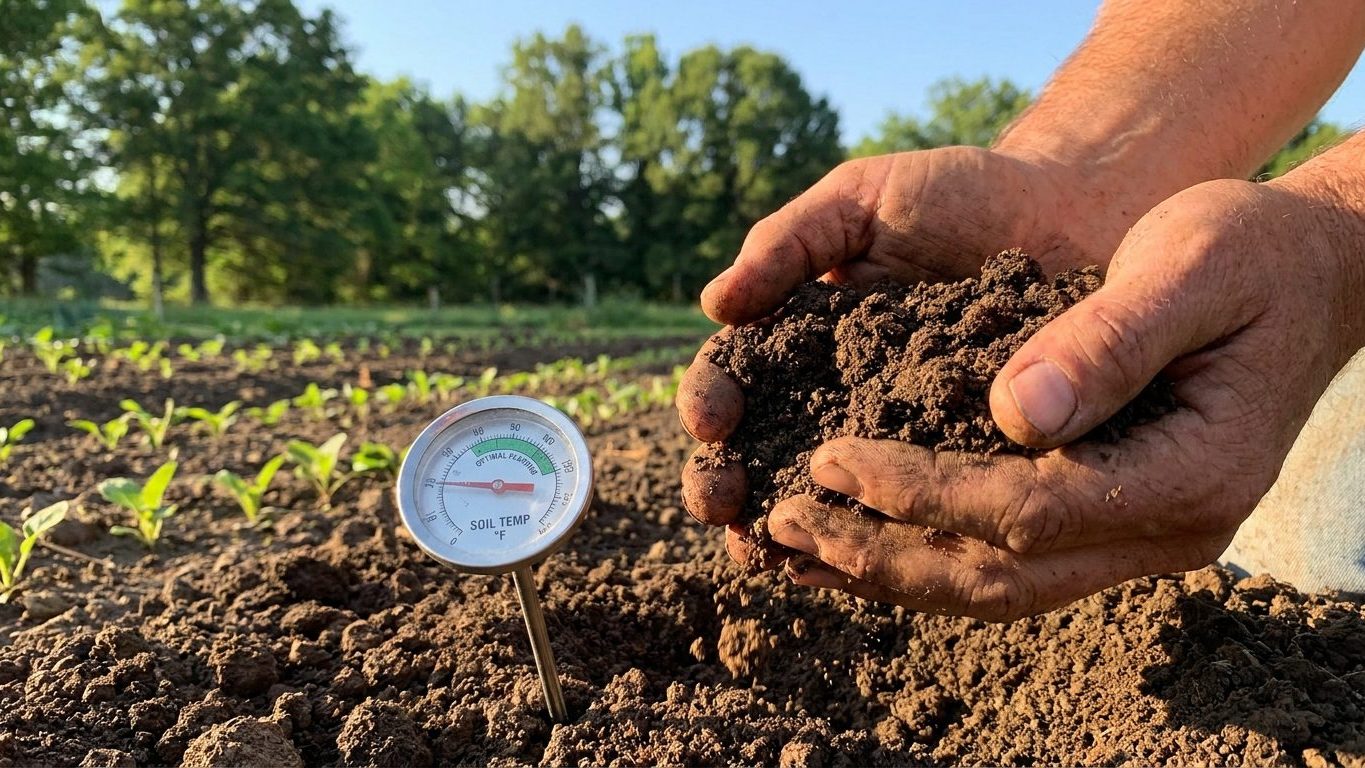

Northwest Territories gardeners get one real shot at winter squash each year, not two. Soil at Yellowknife typically stays too cold to work with until well into June, and the first fall frost lands around September 18 on average, leaving a season too short to waste on a false start. Getting the timing, the type, and the transplant right matters more here than almost anywhere else on this site.
When the soil is warm enough in Northwest Territories
The frost date most people quote for Yellowknife is May 25, the average last spring frost recorded at the Yellowknife A station under Environment and Climate Change Canada’s 1981-2010 climate normals. That number gets treated like a green light, but it’s a mean: in roughly half the years on record, frost has arrived after that date, not before. Treat it as the midpoint of a window, not a promise the ground is safe.
Winter squash doesn’t actually care about frost once it’s past. It cares about soil temperature. Squash seed germinates poorly in cold, wet ground, and transplants set out before the soil has warmed through, not just at the surface, tend to sulk for weeks rather than grow. In most of Northwest Territories that consistent warmth doesn’t arrive with the last frost date. It follows it, often by two to three weeks, once the sun has had time to push heat down through the first several inches of soil.
That gap matters more here than in most territories covered on this site. With a frost-free season already short, as the next section spells out, waiting for truly warm soil before direct-seeding squash outdoors can eat into a window with little slack to spare. Two practices shorten the wait without pretending it away. Laying dark mulch over the bed for a week or two before planting pulls extra heat into the ground. Starting seed indoors, in individual pots that let the roots go undisturbed at transplant, buys three to four weeks of growth the outdoor calendar wouldn’t otherwise allow. Squash resents root disturbance, so this only pays off if the transplant goes into the garden with minimal handling and a spell of settled, warm weather to follow.
The territory’s plant hardiness rating points the same direction. Yellowknife sits in zone 1b under the Canadian system, built from seven climate variables rather than the single minimum-temperature reading the USDA scale uses, and the two don’t convert into each other. What that zone number says plainly is that winters run long and cold, and the frost-free stretch that follows them is correspondingly narrow.
None of this is uniform across the territory either. The Yellowknife A reading describes one weather station, not the whole of Northwest Territories, and communities farther north or at higher elevation typically see a later last frost and an earlier first one, squeezing the window further still. Anyone gardening outside Yellowknife itself should treat May 25 as an optimistic starting point, and the Northwest Territories agriculture services page is the place to check what growers in that specific district have actually found to work.
How long the season lasts here
Subtract Yellowknife A’s last spring frost, May 25, from its first fall frost, September 18, and the frost-free season averages 116 days. That’s the full run, in a typical year, between one killing frost and the next, and it’s the number every planting decision in this territory has to fit inside.
For fast crops like lettuce or radish, a 116-day season is generous enough to fit two or three sowings back to back. Winter squash isn’t a fast crop. It’s one of the longer-season vegetables a home garden grows, and even the earliest types need most of that window just to flower, set fruit, and let the fruit cure hard-shelled on the vine before frost cuts the vine down. There’s no realistic second sowing of Winter Squash in Northwest Territories. The first planting is the only planting, and if it fails or gets delayed, there generally isn’t time to start again and still bring a mature fruit through to harvest.
That single-shot reality is exactly what tips the balance toward starting seed indoors rather than direct-sowing once the soil finally warms. Direct-seeding is simpler and avoids any root disturbance, and in a territory with a longer season it’s often the better default. Here, the math runs the other way: three to four weeks of head start from a well-hardened transplant can be the difference between a squash that finishes curing on the vine and one still soft and green when frost hits it. The trade-off is real, since transplanted squash needs careful handling to avoid setting the roots back, but in a 116-day season that risk is usually worth taking.
Gardeners growing anything besides squash in the same beds, lettuce, peas, quick greens, have more room to maneuver, and staggering those plantings through the season is a different conversation. This site’s succession sowing guide covers how to time multiple sowings where the season allows it.
Heat and water in Northwest Territories
Yellowknife averages 0.0 days a year above 90°F. That figure isn’t rounded down for effect; it’s the actual normal from the 1981-2010 climate record, and it means heat stress is essentially not something a squash grower here has to plan for. No shade cloth, no midday wilting to worry about, no scorched fruit skin from intense sun. That puts Northwest Territories at the opposite end of the spectrum from the hot, dry territories on this site where irrigation exists mainly to carry fruit through heat-driven water demand.
The flip side of a summer with no real heat load is that ripening happens slowly, and slow ripening in a 116-day season is a genuine risk, not a minor inconvenience. Winter squash needs warmth to push sugars into the fruit and to harden the rind enough for storage. Without hot days accelerating that process, the fruit set earliest in the season carries the best odds of finishing properly before the first fall frost arrives.
Rainfall follows a similarly modest pattern. Summer totals about 4.3 inches across June, July, and August, with June the driest month at 1.14 inches, July at 1.61, and August at 1.55. That’s not a heavy rainfall region, but it isn’t a drought-prone one either, and squash generally does fine with supplemental watering to fill the gaps in a dry stretch. The bigger concern in a cool, damp climate isn’t thirst, it’s disease. Powdery mildew and other fungal problems build up fastest where foliage stays wet and airflow is poor, and a summer with modest but persistent rain, spread over cool days, creates exactly those conditions. Spacing plants generously, watering at the soil rather than overhead, and removing any leaf showing early mildew are the practices that matter more here than any irrigation schedule.
Whatever number a rain gauge shows on paper, it never tells the whole story on a given plot. Sandy soil lets that same rain drain through in a day; clay holds it for a week. A rain gauge set up in the actual garden, tracked over a season, settles the question a normals table can’t.
Which winter squash suit Northwest Territories
Given a 116-day frost-free season, cool summer temperatures, and modest but steady rainfall, the type of winter squash chosen matters more than any single technique applied to it. Three broad groups are worth knowing, in order of how much time they typically need to finish. Acorn and delicata types generally mature fastest among winter squash, making them the group best matched to a short window. Buttercup and kabocha types sit in the middle. Large storage types, hubbard and banana squash among them, run longest and are the hardest fit for a territory this tight on season length.
- Earliest-maturing types: acorn and delicata groups, generally the safest bet where the frost-free window is short
- Mid-season types: buttercup and kabocha groups, workable with an early transplant start
- Longest-season types: hubbard and banana groups, riskiest without a long, warm summer to finish them
Disease resistance matters here nearly as much as speed. In a cool, occasionally damp summer, a type bred or selected for resistance to powdery mildew has a real edge, since it buys extra weeks of healthy leaf area to keep filling the fruit even after mildew pressure builds elsewhere in the bed. Airflow around the base of the plant, from generous spacing rather than crowding vines together, does the same job mechanically.
This page won’t name a specific variety, and that’s deliberate rather than an oversight. Seed catalogs list dozens of named varieties within each of these types, and which ones actually perform well in a 116-day Yellowknife-area season is a question that’s been tested locally, not guessed at from a national seed catalog description. The Northwest Territories agriculture services office is the source for varieties actually trialled in this territory’s climate, and that local trial record is worth more than any generic recommendation this page could offer.