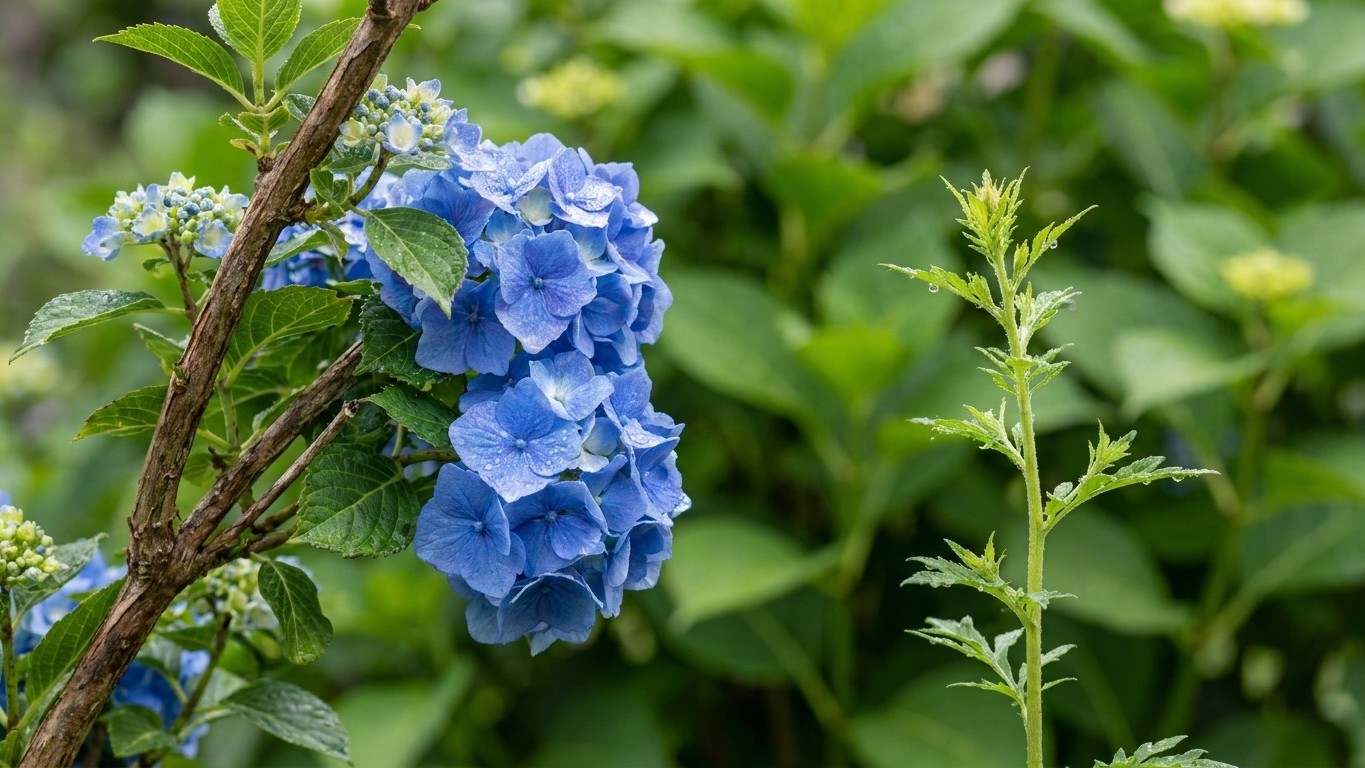

Hydrangeas that bloom on old wood (bigleaf, mountain and oakleaf) get pruned in summer, right after the flowers fade. Those that bloom on new wood (panicle and smooth) get pruned in late winter, before growth starts. Cutting at the wrong season can remove a whole year of flowers. The rest comes down to knowing which type is in your yard and reading what the stems tell you.
What this comes down to in Oklahoma

At the Oklahoma City reference station, the last spring frost falls between March 28 and April 10, and that window sets the calendar for every cut you make. New-wood hydrangeas are pruned in late winter, about four to six weeks ahead of it, and old-wood hydrangeas are pruned in summer, well after it. Those frost dates come from NOAA’s U.S. Climate Normals, and they describe the airport, not every yard in the state.
The reason for two calendars is where the flower buds sit. Bigleaf, mountain and oakleaf hydrangeas form next year’s buds on this year’s stems, starting in late summer. Those buds ride out winter on the stem tips and open in late spring or early summer. Cut those stems in fall, winter or early spring and you remove the buds with them. Panicle and smooth hydrangeas do the opposite. They grow new stems each spring and flower on the tips of that fresh growth, so a hard cut in late winter only changes how big and how many the stems get.
The first fall frost at the same station arrives between October 29 and November 8. That gives old-wood types the stretch from late summer to late fall to finish setting buds, and it is why pruning them late in the season does damage. Whatever you cut in September removes buds that are already formed, and the soft regrowth it provokes can be nipped by the first freeze.
Here is how the main types compare:
| Type | Blooms on | Prune when |
|---|---|---|
| Bigleaf (mophead and lacecap) | Old wood | Right after flowers fade, in summer |
| Reblooming bigleaf (Endless Summer series) | Old and new wood | Lightly after the first flush; remove winter-killed tips in spring |
| Mountain | Old wood | Right after flowers fade |
| Oakleaf | Old wood | After bloom, and only as needed |
| Panicle (Limelight) | New wood | Late winter, before buds swell |
| Smooth (Annabelle) | New wood | Late winter, before buds swell |
Rebloomers are the forgiving exception. Because they flower on both old and new stems, a badly timed cut costs them less than it costs a traditional bigleaf, though the earliest flush still comes from old wood.
Working it out for your own garden
A date copied from a neighbor works until the year the weather shifts. The method below holds up through a move to another county or a freak cold year, and it takes three steps.
How do you tell which type of hydrangea you have?
Check the plant tag first, then the flower and leaf shape. Round or flat heads on broad, toothed leaves point to bigleaf. Cone-shaped blooms on a tall shrub point to panicle. Big white snowballs that flop after rain point to smooth. Leaves shaped like oak leaves are oakleaf, with no ambiguity. If there is no tag and no clue, hold off pruning for one season except for dead wood. Fat buds sitting on bare stems in spring mean old wood. Flowers that form only on shoots that grew that spring mean new wood.
How do you count back from the frost window?
For new-wood shrubs, start with the last spring frost window, March 28 to April 10, and subtract four to six weeks. That lands the pruning window between mid-February and mid-March. Take the example of a panicle hydrangea like Limelight, which blooms on new wood. It is hardy across all of Oklahoma’s 6b to 8a range on the current USDA Plant Hardiness Zone Map, and a late-winter cut in that window leaves it months to grow before bloom. Stems cut now come back strong, and an early frost after the cut does little harm because the buds have not yet swollen.
For old-wood shrubs, count back from the first fall frost window, October 29 to November 8. Rural and suburban yards can frost earlier than the airport, so lean toward the early end. A bigleaf that finishes blooming in late June or July gets pruned right after the flowers fade, well before buds start forming in late summer. One that blooms late has less room, and it is better left unpruned than cut at the last minute.
Which stems are alive after a hard winter?
A traditional bigleaf is the marginal case. Catalogs list many as hardy to zone 5 or 6, but in the colder parts of Oklahoma a sharp winter can kill the tip buds even when the stems survive, leaving a healthy green plant with no flowers. Do not prune the dead-looking stems in March. Wait until the shrub leafs out, which can run well past the frost window. Then scratch the bark with a thumbnail. Green underneath means alive. Brown and dry, with a stem that snaps instead of bending, means dead. Cut dead stems back to the first live bud pair or to the ground.
What changes across the state
A single frost window cannot describe a state that runs from humid, wooded hills in the southeast to high, dry plains in the Panhandle. Oklahoma’s 6b to 8a hardiness range reflects that spread. The USDA zone is built on one variable, the average annual extreme minimum temperature, so it says how cold the worst night usually gets and nothing about how long spring takes to settle.
Moving north and west, winters get colder and spring frosts linger. Elevation climbs toward the Panhandle, the air dries out, and temperature swings widen. In those areas the last spring frost comes later than the Oklahoma City window, and the first fall frost comes sooner. A gardener there should shift the new-wood pruning window later and the old-wood cutoff earlier, and should expect winter bud damage on old-wood bigleafs more often.
Moving south and east, winters ease, rainfall rises and hydrangeas generally grow bigger and more vigorously. Frost arrives later in fall and leaves earlier in spring. The pruning windows move the other way, with new-wood cuts a little sooner and old-wood cutoffs a little later. Where late freezes are rarer, bigleaf flower buds survive more years.
Edges matter inside any county too. A yard in a low spot collects cold air on clear nights, and a bed against a south-facing wall stays warmer. Suburban and rural gardens can see the last spring frost later than the airport, and the first fall frost earlier. Add that to your count rather than ignoring it.
The mistakes this state punishes

A costly mistake is spring tidying on an old-wood bigleaf. It happens on the first warm weekend, when last year’s brown stems look dead and the shrub looks messy. Many of those stems are alive and carry the buds. Leave them until the leaves open, then remove only what is truly dead.
The second is pruning new-wood types after a warm spell has already pushed growth. Oklahoma often has a warm stretch in February or March, followed by a freeze. Cut before buds swell, and the plant stays dormant through it. Cut after new shoots have started and you leave soft tips exposed, and a late freeze can burn them back. The shrub recovers, but flowering can arrive later.
Third, shearing in fall. A tidy-up in September or October on a bigleaf or oakleaf removes formed buds, and the new growth it triggers may not harden before the first frost. Fall is for leaving things alone.
Fourth, cutting everything to the ground each year. That works for smooth and panicle hydrangeas, and some gardeners do it deliberately for bigger smooth blooms. It wipes out the flowers on any old-wood type. If a hydrangea has not bloomed in years, a yearly hard cut is the first thing to check.
Last, overpruning oakleaf. It rarely needs more than the removal of dead wood and a few crossing branches after bloom. A heavy cut costs next year’s flowers and the shrub’s natural shape.
Checking this against your county
A state-wide figure is a starting point, and the Oklahoma City window will be early for some yards and late for others. Your county office at Oklahoma State University Extension can tell you the local frost pattern and how recent winters have treated hydrangeas in your area. For the broader picture of site, soil and care, see the state guide to growing hydrangeas in Oklahoma.
Common questions
Can I prune hydrangeas in the fall in Oklahoma?
Only to remove dead or damaged stems, and only after the plant has gone dormant. Old-wood types have already set next year’s buds by then, so a fall cut removes flowers. New-wood types are better left until late winter, since the old stems protect the crown through cold snaps.
When do I cut back an Annabelle or a Limelight?
Both bloom on new wood. Prune in late winter, roughly four to six weeks before the last spring frost window of March 28 to April 10 at the Oklahoma City reference station. That works out to mid-February through mid-March. Cut Annabelle low if you want very large heads, though a taller framework gives sturdier stems that flop less, and trim Limelight to keep the framework.
My bigleaf hydrangea has green leaves and no flowers. Did I prune it wrong?
It could be pruning, but winter bud kill is another common cause. If you cut stems in fall, winter or early spring, you probably removed the buds. If you did not prune, a hard freeze or a late frost after a warm spell may have killed the buds on stems that otherwise survived. Reblooming types will usually flower later on new growth.
How much can I take off at once?
For old-wood types, remove spent flowers and a few of the oldest stems after bloom, and keep the rest. For new-wood types, cutting back a good portion of the height is typical, and a rejuvenation cut is possible every few years. If you are unsure, take less. A hydrangea that is pruned too little looks untidy for a season, while one pruned too much may not bloom.