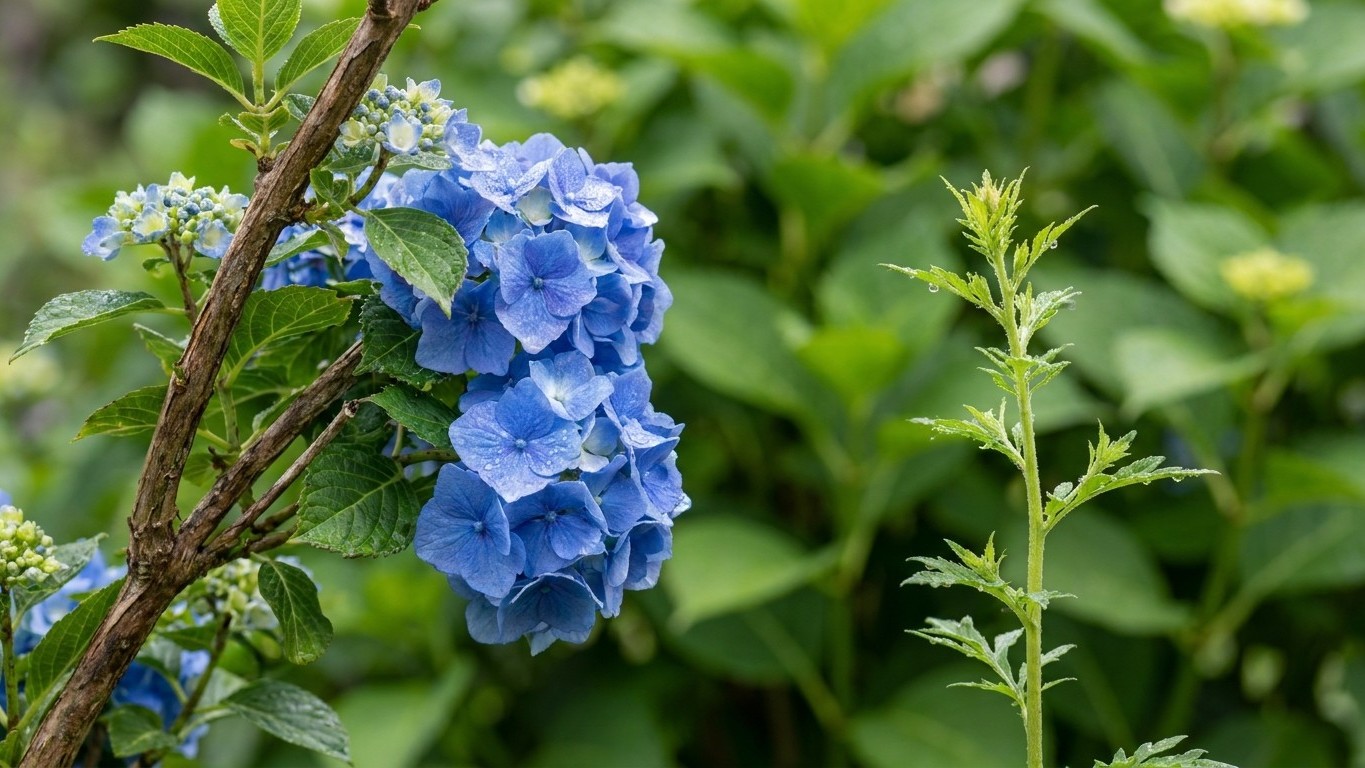

Almost every hydrangea sold for Oklahoma yards survives the winter. The state runs from USDA zone 6a to 8a, and frost timing differs from one region to another. The difference shows up in the flowers. Smooth and panicle hydrangeas bloom on new growth, so a hard freeze costs them little. Bigleaf and oakleaf types set their buds the summer before, and a late freeze can erase a year of blooms on a plant that looks perfectly healthy.
What this comes down to in Oklahoma

At the Oklahoma City reference station, the last spring frost falls between March 28 and April 10, and the first fall frost between October 29 and November 8 (NOAA NCEI U.S. Climate Normals, 32F freeze probabilities). Every hydrangea below fits inside that season, and the ones that bloom on new wood fit with the least risk.
The station has roughly seven months between its last spring frost and its first fall frost. Suburban and rural gardens usually see the last spring frost one to two weeks later and the first fall frost one to two weeks earlier, and more so at elevation. The USDA hardiness zone is built on one variable, the average annual extreme minimum temperature, and in Oklahoma that places gardens anywhere from 6a to 8a. January cold rarely kills an established hydrangea here. The damage comes in spring, when a warm March pushes buds open and a freeze follows.
The seven cultivars below are ordered from the shortest season to the longest. That means from plants that bloom soonest on fresh growth to plants whose flowers depend on buds surviving a long stretch of unsettled weather.
Quick Fire
A panicle hydrangea (Hydrangea paniculata). Its white blooms open early in summer and age to pink and red, all on new wood. It finishes its show well ahead of any fall frost and shrugs off a late spring freeze.
Annabelle
A smooth hydrangea (Hydrangea arborescens) with big white globes on new wood. Cut it back hard in late winter and it still blooms that year. The stems flop under heavy rain, but freeze damage is rarely a worry.
Incrediball
An Annabelle relative with stiffer stems. The flowers are white and appear on new wood, so the freeze logic matches Annabelle’s. Gardeners who like the look but are tired of staking tend to choose it.
Limelight
A panicle type with lime-green cones that turn white and then pink as fall approaches. It blooms on new wood from midsummer into autumn. It is a sturdy choice for Oklahoma’s wind and heat, and a spring freeze mostly just delays it.
Snow Queen
An oakleaf hydrangea (Hydrangea quercifolia) with white cones that age to pink and red fall leaves. It flowers on old wood, so buds set the previous summer must survive the winter. Those buds are tougher than a bigleaf’s, but a hard freeze after leaf-out can still thin the show.
Endless Summer
The original reblooming bigleaf (Hydrangea macrophylla). Flowers are blue or pink depending on soil acidity, and it blooms on both old and new wood. If a freeze kills the old-wood buds, the new growth still produces flowers, only later in the season.
Nikko Blue
A classic bigleaf with blue flowers in acidic soil, blooming on old wood only. The plant survives winter in Oklahoma, but its buds are exposed to every spring freeze after they swell. In a bad year the shrub leafs out green and never blooms. This is where the line falls.
Working it out for your own garden
The method is the same in any state: take your local frost window, add your yard’s offset, and count the weeks to the cultivar’s catalog bloom time. Then ask whether the flowers form on wood that is exposed to freeze.
How do you check a new-wood hydrangea against the frost window?
Take Limelight. The reference station’s last spring frost runs March 28 to April 10. A suburban or rural yard often runs one to two weeks later, which stretches the range from about April 4 to April 24. Planting a week or two after that puts the shrub in the ground from mid-April to early May. Catalogs list Limelight’s bloom as midsummer, which means July. That is roughly ten to fourteen weeks after planting. The first fall frost at the station comes October 29 to November 8, and a country yard may see it a week or two sooner. Even on the early end, the first frost arrives about three months after the first flowers. The plant blooms with room to spare.
What does a hydrangea look like when it will not bloom?
Now take Nikko Blue. Its catalog bloom is early summer, but the flowers come from buds formed the previous late summer. Planting date hardly matters, because the buds already exist. What matters is whether a freeze reaches them after they swell. In a warm March the buds can open weeks early, and the station’s last spring frost can still come as late as April 10, later in the country. A freeze in that gap leaves a healthy green shrub with no flowers.
The same arithmetic travels. In a state with a short season, even a new-wood cultivar like Limelight could miss its bloom ahead of the fall frost. In Oklahoma, no cultivar in the list misses the fall frost. The line falls at spring bud survival, so that is the number to watch.
What changes across the state
Oklahoma is long, east to west, and the climate shifts with it. The Panhandle and the northwest sit at higher elevation, where winters run colder and spring freezes linger. That end of the state leans toward the zone 6 range. Gardens there do best with Quick Fire, Annabelle, Incrediball and Limelight, and an old-wood bigleaf is a gamble.
The south and southeast lean toward the warm end of the range, up to zone 8a. Freezes end sooner there and fall frost arrives later. Reblooming bigleafs such as Endless Summer perform well in those conditions. The eastern third of the state is also wetter, with more acidic soil, and that helps bigleaf color and vigor. The western half is drier and the soil tends to be alkaline, so bigleaf flowers there lean pink and the shrubs need more water.
The central region around Oklahoma City sits in the middle of the range, and the city’s reference figures apply there best. Even so, a yard just outside the metro on open ground may see frost later than the airport by a week or two. Cities hold heat. A garden beside a south-facing brick wall can run noticeably warmer than a field a mile away, which pushes buds open earlier and raises the freeze risk. A north or east exposure delays growth in spring, which can help old-wood types dodge a late freeze.
The mistakes this state punishes

Oklahoma springs swing wildly. Several errors follow from trusting a warm week.
The first is planting into soil that only looks warm. A week of 75-degree afternoons does not mean the ground has settled. A hard freeze can still arrive before April 10 at the reference station, and later in many yards. Wait until the local last-frost range has passed, then plant a week or two after it.
The second is choosing an old-wood bigleaf for an exposed northwest yard and expecting flowers every year. Pick new-wood or reblooming types there, and treat a bigleaf as a bonus.
The third is pruning at the wrong time. Cutting bigleafs or oakleafs in fall or early spring removes the buds that make the flowers. Smooth and panicle types can be cut back in late winter without harm, which is part of why they suit this state.
The fourth is treating swollen buds as a reason to celebrate. When buds break early, a freeze forecast is the signal to cover the plant overnight with a sheet or frost cloth, then take it off in the morning.
| Type | Blooms on | What a late freeze does |
|---|---|---|
| Smooth and panicle (Annabelle, Limelight) | New wood | Little harm, bloom delayed at most |
| Reblooming bigleaf (Endless Summer) | Old and new wood | Early flowers lost, later flush follows |
| Bigleaf and oakleaf (Nikko Blue, Snow Queen) | Old wood | Buds can die, little or no bloom that year |
Checking this against your county
The dates above come from one airport station in Oklahoma City. Treat them as a starting point, not an instruction for your yard. Your county office of Oklahoma State University Extension can tell you the local frost pattern and what has worked in nearby gardens. For soil, watering and everyday care, the full guide to growing hydrangeas in Oklahoma covers the rest.
Common questions
Will a bigleaf hydrangea come back after an Oklahoma winter?
Usually yes. The plant is hardy to zone 6 or warmer, so the roots and lower stems survive. What may not survive is the flower bud on old wood. In a mild spring it blooms normally. After a late freeze it may only leaf out.
Which hydrangea is the safest choice for the Panhandle?
Panicle and smooth hydrangeas, such as Limelight, Quick Fire, Annabelle and Incrediball. They bloom on new wood, so a late freeze rarely takes the flowers. Choose a spot with some protection from wind.
Do hydrangeas need winter protection here?
Mostly mulch and a freeze-night cover. A few inches of mulch over the roots helps in the colder northwest. For bigleafs, a sheet or frost cloth on nights when buds are open and freezing weather is forecast protects flowers better than a winter wrap does.
How can I tell if my hydrangea survived the winter?
Wait until the local last-frost range has passed and give it time to leaf out. Then scratch a stem lightly with a fingernail. Green tissue underneath means it is alive. Dry brown tissue means that stem is dead and can be cut back to live wood or to the ground.