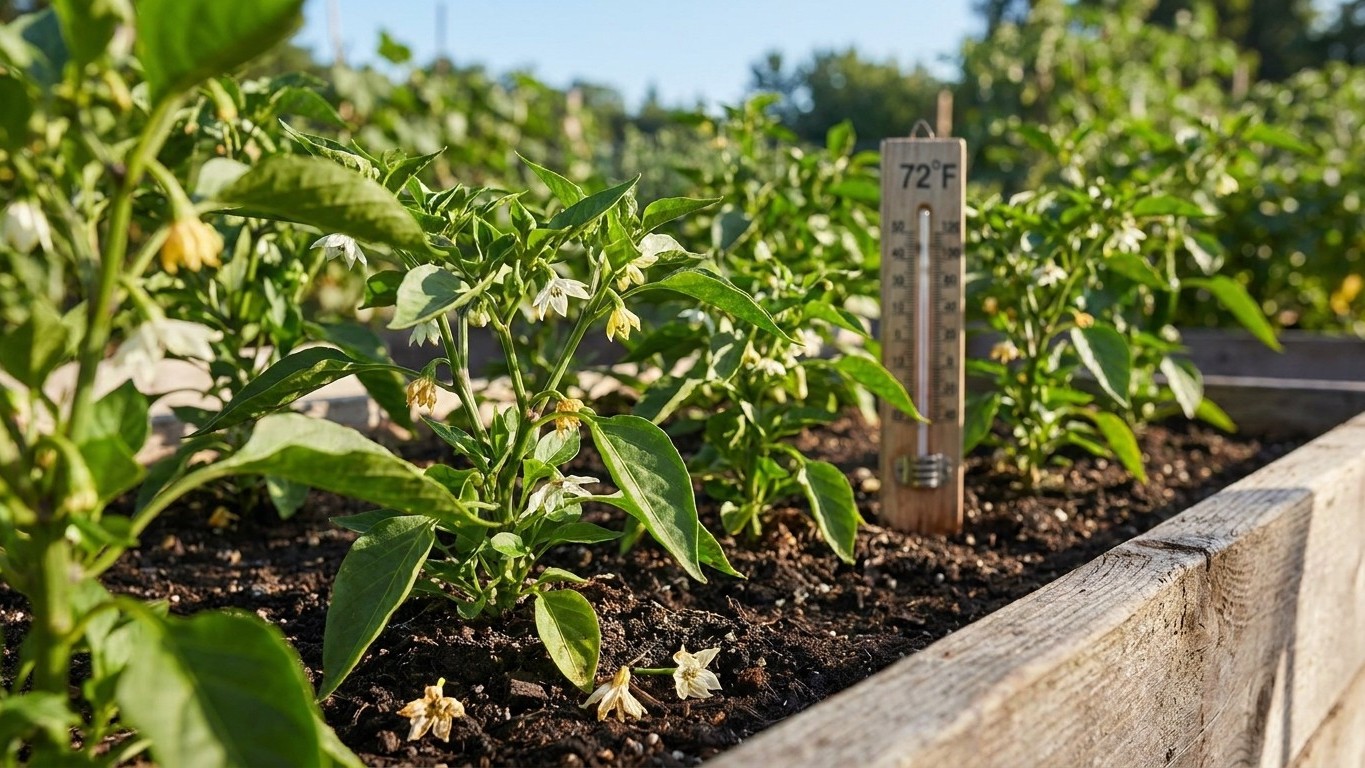

Start pepper seed indoors about 8 to 10 weeks before you plan to transplant, which lines up with mid-to-late January into early February for most of Oklahoma. That timing works backward from the state’s typical last spring frost window and a soil temperature of 60 F. The trickier part isn’t the sowing date. It’s what happens after transplant, when Oklahoma’s heat and unpredictable nights decide whether those peppers actually set fruit.
The short answer
Oklahoma City, used here as the reference station, averages 70.7 days a year at or above 90 F, according to NOAA NCEI Climate Normals for 1991-2020. That’s not a handful of hot afternoons. That’s roughly ten weeks of the growing season where daytime temperatures push into territory that pepper plants treat as a warning sign, not an invitation. Pepper fruit set starts to fail once days consistently top 90 F, according to Utah State University Extension, and with more than two months of days that hot on the calendar in a typical year, gardeners across the state need to plan for a stretch where blossoms drop and no new fruit forms, even on healthy, well-watered plants.
That’s one end of the problem. The other end is cold, and it’s just as real. Pepper fruit set also fails when nights drop below 55 F, per the same Utah State University Extension guidance. Cool nights in spring, especially right after transplant, can stall a plant just as effectively as a July heat wave. Here’s where this site has to be honest about its limits: it tracks days above 90 F for Oklahoma, but it does not carry summer night minimum data for this state. That gap matters more than it sounds.
Latitude doesn’t tell you what your nights actually do. Neither does the coldest month of the year, which measures winter, not the overnight lows of a late spring cold snap or an early June dip after a front comes through. Oklahoma sits in a part of the country where weather systems can swing temperatures 20 or 30 degrees in a day, and a clear, dry night in April or May can drop well below what a pepper plant wants to see, even after the last frost has passed. The only reliable way to know your risk is to watch your own nightly lows once transplants go in the ground, rather than assume a “safe” window based on the calendar alone.
Put those two limits together and the practical takeaway is this: Oklahoma pepper growers aren’t just racing to get past frost. They’re threading a needle between a cold snap that stalls early fruit set and a summer heat stretch that shuts it down again, often for weeks, before conditions moderate enough in early fall for a second flush.
When to start seed here
The math behind pepper start dates is straightforward once you have the two anchor points: your last frost date and the 8 to 10 week window peppers need indoors before they’re ready to go outside. Here’s how to work it out for your own county rather than relying on a single statewide date.
- Find your last spring frost window. For the Oklahoma City area, NOAA NCEI’s 1991-2020 climate normals put the 32 F freeze probability window between March 28 and April 10. That’s the airport-station figure, and it’s a starting point, not a guarantee. Suburban and rural gardens away from that station typically see their last frost land later, often by one to two weeks, and more if you’re at higher elevation. Check your own local frost history if you’re outside the metro.
- Add a buffer for soil temperature. Frost date isn’t the trigger for transplanting peppers. Soil temperature is. Peppers should go into the ground only once soil reaches 60 F, according to Utah State University Extension, and soil at that depth often lags behind air temperature by a week or two after the last frost, especially in a cool, wet spring.
- Count backward 8 to 10 weeks from your planned transplant date. If your target transplant date lands in mid-to-late April, accounting for both frost risk and soil warm-up, that puts seed-starting indoors somewhere in the window from mid-January to mid-February, depending on which end of the 8 to 10 week range you use and how cautious you want to be about a late frost.
- Adjust for your own microclimate. A garden in a low spot that collects cold air, or one shaded late into spring, will want to lean toward the later end of that transplant window. A raised bed in full sun with good drainage can often go a week earlier.
None of this locks you into a single date. It’s a framework you rerun every year based on how the spring is actually shaping up, not a fixed square on the calendar.
What goes wrong here
- Blossom drop from a hot spell. When days climb toward or past 90 F, a threshold Oklahoma City reaches an average of 70.7 days a year per NOAA NCEI’s 1991-2020 normals, pepper flowers can drop before they ever set fruit. The remedy isn’t more water alone, though consistent moisture helps. Some gardeners get better results by providing light afternoon shade during the hottest stretches, and by not panicking when a plant stops setting fruit for a few weeks. Production typically resumes once temperatures ease.
- Blossom drop from a cool night. The flip side happens when nights dip below 55 F, per Utah State University Extension, something that can catch gardeners off guard in a cool April or an unusually mild-turned-chilly early June. Since this site doesn’t track summer night minimums for Oklahoma, the only fix is vigilance: check your own overnight lows around transplant time and hold transplants a bit longer indoors or under cover if a cold stretch is forecast.
- Sunscald on exposed fruit. Oklahoma’s strong summer sun can scald pepper fruit that’s left uncovered by foliage, especially on plants pruned too aggressively or stressed by heat and losing leaves. Keeping plants well-watered and avoiding heavy pruning during the hottest months helps maintain the leaf cover that shades the fruit itself.
- Blossom-end rot. This shows up as a dark, sunken patch on the bottom of the fruit and is tied to inconsistent calcium uptake, which usually traces back to uneven watering rather than a soil calcium shortage. The fix is steady, even moisture, particularly during the stretch when fruit is sizing up, rather than letting soil swing between bone-dry and soaked.
Common questions
Can I direct-sow pepper seed outdoors in Oklahoma instead of starting indoors?
It’s technically possible, but with an 8 to 10 week head start needed before soil hits 60 F, direct-sowing in most of Oklahoma pushes fruit production dangerously close to, or past, the point where summer heat above 90 F starts shutting down fruit set. Starting indoors gives plants a real jump on the season.
How long after flowering should I expect peppers to actually appear?
Utah State University Extension notes that fruit typically develops over roughly 35 to 45 days after flowering, not after sowing or transplanting. That distinction matters for setting expectations. Plant timing gets you to a flowering plant; the fruit itself takes another five to six weeks from there.
Is the last frost date the same everywhere in Oklahoma?
No. The March 28 to April 10 window comes from the Oklahoma City airport weather station’s 1991-2020 climate normals. Gardens elsewhere in the state, especially rural or suburban sites away from that station, commonly see their last frost land one to two weeks later, and elevation can push that further. Treat this as a reference point and check local frost history for your own area.
What if my nights stay above 55 F all summer but days keep hitting 90 F or more?
Then the hot end of the fruit-set problem is the one to manage. With Oklahoma City averaging 70.7 days a year at or above 90 F, expect a real midsummer lull in fruit set on many years. Providing afternoon shade, keeping soil moisture consistent, and being patient through the hottest stretch of the season are the practical responses, since fruit set typically picks back up once temperatures moderate.