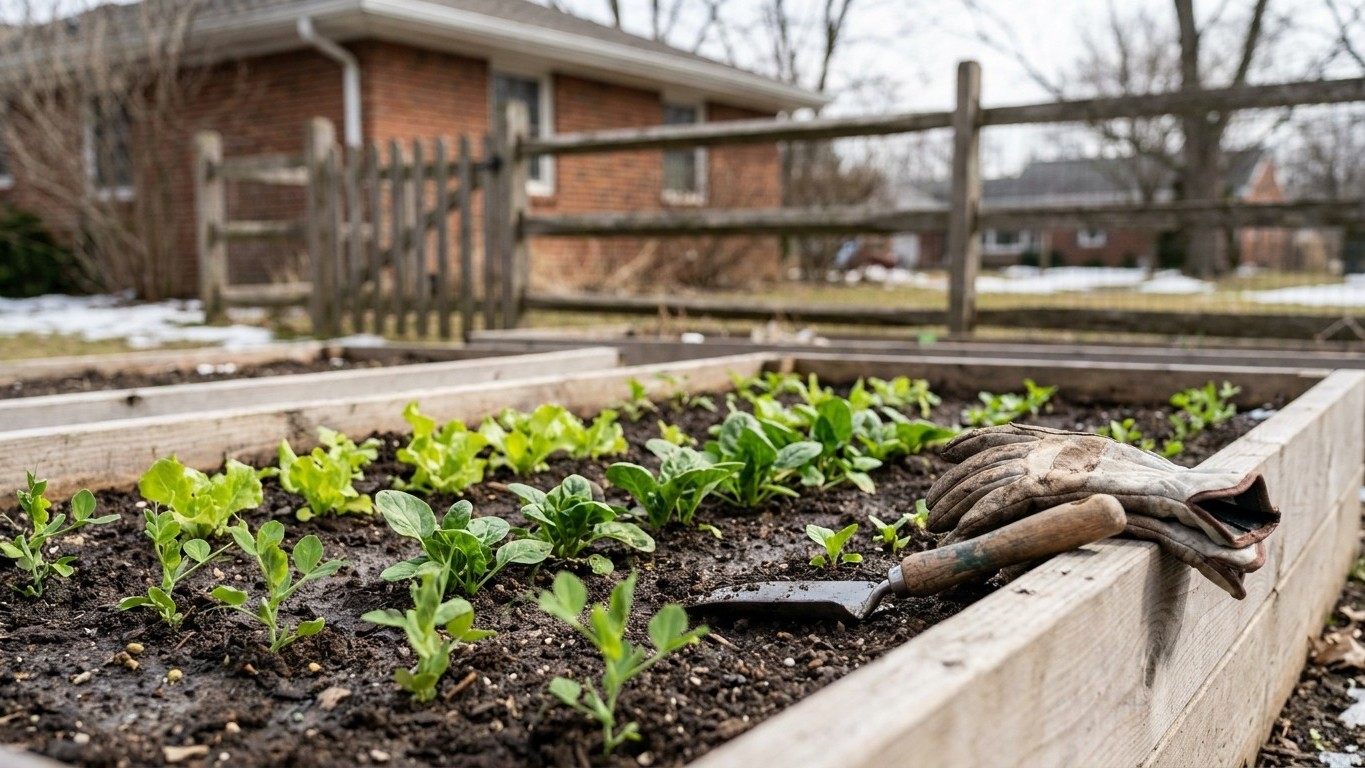

March in Oklahoma sits right on the edge of the frost line, so the answer depends on which week you mean. Early in the month, cold-hardy vegetables like spinach, peas, radishes, and onion sets go straight into the ground. By late March, in the state’s southern counties, the soil starts warming enough to risk potatoes and the first warm-season transplants under cover, while northern Oklahoma stays firmly in wait-and-see territory.
What goes in the ground in March
The frost calendar, not the flip of a page on the wall calendar, decides what survives. Reference data from NOAA NCEI puts the last spring frost at the Oklahoma City airport station between March 28 and April 10, based on 1991-2020 climate normals. That means for most of March, the region sits before its own frost window closes, and anything tender planted outside is a bet against a freeze that hasn’t finished happening yet.
What tolerates that risk is a short but useful list: spinach, lettuce, kale, and collards can go in as transplants or direct-sown seed, since a light freeze barely slows them down. Peas, both shelling and snap types, go into the ground as soon as the soil can be worked, often weeks before the frost window closes. Radishes and turnips germinate in cool soil and mature fast enough to beat the heat that follows. Onion sets and seed potatoes are the other safe bets for most of the state, especially once soil temperatures climb through the 40s.
Garlic is usually a fall crop, but where the ground stayed workable and garlic wasn’t planted earlier, a late-winter planting in the far southern counties can still produce, though bulbs will run smaller than a properly timed fall crop. Asparagus crowns and bare-root fruit trees or berry canes also belong on this month’s list. They’re dormant plantings, not seedlings, so a freeze after planting does no harm.
What doesn’t belong outside yet: tomatoes, peppers, squash, beans, corn, and anything else that came from a warm climate. Soil this cold slows germination to a crawl or rots the seed outright, and a transplant set out now risks a hard freeze before it has roots enough to recover. Zone 6a in the Oklahoma Panhandle and far northern counties runs noticeably colder than zone 8a near the Red River, so a gardener in Boise City is working with a different March than one in Ardmore.
What to start under cover
Count backward from the frost window instead of forward from the calendar page. With the last frost expected between March 28 and April 10 at the reference station, and later than that in most home gardens away from the airport, tomatoes and peppers need six to eight weeks of indoor growth before transplant. That puts their ideal start date in mid-to-late January for a March transplant target, which means by March many gardeners are either already tending leggy tomato starts or should be starting peppers now for a transplant date pushed into April or May.
Eggplant runs even longer, often eight to ten weeks from seed to a transplant-ready stage, so March is a reasonable start month if the goal is planting out well after the frost window closes. Squash, cucumbers, and melons need far less lead time, typically three to four weeks, which makes late March a workable start date for transplanting in late April once soil has warmed.
The two ways this goes wrong both come down to timing math. Start too early and the seedlings outgrow their containers before the ground is safe, turning rootbound and stressed by the time transplant day finally arrives. Start too late, especially with long-season crops like peppers and eggplant, and the plant never catches up, producing its first fruit just as the first fall frost closes the season instead of mid-summer. Working from the actual frost window for a specific county, rather than a fixed date on a seed packet, is what keeps that math honest.
What is ready to pick
Outdoors, March harvests lean almost entirely on what survived winter rather than anything newly planted. Kale, collards, and spinach that overwintered under mulch or row cover often taste sweeter after cold exposure, since the plant converts starches to sugars as a natural antifreeze. Green onions and any overwintered leeks are usually ready to pull as soon as the ground softens enough to dig them without snapping the tops.
Cold frames and low tunnels extend this list considerably. Lettuce, mustard greens, and arugula grown under cover through the winter months often reach harvest size well before anything in the open garden, and a cold frame that’s been quietly running since fall can be producing salad greens on a weekly cutting schedule by now.
Indoors, sprouts and microgreens fill the gap for anyone who wants fresh greens without waiting on the weather at all. A tray of pea shoots or sunflower sprouts on a windowsill goes from seed to harvest in seven to fourteen days, which makes it one of the few crops in this window with a fixed, weather-independent timeline.
Storage crops deserve a check this month too. Winter squash, potatoes, and onions that have been sitting since fall harvest start showing their age by March: a soft spot on a squash, a sprouting potato eye, or an onion gone papery and hollow at the neck are all signs to use that item first, before the spoilage spreads to the rest of the bin. Sorting through storage now, rather than waiting for a smell to announce the problem, saves the crops still in good shape.
The jobs that matter this month
Soil preparation tops the list, and the timing window is narrower than it looks. Working wet clay soil, which covers large parts of Oklahoma, compacts it into something closer to brick than garden bed, so waiting for soil to crumble rather than clump in the hand is worth the extra few days it costs. Once it’s workable, turning in compost or aged manure now gives it weeks to integrate before the main planting season.
Pruning, ordering, and planning
Dormant pruning of fruit trees, grapevines, and berry canes needs to finish before buds break, and in most of Oklahoma that break happens close to the frost window itself. Pruning after growth starts wastes the plant’s stored energy and invites disease into fresh cuts. Seed catalogs also thin out fast this time of year, and popular varieties of tomatoes, peppers, and heirloom vegetables sell out well before planting season peaks, so ordering now beats settling for whatever’s left on the shelf later.
Soil testing is worth doing before the growing season locks in a full year’s worth of amendments guesswork. A basic test through the county extension office identifies pH and nutrient gaps while there’s still time to correct them with lime, sulfur, or organic matter before planting.
Maintenance that pays off later
Compost piles benefit from a turn now, both to speed decomposition and to check moisture before spring rains either drown or dry out the pile depending on the year. Tools that sat idle over winter, pruners, hoes, shovels, need cleaning and sharpening before the season’s heaviest use begins, and any raised beds, trellises, or fencing that took winter damage are far easier to repair now than mid-season with plants already in the ground. None of this is filler work. It’s the difference between a garden that runs smoothly in May and one playing catch-up all summer.
What not to do in March
The classic mistake is trusting a warm afternoon over the soil thermometer. A string of 70-degree days in early March feels like spring, but soil several inches down often lags air temperature by weeks, and a tomato or pepper transplant set out on that warm stretch can be killed by the freeze that follows a week later, well within the March 28 to April 10 frost window at the reference station, and often later than that in outlying counties.
Uncovering cold frames, row covers, or mulched beds too early after a mild spell is the second version of the same error. Cold-hardy crops underneath that protection have been acclimating slowly; stripping the cover off during a warm snap exposes tender new growth to a freeze it never had to face before, undoing weeks of protection in a single night.
Feeding nitrogen too early is a quieter mistake but a costly one. High-nitrogen fertilizer pushes soft, fast, watery growth, exactly the kind of tissue most vulnerable to freeze damage. Applying it before the frost window closes sets plants up to lose that new growth the moment temperatures dip, and they have to rebuild it from scratch. Waiting until the frost risk has genuinely passed, rather than fertilizing on a fixed date, avoids that wasted cycle entirely.
Direct-sowing warm-season seeds like beans, corn, or squash into cold soil causes a different failure: the seed simply sits and rots before it germinates, since soil below roughly 60 degrees stalls or kills most warm-season seed outright. Waiting for the soil itself to warm, rather than the calendar to turn a page, is the fix in every one of these cases.
Checking this against your own county
A statewide frost window is a starting point, not a guarantee for any single backyard. The March 28 to April 10 range comes from one reference weather station, and elevation, local terrain, and simple distance from that station all shift the real date earlier or later, sometimes by a week or two. Oklahoma’s own USDA hardiness range, 6a in the Panhandle up to 8a near the Red River, makes that spread obvious: a gardener in the northwest is working with a colder, later spring than one near the Texas border.
The most reliable next step is checking those local numbers directly through the Oklahoma State University Extension service, which tracks county-level frost data and planting guidance that accounts for exactly this kind of regional spread.
Common questions
Can I plant tomatoes in Oklahoma in March?
Not outdoors for most of the state. The reference frost window runs March 28 to April 10, and home gardens away from that station often run later still. Tomatoes started indoors in January or February can go outside once that window has safely passed.
When is the last frost date in Oklahoma?
NOAA NCEI climate normals place it between March 28 and April 10 at the Oklahoma City reference station. Rural and elevated gardens typically see it later, sometimes by one to two weeks.
What vegetables can I direct sow in Oklahoma in March?
Peas, spinach, lettuce, radishes, turnips, kale, and onion sets all tolerate the cold soil and lingering frost risk typical of this month.
What USDA hardiness zone is Oklahoma?
Oklahoma spans zones 6a to 8a on the USDA Plant Hardiness Zone Map, with the coldest zone in the Panhandle and the warmest along the southern border.