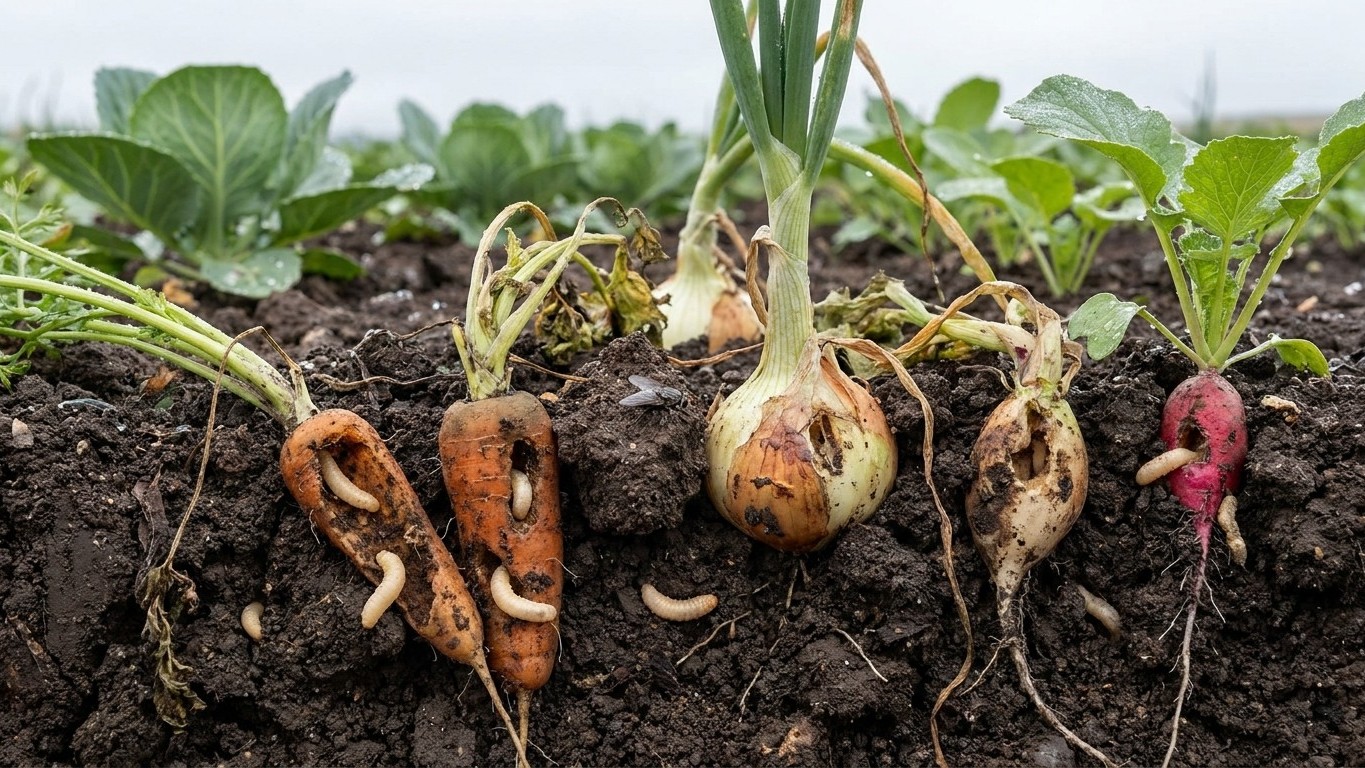

Wait for warm soil, not just the last frost. NOAA’s Oklahoma City reference data put the last spring freeze between March 28 and April 10 and the first fall freeze between October 29 and November 8. That leaves a window of more than 200 days for celeriac, kohlrabi, horseradish, turnips, rutabagas and Jerusalem artichokes. The calendar isn’t the limit here. Summer heat and the day you plant are. The sections below cover how to read the dates, the heat and the winter.
When the soil is warm enough in Oklahoma

NOAA’s 1991-2020 U.S. Climate Normals for the Oklahoma City airport station put the last spring 32 F freeze between March 28 and April 10. That band covers the 30 to 70 percent freeze probabilities (NOAA NCEI). It is a probability, not a promise, and a freeze after April 10 can still happen in any given year. It is also an airport figure. Suburban and rural gardens usually see their last freeze one to two weeks later, and more so at elevation, so check the date for your own county.
Frost is a proxy, soil is the test
The frost date stands in for something it doesn’t measure. Roots live in the soil, and soil trails the air. It warms after the frost risk ends, not with it. Seed sown into cold, wet ground sits and rots. Young celeriac or kohlrabi plants chilled for too long can flower instead of swelling a root.
A cheap soil thermometer settles the argument. Your state extension service publishes the soil temperature each crop wants. Without a thermometer, use your hands. Ground that crumbles, doesn’t cling to a boot and feels mild at midday is ready.
The hardy types go first. Turnips, rutabagas and kohlrabi tolerate cooler soil than the others and take the earliest slots once the bed is workable. Celeriac transplants wait until the frost risk has truly passed. Horseradish roots and Jerusalem artichoke tubers go in during spring, once the soil is workable and warming.
Site Jerusalem artichokes before anything else
Jerusalem artichoke is effectively permanent once planted. Every fragment of tuber left in the ground regrows, and no amount of careful digging gets them all. It is the most regretted planting in a vegetable garden. Pick a corner you will never want for tomatoes, well away from the beds you rotate, with a mown strip or hard edge around it. Treat the patch as a fixture for good.
The vegetable itself needs one plain warning. Jerusalem artichokes store inulin instead of starch, and in many people it causes digestive discomfort. Start with a small first portion to find out how you react. Don’t count on cooking or frost to remove the effect.
How long the season lasts here
Take the two ends of NOAA’s bands for the Oklahoma City station. From the late edge of the last spring freeze (April 10) to the early edge of the first fall freeze (October 29) is 202 days. From the early edge of spring (March 28) to the late edge of fall (November 8) is 225 days. So the reference-city window runs roughly 200 to 225 days. Rural and suburban gardens lose a week or two at each end, so plan on the lower figure and treat anything longer as a bonus.
The useful question is what that length allows. Here it allows two sowings, which a short northern season would not. The first goes in as the soil warms. The second goes in late summer for a fall harvest of turnips, rutabagas and kohlrabi. Those crops sweeten as nights cool, and the first fall freeze doesn’t end them the way it ends tender plants. The succession sowing guide on this site explains how to space those plantings so one bed doesn’t produce everything in the same week.
The long window also changes the transplanting math. In a short season, nursing seedlings through a root check can cost the weeks you don’t have. Here, starting celeriac and kohlrabi indoors and setting them out is worth the check, because there is time to recover. Plant them gently and keep the roots undisturbed. Celeriac is the slowest of the group and the only one that really depends on a long run, which is why the 200-plus days matter most for it.
One caution. A frost-free window isn’t a growing window. Cool-season roots won’t thrive through the hottest weeks, however many frost-free days remain. The window opens at both ends for these crops and sags in the middle, and the next section covers the sag.
Heat and water in Oklahoma

Look up the normals for the station nearest you on NOAA’s climate normals pages. The mechanism is easy to describe without a number. Oklahoma summers are hot, and rainfall comes unevenly. Cool-season roots such as kohlrabi and turnips turn woody, bitter or split when heat and irregular water arrive together. Celeriac is the most demanding, since it wants even moisture through a long season.
A thick mulch is the best defense against both problems. It shades the soil over the root, holds moisture between rains and evens out the swings that cause splitting. Deep, infrequent watering beats daily sprinkling. Given that heat, the second sowing of the cool crops should go in late enough to mature in cooling weather, not in the worst of summer.
What winter decides
The coldest month at the Oklahoma City reference station has a mean daily minimum of 27.0 F. That is an average of the lows, not the record low. Nights below freezing are routine, but not brutally cold ones. The USDA Plant Hardiness Zone Map 2023 puts the state across zones 6a to 8a, a wide range, so the Panhandle and the southeast differ from the city.
Against that backdrop, horseradish and Jerusalem artichoke are perennials. They stay in the ground through winter, and the artichokes will come back whatever you do. Hardy roots like turnips and rutabagas can be left under a deep mulch and harvested as needed in a mild winter. Celeriac is the one to lift, before the soil freezes hard, which means around the first fall freeze (October 29 to November 8 at the reference station).
Storage touches food safety. Inspect every root before it goes into storage and again as the weeks pass. A soft patch, a weeping spot or a moldy crown ends the question for that root. Looking sound on the outside doesn’t make a root safe. Check often.
Horseradish needs one more warning. Grating the fresh root releases compounds that burn the eyes and airways. Work with the windows open or a fan running, keep your face away from the bowl, and don’t lean in to check the texture.
Which these root crops suit Oklahoma
Choose by type. The long window favors celeriac more than it would in a northern state, but heat at the root makes mulch and steady water the price of admission. Disease pressure in humid summers makes resistance the first criterion for any named variety. The table sets out how each type fits.
| Type | What Oklahoma conditions mean | Practical lean |
|---|---|---|
| Kohlrabi | Heat makes it woody | Two sowings, spring and late summer |
| Turnip and rutabaga | Fall crops sweeten in cool weather | Favor a late-summer sowing |
| Celeriac | Needs the whole long window and even moisture | Start indoors, mulch deep, lift before hard freeze |
| Horseradish | Hardy through winter | Plant once, site with care |
| Jerusalem artichoke | Thrives and spreads | Only in a permanent, isolated spot |
Turnips and rutabagas are brassicas. They share their pests and diseases with cabbage, kale and mustard, and a gardener who rotates them into a cabbage bed has rotated nothing.
A variety that excels in another state can fail here. The varieties trialled in Oklahoma are the only recommendation that means anything, and Oklahoma State University Extension is where to find them. Ask for disease resistance and heat tolerance first.
For the overview of the whole group, see Celeriac, Kohlrabi, Horseradish and Jerusalem Artichokes. For how neighboring humid-climate states handle the same crops, see Growing Unusual Root Crops in North Carolina and Growing Unusual Root Crops in Georgia.
Common questions
Can I sow as soon as the last frost date passes?
Only the hardy types, and only once the soil is workable. The frost date is a stand-in for warm soil, and soil trails the air. Check the ground, not the calendar.
Can celeriac finish in Oklahoma?
On the reference-city window of roughly 200 to 225 days, it can, with indoor starting, deep mulch and steady water. Heat is the risk, not the length. Your extension service knows which varieties have been trialled.
Do I leave these roots in the ground over winter?
Horseradish and Jerusalem artichoke stay put. Turnips and rutabagas can stay under mulch in a mild winter. Lift celeriac before the soil freezes hard, and inspect everything you store.
Can turnips follow cabbage in a rotation?
No. Turnips and rutabagas are brassicas and share cabbage’s pests and diseases, so a bed that held cabbage, kale or mustard needs a different family next.