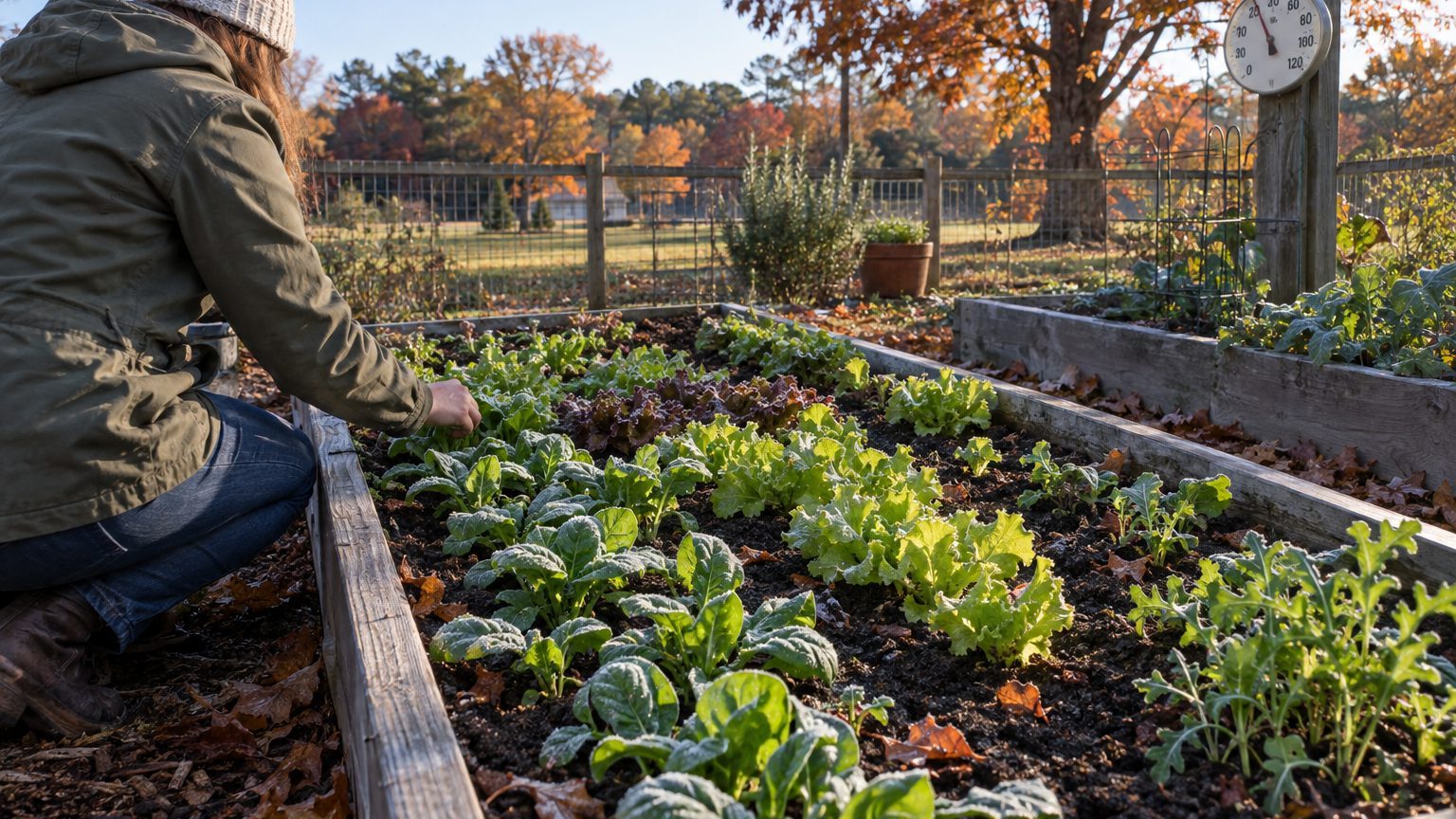

Early to mid fall is the main window for winter salads in Oklahoma, with a second chance in late winter. The fall sowing feeds you through the cool months. The late-winter sowing gives a quick spring crop before warm weather arrives. Exact dates hang on frost, and frost can differ by a week or two between one Oklahoma garden and the next.
The short answer for Oklahoma
Sow from September into October and finish before the first fall freeze. At the Oklahoma City airport weather station, that freeze arrives between October 29 and November 8, and the last spring freeze falls between March 28 and April 10. Both ranges come from the NOAA NCEI U.S. Climate Normals 1991-2020. They mark the band where the chance of a 32°F freeze runs from 30 percent to 70 percent.
| Event | Oklahoma City airport station | Suburban or rural garden |
|---|---|---|
| Last spring freeze (32°F) | March 28 to April 10 | Often one to two weeks later |
| First fall freeze (32°F) | October 29 to November 8 | Often one to two weeks earlier |
When should you sow winter salads in fall?
Start in September and keep going through October. A seedling needs its first true leaves and a small root system before the cold slows everything down, and growth slows fast once days shorten. A garden outside the city, where the first freeze often comes a week or two ahead of the airport date, should sow at the early end of that window. Sowing in the weeks before the freeze band begins is what gets the plants established.
Cold is routine here by midwinter. The mean daily minimum of the coldest month at Oklahoma City is 27.0°F, so a typical night in that month is below freezing, and cold snaps go lower. Plants meant to stand through winter should be the hardy types. The Best Winter Salads for Oklahoma sorts those from the tender ones.
Can you sow winter salads in late winter?
Yes. Hardy greens can go in as soon as the soil is workable, a few weeks ahead of the March 28 to April 10 band. The crop grows while days lengthen and nights are still cool. A late freeze can still arrive after that band, so keep a sheet of frost cloth handy. Stop sowing when warm days become common, because lettuce and spinach run to seed in heat. For the wider picture of what to grow, see Winter Salads for Oklahoma Gardens.
What will not work here

Using the airport dates as if they were your own. The reference figures come from a station in the city, and a suburban or rural garden usually sees its last spring freeze later and its first fall freeze earlier, often by one to two weeks and more at elevation. A gardener who sows on November 1 because the airport freeze band starts October 29 may be sowing after the first freeze has already hit the yard.
Why does sowing in late October fail?
The freeze band begins October 29 at the reference station, and rural gardens reach it sooner. Seed sown in that last week may sprout, but the seedlings have no true leaves and almost no roots when cold nights arrive. They stall in the bed through the shortest days, and many are lost to a hard freeze or a heaving thaw. Winter salads sown this late rarely catch up with the ones sown in September.
Can tender lettuce stay uncovered all winter?
Mostly no. With a coldest-month mean minimum of 27.0°F, a normal January night in the city is already below freezing, and the cold snaps that go lower than that are the ones that burn tender leaf lettuce and baby greens. Sturdy greens such as spinach and the cabbage-family leaves can take open-bed freezes. Delicate heads need a cold frame, a low tunnel, or at least a layer of row cover on the coldest nights.
Two other plans fail as well. Sowing lettuce in early September in full sun is one, since the soil is still warm and the seed germinates poorly. Shade the bed and keep it damp, or wait for the first cool spell. Expecting steady growth in midwinter is the other. Plants stall in the coldest weeks, so what you pick in January is what grew in October and November. Sow enough early to carry you through, and do not count on new growth to fill the gaps.
What changes across Oklahoma
The USDA Plant Hardiness Zone Map for Oklahoma runs from 6a to 8a. That map is built on one variable, the average annual extreme minimum temperature, and the state covers several steps of it. So there is no single answer for the whole state, only a spread from a colder north and west to a milder south and southeast.
A gardener at the cold end should shift everything toward the safe side. Sow at the early end of the fall window, plan on cover for tender types from the first hard night, and wait a bit longer before sowing in late winter, since the last freeze comes later. Higher ground also runs colder than the lowlands around it, and cold air settles in low spots, so a bed in a hollow can freeze before one on a slope.
A gardener at the mild end has more room. Fall sowing can run later into October, hardy greens may keep growing through most of the winter, and the late-winter sowing can start a little sooner. Still, a mild zone does not cancel a hard freeze, and the coldest nights call for cover in any part of the state.
The zone number describes how cold the worst winters get. It does not give sowing dates, which depend on the frost calendar of the place. To see where your property falls, look up your location on the USDA Plant Hardiness Zone Map rather than assuming a zone from the nearest big town.
Where to check this for your own county
Your state extension service is the best next stop. Oklahoma State University Extension runs a county office across the state, staffed by people who know the local soil and weather. Look there for two things. The first is a local planting calendar for fall and winter vegetables, which gives sowing dates built for your county instead of a reference city. The second is the list of varieties trialled locally, which tells you which lettuces, spinach, and other greens held up in local conditions.
A county recommendation beats a state one. Oklahoma spans several hardiness zones, and the dates given above are for one airport station, so they can only be a starting point. A county educator can tell you whether your area runs a week or two later than the city, whether your soil needs amending, and which fall pests to expect.
When you call or visit, bring a rough sketch of your beds and a note of when frost first showed in your yard last year. Extension staff can fit their advice to your site much faster with those two things in hand.
Checking this against your own garden
Your own observations outrank every date here. Three are worth keeping track of.
- Soil warmth by feel. Push your hand a couple of inches into the bed in mid-morning. If the soil still feels warm, lettuce seed will struggle, so wait for the first cool spell or shade the bed. A bed beside a sunny wall that stays warm longer than the rest tells you where heat-sensitive crops will sulk.
- The first true leaves. Seedlings first show two seed leaves, then the real leaves that look like the adult plant. Note how many days that takes after sowing. If your seedlings are still at the seed-leaf stage when the first freeze is forecast, cover them.
- The first frost on your own ground. Check the grass, car roof, or garden bench each cold morning and write down the first date it is white. Compare it with the airport band. Low corners frost first and beds near the house frost last.
Keep those notes for a few seasons and they become a calendar built for your yard. Even at the airport, a freeze before the early edge of the band is possible in some years, since the band marks the middle range of the probabilities and not the extremes.
Common questions
Can I sow winter salads in November in Oklahoma?
In most gardens that is too late for open beds, because the first freeze arrives between October 29 and November 8 at the reference station and earlier outside the city. A cold frame or low tunnel can extend the season for hardy greens.
Do winter salads survive Oklahoma winters?
Hardy types do. The coldest-month mean minimum of 27.0°F means regular freezing nights, which spinach and the sturdy cabbage-family greens tolerate. Tender lettuces need cover on the coldest nights.
When should I stop sowing in spring?
Sow in late winter, a few weeks before the March 28 to April 10 last-freeze band at the reference station. Once warm days are common, lettuce and spinach tend to bolt, so sowings after that are better spent on warm-season crops.
Do the airport frost dates apply to my garden?
They are a starting point. Suburban and rural gardens usually see the last spring frost later and the first fall frost earlier, often by one to two weeks. Check the local calendar from your county extension office.