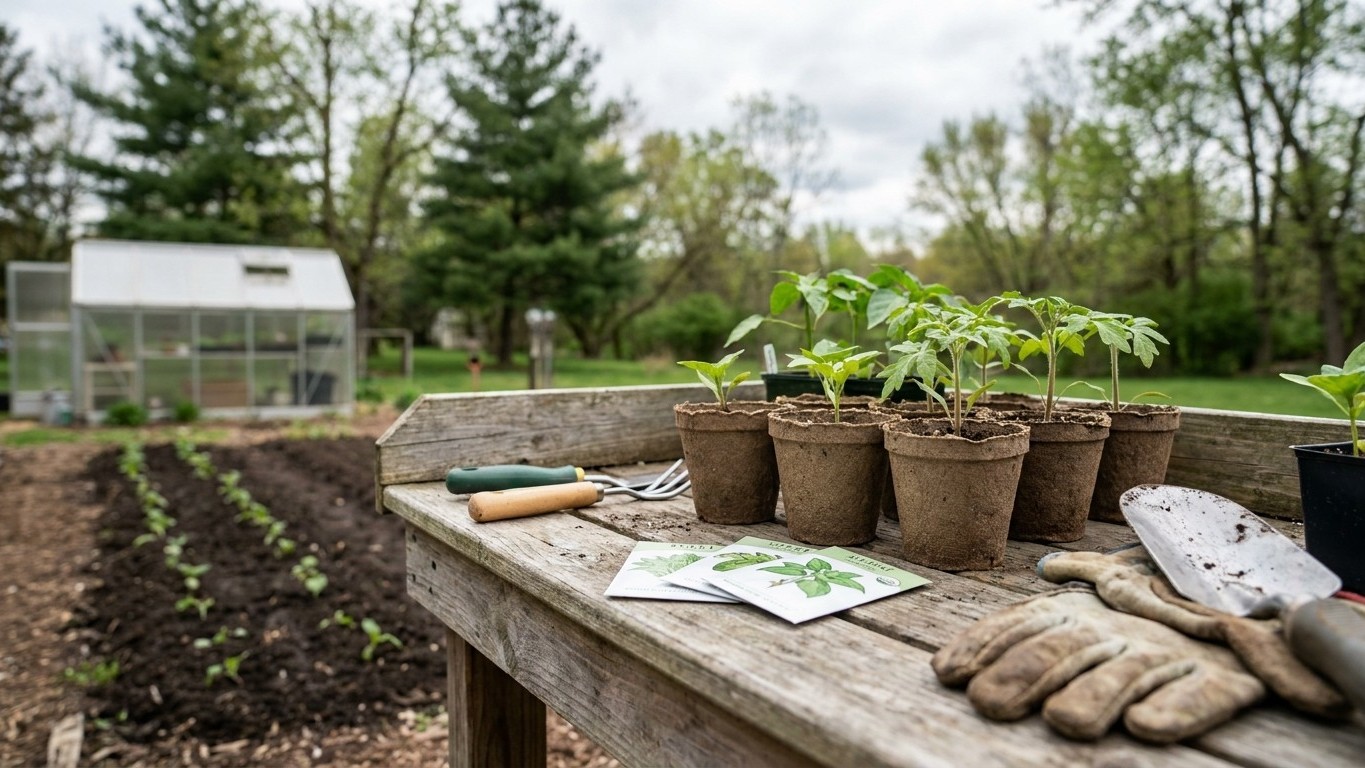

April in Ontario sits right on top of the average last frost date, so the ground rules are simple: cold-hardy crops like peas, spinach, lettuce, and onion sets can go in the soil as it becomes workable, but anything that fears frost stays indoors or under cover until the frost risk has genuinely passed, not just until the air feels warm.
What goes in the ground in April
The date that matters more than the calendar page is soil temperature, and right behind it, the frost window. Environment and Climate Change Canada’s climate normals for the Toronto Lester B. Pearson station put the average last spring frost at April 30. That figure is a mean, not a safety line: in roughly half of all years, frost arrives after that date. Treat April 30 as the midpoint of a window that can stretch well into May, not as a green light printed on a calendar.
That single fact reshapes the whole month. For most of April, southern Ontario gardeners are still inside the frost window, and northern and upland parts of the province are further behind still. This is not the month to gamble on tomatoes, peppers, squash, or beans in open soil. Those crops die at temperatures that peas and spinach shrug off.
What does tolerate the risk is a short, reliable list. Peas can go into workable soil weeks before the frost window closes, since cold soil slows germination but rarely kills the seed. Spinach, arugula, and mustard greens handle light frost without complaint. Onion sets and transplants, along with shallots, are built for exactly this kind of cool, unsettled weather. Garlic planted the previous fall keeps pushing up through cold soil on its own schedule and needs no attention beyond mulch removal once growth resumes.
Radishes and hardy lettuce varieties round out the safe list, especially where a cold frame or a low tunnel can knock a few degrees off the worst nights. Those structures are worth setting up now: they let a gardener push the cold-hardy list a week or two earlier than open ground would allow, and they buy insurance against the kind of late, sharp frost that the average date does not warn about. Bare-root fruit trees, canes, and dormant perennials can also go in as soon as the ground can be worked, since they are not actively growing yet and tolerate cold roots far better than a leafed-out plant would.
What to start under cover
Seed packets for tomatoes, peppers, and eggplant usually list a transplant timeline of six to eight weeks for tomatoes and eight to ten for peppers and eggplant, counted backward from the date they’ll go outside. Since the average last frost lands on April 30, and since that date runs later in roughly half the years on record, the safer anchor for counting backward is mid-to-late May rather than the average date itself. Working from that anchor, most warm-season transplants should already be started or should be started very soon, depending on the variety’s stated timeline.
Brassicas for an early crop, broccoli, cabbage, and their relatives, run a shorter clock, generally five to seven weeks before transplant, which puts a mid-April start well within reach for gardeners aiming to set plants out once the worst frost risk has passed. Slower crops like celery and onions from seed (rather than sets) need even more lead time and should already be well underway indoors.
Two mistakes show up every year at this stage. Starting too early leaves a gardener with leggy, rootbound seedlings stretching for light on a windowsill weeks before it’s safe to plant them out, a plant that never fully recovers even after transplanting. Starting too late does the opposite damage: the transplant goes out small and underdeveloped, and a short Ontario growing season doesn’t leave much room to make up lost time. Counting backward from an honest, later estimate of the frost window, rather than from the bare average date, protects against both errors at once.
What is ready to pick
April is a lean month in the open garden. Outdoors, there’s little to harvest yet beyond what survived the winter on its own terms: kale and leeks that were left in the ground under snow cover often come through intact and can be picked as soon as the soil thaws enough to lift them. Their flavor, sweetened by cold exposure, is one of the small rewards of overwintering crops in the first place.
Cold frames earn their keep here too. Spinach, mâche, and hardy lettuce sown late the previous season, or even earlier in spring under protection, are often ready to cut weeks before anything in open soil catches up. Indoors, sprouts and microgreens fill the gap on a kitchen counter with almost no equipment and a turnaround measured in days rather than weeks.
The other job this month is inspection, not harvest. Stored squash, potatoes, and onions from the previous season need a hands-on check: soft spots, sprouting eyes on potatoes, or a sweet smell from a squash are all signs that item needs to be used immediately or pulled before it spreads rot to its neighbors. Rhubarb crowns forced indoors or under a bucket in the garden may also be ready for a first light pull, though established plants should never be stripped hard in their first productive year.
The jobs that matter this month
Dormant pruning of fruit trees and berry canes has a real deadline this month: once buds swell and break, cuts heal slower and the tree loses more energy to the wound. Apple, pear, and stone fruit trees, along with raspberry and currant canes, should be finished before that growth kicks in. This is also the last comfortable window to plant bare-root stock while it’s still dormant.
Soil work pays off disproportionately now. A simple soil test, whether a home kit or a lab sample, tells a gardener what to amend before planting rather than guessing after a crop underperforms. Turning compost speeds it toward usable condition for May planting, and working finished compost or aged manure into beds while they’re still empty avoids disturbing roots later.
Seed ordering belongs on this list too, and it’s easy to underrate. Popular varieties, especially disease-resistant tomatoes and early sweet corn, routinely sell out by the time other gardeners realize spring is close. Ordering now, alongside planning crop rotation for beds that held heavy feeders like tomatoes or brassicas last season, saves scrambling later.
Tool maintenance and bed repair round out the list: sharpening pruners and hoes, replacing cracked handles, and fixing fencing or raised bed frames before they’re loaded with soil and plants. None of this is glamorous, but every hour spent here in April is an hour not spent fighting a broken tool or a collapsing bed frame in June.
What not to do in April
The most common mistake is planting by air temperature instead of soil temperature. A run of 60-degree afternoons feels like spring, but if the soil four inches down is still cold and wet, warm-season seeds either rot before germinating or sit stalled for weeks. Check soil temperature directly, or simply wait for the visible cues, like weeds actively growing, rather than trusting a mild afternoon.
A close second is uncovering too early. Removing winter mulch, row covers, or cold frame lids the first week the weather turns pleasant leaves tender new growth exposed right when a late frost is still statistically likely, given that the average last frost date itself falls at the very end of April and often later. Ease covers off gradually, and keep a lightweight cover on hand to throw back over anything newly exposed if a cold night is forecast.
Feeding nitrogen at the wrong point causes its own quiet damage. Heavy nitrogen applied to dormant or barely-waking plants pushes soft, lush growth that has no cold tolerance at all, right before the season’s last frosts. It’s better to hold nitrogen-heavy feeding until growth is well underway and frost risk has genuinely dropped, leaning instead on compost or a balanced, slow-release amendment early on. Skipping the hardening-off step for indoor-started seedlings is the fourth classic error: a seedling moved straight from a windowsill to open ground, without several days of gradual outdoor exposure, often shows scorched or stunted leaves within a day.
Checking this against your own county
A province-wide figure like the April 30 average last frost is a starting point, not an instruction for a specific backyard. Elevation, distance from the Great Lakes, and simple north-south position shift real planting windows by weeks. A lakeside garden near Lake Erie often runs milder than the provincial average would suggest, while a garden in northern Ontario or at higher elevation can lag well behind it. The hardiness zone figure for the Toronto area, 7a on the Canadian system (not the USDA scale, and not directly convertible to it), applies to that reference city alone, not to the province as a whole.
Ontario’s Ministry of Agriculture, Food and Agribusiness (ontario.ca/page/agriculture-and-food) is the place to check local advisories and planting guidance before locking in a date based on a provincial average.
Common questions
Is it safe to plant tomatoes outside in Ontario in April?
No. The average last frost falls on April 30, and since that’s a mean rather than a safe cutoff, frost often arrives later in roughly half of all years. Tomatoes should stay indoors or under cover until well past that window.
Can garlic still be planted in April in Ontario?
Garlic is typically planted the previous fall for the strongest bulbs, but if fall planting was missed, garlic and shallots can still go into workable spring soil in April with a shorter but usable growing window.
What’s the biggest risk to garden crops in Ontario in April?
A false spring: a stretch of mild days that tempts gardeners to plant warm-season crops or remove protective covers, followed by frost that the calendar didn’t rule out, since the average last frost date sits at the very end of the month.
Do cold frames really make a difference this early in the season?
Yes. A cold frame or low tunnel can raise soil and air temperature enough to let hardy greens germinate and grow weeks before open-ground planting would be reliable, and it buys a buffer against unexpected late frosts.