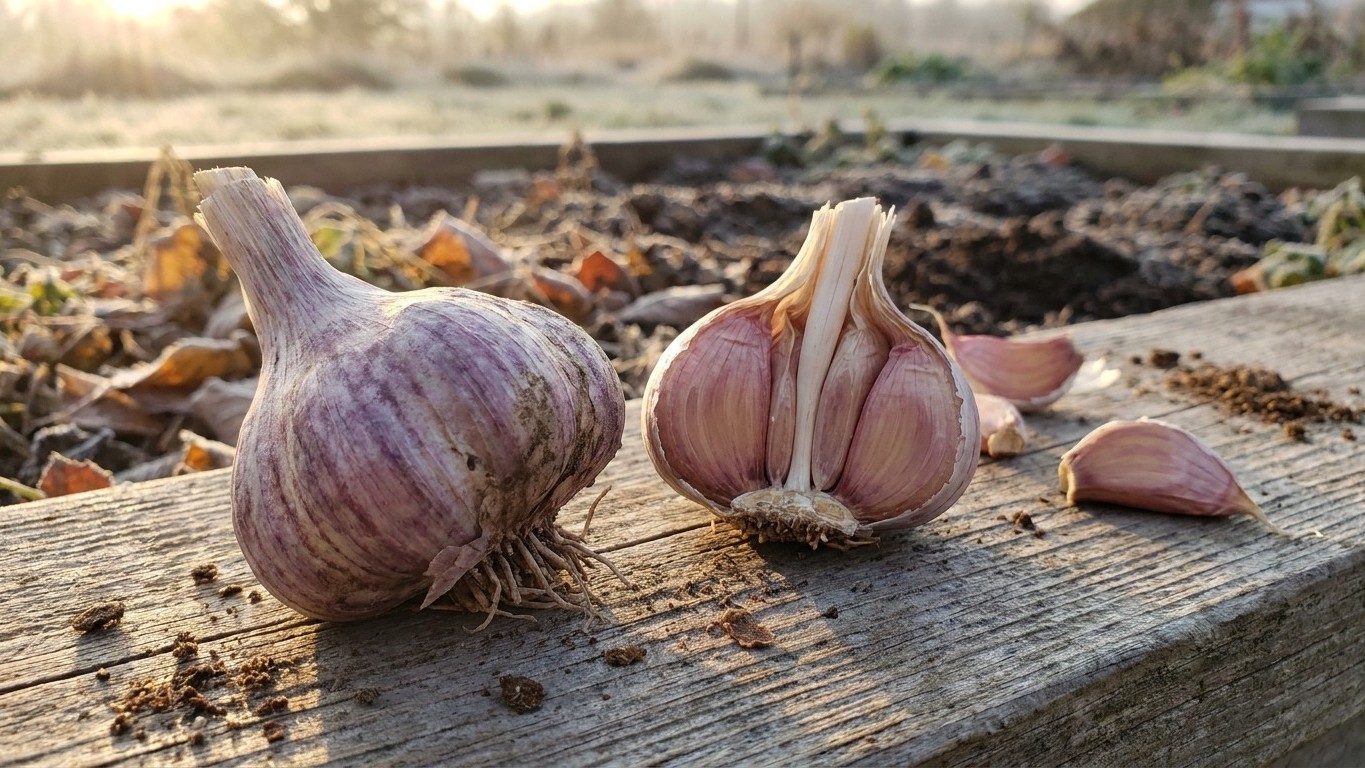

West of the Cascades, garlic planted last fall is usually ready to lift sometime in late June through July, when about half the leaves have browned and the rest are still green. In the high desert of central and eastern Oregon, the same bulb often finishes a few weeks earlier because the growing season runs shorter and hotter. The leaf color, not the calendar, is what tells you.
When garlic is ready to lift in Oregon
Garlic planted in autumn spends the cold months building roots, then pushes leaf growth once the soil warms in spring. By early summer, the plant shifts its energy into the bulb, and that’s the phase that matters for timing the harvest. The signal gardeners watch for is straightforward: the lower leaves turn brown and start to collapse while four to six upper leaves stay green. Pull too early and the wrapper layers around each clove haven’t fully formed, so the bulb won’t store. Wait too long and the wrapper splits, the cloves separate in the ground, and the bulb is exposed to rot and pests before you ever get it out.
Oregon’s geography makes this trickier than a single statewide date. The Willamette Valley and the coast sit under a marine-influenced climate with cool, damp springs that can push the bulking phase later into summer. Central and eastern Oregon, by contrast, warm up faster and dry out earlier, which tends to move harvest up on the calendar. A gardener in Bend and a gardener in Portland are not looking at the same week, even if they planted the same variety on the same fall date.
Soil moisture at lift time matters almost as much as leaf color. Garlic pulled from bone-dry, cracked soil tears its roots and bruises the bulb; garlic pulled from soaked ground carries too much moisture into curing and rots before it dries. A light watering two or three days ahead, followed by dry soil on harvest day, gives you the cleanest pull. Loosen the ground with a fork rather than yanking the stalk, since a snapped neck leaves a bulb with no way to cure properly.
Because local rainfall patterns, soil type, and elevation all shift the exact week, the most reliable local reference is the Oregon State University Extension Service, whose site is extension.oregonstate.edu. Their county-level offices track regional planting and harvest timing far than any single statewide rule can.
Curing it, and where to hang it here
Curing is the step that turns a freshly pulled bulb into something that survives storage, and it’s also where most home harvests go wrong in Oregon’s climate. The goal is to dry the outer wrapper and neck down until they’re papery and tight, which typically takes several weeks in a space that’s shaded, dry, and moving air. Direct sun on curing garlic can cook the cloves right in the wrapper, so this isn’t a job for a sunny patio.
West side humidity versus high desert dryness
Gardeners west of the Cascades, in the Willamette Valley and along the coast, deal with summer air that holds more moisture than the dry side of the state. That extra humidity slows curing and raises the risk of mold forming between the layers before the bulb fully dries. A carport, covered porch, or garage with a box fan running is usually a better bet than a closed shed, since stagnant air is the enemy here, not heat.
In central and eastern Oregon, the high desert’s dry summer air cures garlic faster, sometimes noticeably so. The risk on that side of the state runs the other way: bulbs can dry too fast on the outside while the neck stays soft inside, which traps moisture and invites rot later in storage. Slowing airflow slightly, or curing in a shadier spot, helps even that out.
Whichever side of the state you’re on, hang bulbs in loose bunches of six to ten, or lay them in a single layer on a screen or mesh rack so air reaches all sides. Piling garlic in a bucket or a tight box during curing is one of the most common mistakes, because the bulbs in the middle never dry and rot spreads outward from there. Leave the roots and stalks attached until curing finishes. Trimming them early opens a wound that lets in moisture and mold spores before the bulb has sealed itself.
You’ll know curing is done when the outer wrapper rustles like paper and the neck, if you squeeze it, feels dry rather than fleshy. That’s usually the point where local extension guidance recommends moving on to trimming and long-term storage.
Storing it through a Oregon winter
Once cured, garlic needs a storage spot that’s cool, dark, dry, and has some airflow, and that’s a harder combination to find in an Oregon winter than it sounds. Basements on the west side of the state often run damp during the rainy season, which is exactly the condition that softens bulbs and starts rot from the inside out. A closet shelf, a pantry away from exterior walls, or a garage that doesn’t freeze solid tends to work better than a below-grade basement.
Mesh bags, open baskets, or shallow boxes with holes let air circulate around the bulbs, which matters more than most people expect. Plastic bags or sealed containers trap the small amount of moisture every bulb releases, and that moisture has nowhere to go except back into the cloves. Refrigerators are also a poor fit for long-term storage. The cold there is closer to what garlic experiences underground in winter, and it can trigger the bulb to start sprouting well before spring, which shortens how long it stays usable in the kitchen.
Timing your storage setup around Oregon’s fall weather is worth thinking through as well. NOAA’s 1991 to 2020 climate normals put Portland’s first fall freeze, the point where there’s a 30 to 70 percent chance of 32 degrees Fahrenheit, somewhere between November 11 and November 27. That’s a midpoint, not a guarantee. In roughly half of all years, the first freeze arrives later than that window, sometimes well into December. Because Portland sits west of the Cascades, this range doesn’t hold for the rest of the state; central and eastern Oregon’s high desert runs a shorter, colder season overall, and that first-freeze window doesn’t apply there.
What that means practically is that garlic already in storage by the time cold weather sets in isn’t affected much, since it’s indoors. But if you’re storing seed garlic for fall planting alongside your kitchen supply, knowing that the ground can still be workable well past that freeze midpoint, in about half of all years, gives some flexibility on when to get cloves back in the soil.
What goes wrong here
Rot is the most common failure, and it almost always traces back to moisture trapped somewhere in the curing or storage chain, whether that’s damp soil at harvest, a tight-packed curing bin, or a humid basement shelf. Once one bulb starts to soften, mold spreads to whatever it’s touching, so checking stored garlic every few weeks and pulling anything soft before it spreads is worth the five minutes it takes.
Pests are the other major issue, and Oregon State University Extension documents several that affect garlic and related crops in this territory. Slugs, including the gray field slug (Deroceras reticulatum), are a persistent problem in the state’s wetter regions, feeding on foliage and sometimes working down toward the bulb. Symphylans, small soil-dwelling arthropods, can damage roots below ground, weakening bulb development before harvest ever happens. Cabbage maggot and carrot rust fly are documented pests in Oregon vegetable plots generally, and aphids, cucumber beetles, European earwig, imported cabbageworm, brown garden snail, and brown marmorated stink bug round out the list of pests the extension service tracks in this region.
Beyond pests and rot, a smaller but real problem is harvesting off the calendar instead of off the plant. Gardeners who pull garlic on a fixed date every year, regardless of leaf color, end up with bulbs that are either underdeveloped or split open, and both conditions cut storage life short. The leaves are a better guide than any date on a calendar, in a state where the same crop finishes at noticeably different times depending on which side of the Cascades you’re growing on.
Common questions
Can I plant garlic in spring instead of fall in Oregon?
Garlic grown for full-size storage bulbs is planted in autumn and lifted the following summer, which gives the cloves the cold period they need to divide properly. Spring planting generally produces smaller, underdeveloped bulbs.
Does curing time differ between the Willamette Valley and eastern Oregon?
Yes. The Willamette Valley’s more humid summer air slows curing and raises mold risk, while the dry high desert cures bulbs faster but can leave the neck soft inside if drying happens too quickly on the outside.
Is my basement a good place to store garlic through winter?
Only if it stays dry. Many Oregon basements, especially west of the Cascades, run damp during the rainy season, and that dampness softens bulbs and encourages rot. A dry pantry shelf or an unheated but frost-free garage often works better.
Should I worry about frost damaging harvested garlic?
Not directly. NOAA’s data puts Portland’s first fall freeze between November 11 and November 27, but that’s a midpoint, and it applies to soil and field conditions, not to garlic already cured and stored indoors. It’s more relevant if you’re timing fall planting of next year’s seed garlic than for protecting this year’s harvest.