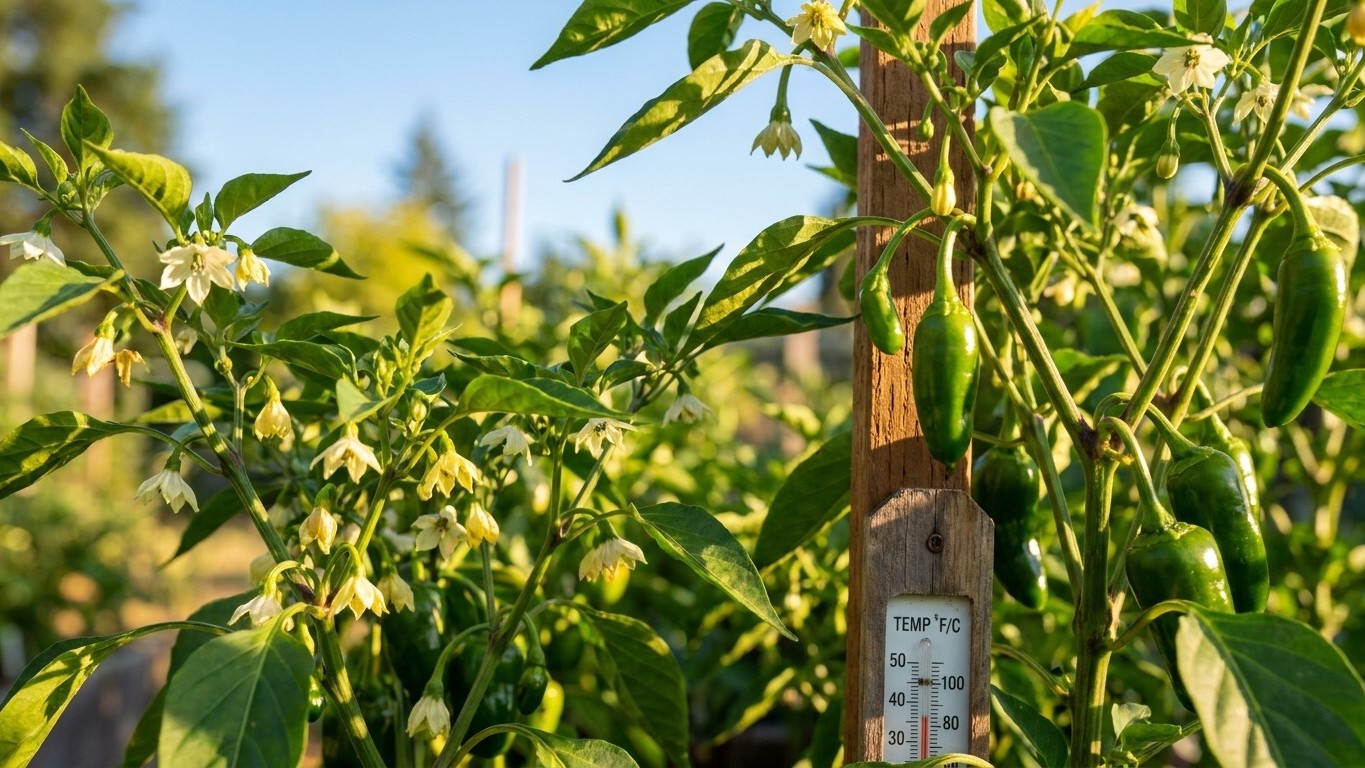

Oregon’s pepper growers face a narrow window: heat strong enough to set fruit but not so strong it stops setting, arriving late enough to dodge frost but early enough to ripen before fall. Portland-area data puts the state’s heat load at just under 12 days a year above 90 F, a number that shapes almost every decision below.
The short answer

Start with the number itself. NOAA’s 1991-2020 Climate Normals for the Portland reference station put the average at 11.9 days a year at or above 90 F. That is not a heat wave count, and it is not the average summer temperature. It is the tally of days when the thermometer crosses a threshold that matters specifically for pepper fruit set. Under Utah State University Extension’s guidance, pepper flowers stop setting fruit once daytime highs push past 90 F, so a season with roughly 12 such days is not a crisis. It means most of the growing season sits below that ceiling, with a handful of hot stretches, usually in July and August, where blossoms open and drop without becoming peppers.
That is the manageable half of the problem. The other half is harder to plan around, because it works in the opposite direction. The same USU Extension guidance is direct on this: fruit set fails just as reliably when nights drop below 55 F. A plant loaded with open flowers can lose the whole flush to a single cool night in late spring or a chilly stretch in early fall, well before or after the 90 F days show up.
Here is the gap in the data, and it matters. This site tracks days above 90 F for Oregon because that figure is published and measured at a fixed station. Summer night minima are not part of that dataset, and nothing here should be read as an estimate of how cold your nights get in June or September. For a closer look at both ends of this problem, see Why Peppers Fail to Set Fruit in Oregon. Guessing at that number from a map, from elevation, or from how far south or north you sit is a bad substitute for watching your own thermometer. Willamette Valley nights, Cascade foothill nights, and high desert nights in central and eastern Oregon do not behave the same way, sometimes within a few miles of each other.
The practical takeaway: track your own overnight lows outdoors, right where the plants sit, from the point flowering starts through the end of the season. If you see nights dipping under 55 F during a flowering flush, expect blossom drop regardless of how mild the daytime heat has been. If you hit a run of 90-plus days, expect the same drop from the other direction. Neither one is a plant health issue. Both fix themselves once conditions swing back into range, which is why timing the crop around the two extremes matters so much; see When to Start Pepper Seed in Oregon for guidance on getting that timing right from the start.dges, not just the frost date, is the real skill here, and why choosing from the Pepper Varieties That Ripen in a Oregon Season can make the difference between a full harvest and one cut short by cold nights or scorching days.
When to start seed here
Pepper seedlings need 8 to 10 weeks indoors before they are ready to go into the ground, and they should not go into the ground until two conditions are both met: the frost risk has passed, and the soil has warmed to 60 F. Working that backward from a real Oregon frost window shows how the math actually plays out for a Willamette Valley gardener.
- Find your last spring frost window. NOAA’s 32 F freeze probability data (the 30 to 70 percent band, from the 1991-2020 Climate Normals) puts this window at March 6 to March 21 for the Portland-area station. That is a west-of-the-Cascades number. Central and eastern Oregon run a shorter, later, high-desert season, so this specific window does not carry over statewide.
- Do not stop at the frost date. Frost passing does not mean the soil is warm enough. Pepper roots stall in cold soil, and USU Extension’s transplant guidance is built around soil temperature, not the calendar. Push a soil thermometer a few inches down in the bed you plan to use, and wait for a reliable 60 F reading before you plant, even if that lands well after the last frost date.
- Count back 8 to 10 weeks from your real transplant date. If your soil typically hits 60 F in mid-May, for example, counting back 8 to 10 weeks lands seed-starting somewhere in the second half of March. The exact date shifts every year and every yard, which is why the count has to run from your own soil reading, not from a fixed spot on the calendar.
- Rerun the count for your county. A grower in central or eastern Oregon working with a shorter frost-free season needs to shift this whole sequence earlier or accept a shorter harvest window, and should check local frost data rather than borrow the Portland-area figure.
What goes wrong here
- Blossom drop from a hot spell. Once daytime highs climb past 90 F, open flowers abort instead of setting fruit. With Portland-area data showing about 11.9 such days a year, this is usually a short-term interruption rather than a season-long problem. Wait it out. Fruit set resumes once temperatures fall back under that mark, and no feeding or watering trick reverses it faster than the weather itself.
- Blossom drop from a cool night. The same failure happens at the other end, once nighttime lows drop below 55 F during flowering. Because this site does not track summer night minima, growers need to log their own overnight lows near the plants, especially during a cool spell in late spring or early fall, and expect a pause in fruit set rather than a plant problem to fix.
- Sunscald on exposed fruit. Strong summer sun on fruit that lacks leaf cover can scorch the skin, leaving a pale, sunken patch. Keep the plant’s own foliage full enough to shade developing peppers, and avoid heavy pruning during the hottest stretch of summer.
- Blossom-end rot. A dark, sunken patch at the base of the fruit, usually tied to uneven watering rather than a soil nutrient shortage on its own. Keep watering consistent through hot spells so the plant can move calcium into the fruit without interruption, since irregular soak-and-dry cycles are what trigger it, not necessarily a lack of calcium in the ground.
Checking this against your own county
None of the figures above replace a local check. Frost dates, soil warm-up timing, and heat patterns shift across Oregon’s geography, from the Willamette Valley to the Columbia Gorge to the high desert east of the Cascades, sometimes over a short drive. Before locking in a planting date, run your specifics past Oregon State University Extension, which publishes county-level guidance built for the state’s different growing regions rather than a single statewide average.
Common questions
Do peppers stop producing once it gets too hot in Oregon?
Production pauses rather than stops for good. Once daytime highs move past 90 F, open blossoms abort instead of setting fruit, but the plant resumes setting once temperatures drop back under that mark. With the Portland-area average sitting at 11.9 days a year that hot, most Oregon summers give the plant plenty of cooler stretches to keep producing.
Can I use my region’s coldest month to guess my summer night lows?
No. Winter cold and summer night minima do not track each other reliably, and this site does not publish summer night low data for Oregon. The only dependable approach is watching your own outdoor thermometer through the flowering period, since a single run of nights under 55 F can stall fruit set even in a warm-summer location.
Is the last frost date the same everywhere in Oregon?
No. The March 6 to March 21 window comes from a Portland-area NOAA station and applies to the west side of the Cascades. Central and eastern Oregon run a shorter, high-desert season with a different frost pattern, so growers there should check their own county data through OSU Extension rather than use the Portland window.
Why did my pepper plant drop flowers even though it wasn’t that hot outside?
Fruit set fails at both ends, not just the hot one. A cool night, specifically anything below 55 F during a flowering stretch, can cause the same blossom drop as a 90-plus F day. Since this pattern depends on your own nighttime lows rather than daytime heat, tracking overnight temperatures near the plant is the way to confirm the cause.