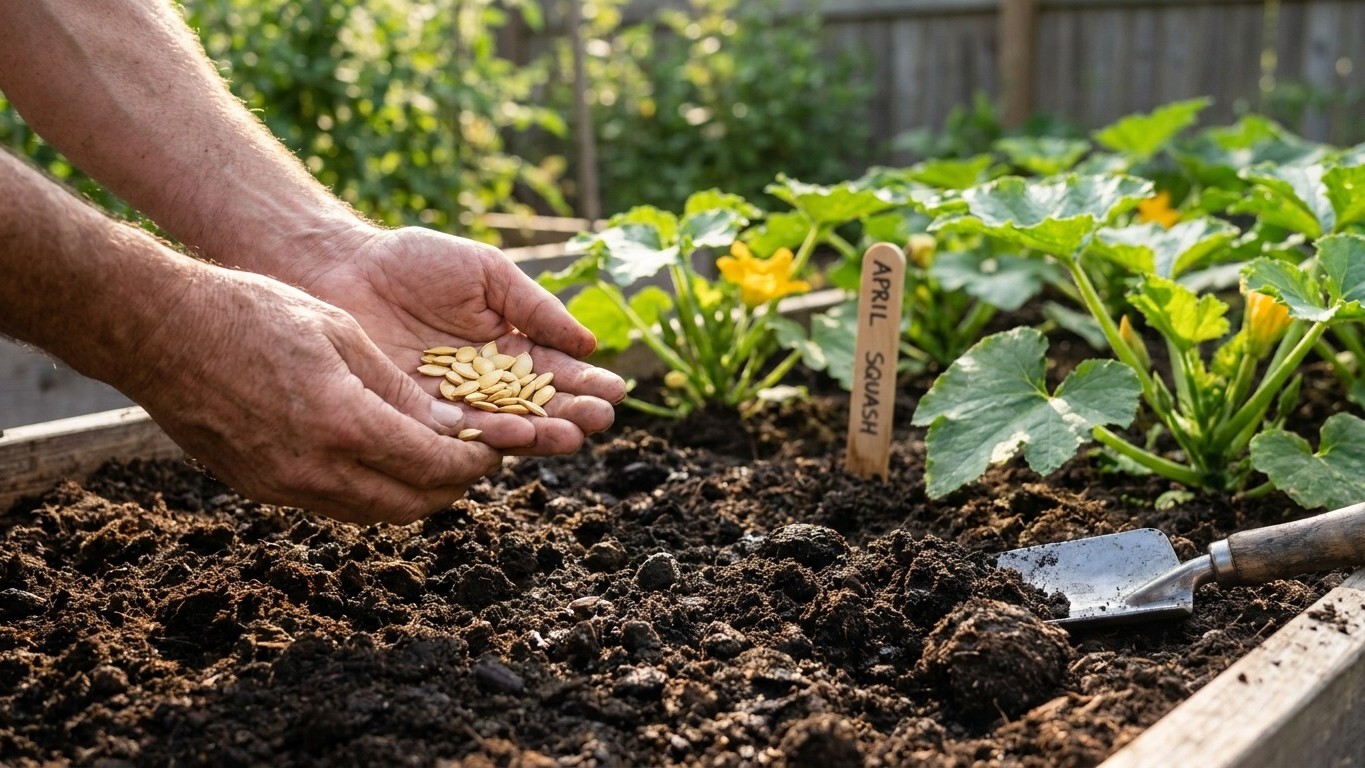

Sow summer squash outdoors in western Oregon once soil has warmed past the mid-50s, which usually lands somewhere in the three to four weeks after the region’s last spring frost window of March 6 to March 21. That frost date is a probability marker, not a starting gun: the real trigger is soil temperature, and squash seed sitting in cold, wet ground will rot before it sprouts.
The short answer for Oregon
The frost dates available for this territory come from the NOAA climate normals for the Portland reference station, west of the Cascades: a last spring frost falling somewhere between March 6 and March 21, and a first fall frost between November 11 and November 27. Both are 30-70% probability bands for a 32F freeze, built from 1991-2020 data. They tell you when a freeze is reasonably likely, not when your garden bed is ready.
Run the math on those two dates and the growing season at this reference point stretches from roughly 235 to 265 days, depending on which end of each band you use. Summer squash needs somewhere in the neighborhood of 45 to 65 days from seed to first harvest. Against a season that long, frost timing is almost never the limiting factor west of the Cascades. What actually decides your planting date is soil warmth, and squash germinates poorly below 60F soil temperature. Since the last-frost window closes by March 21 at the earliest, and soil in the Willamette Valley typically lags air temperature by several weeks in spring, most direct-seeded plantings don’t go in the ground until mid-May, sometimes into early June if the spring has run cool and wet.
Transplants started indoors four weeks earlier can move that timeline up by two to three weeks, since you’re not waiting on the soil to warm before germination happens. But even transplants need warm soil to grow on, not just survive, so setting them out in late April rather than mid-May usually buys little.
One caution matters more than any calendar math: this frost data describes the Portland reference station, which sits west of the Cascades. Central and eastern Oregon are high desert, with frost-free seasons that run considerably shorter and colder nights even in summer. Nothing in this page’s frost figures should be applied east of the mountains.
What will not work here
Two failure patterns show up again and again in this climate, and both trace back to the numbers above rather than to gardener error.
Seeding by the calendar instead of the soil
Because the last-frost window closes as early as March 6 in a mild year, it’s tempting to treat early March as green light. It isn’t. Squash seed dropped into soil still in the 40s will sit and rot rather than sprout, and a rotted seed looks identical to a failed planting for the two weeks it takes to notice nothing has come up. The frost date answers one question, whether a freeze is likely; it says nothing about whether the ground is warm enough to germinate a warm-season vine crop. Waiting for the soil rather than the frost date is what separates a squash bed that comes up even from one that needs a second planting.
Treating this as a rainy-summer climate
Oregon’s reputation for rain is a fall-through-spring story, not a summer one. Summer rainfall across June, July and August totals about 2.7 inches at the reference station, and July alone averages just 0.51 inches, the driest month of the year. Gardeners who assume the region’s wet reputation covers them through summer, and who water on a once-a-week schedule out of habit, run their squash into drought stress right when fruit is setting. The heat load here isn’t extreme, with an average of 11.9 days a year reaching 90F or hotter, so the crop isn’t fighting scorching temperatures the way it might in a desert climate. But low heat plus low summer rainfall still adds up to a plant that needs deliberate, regular irrigation rather than whatever the sky provides. Skip that step and the fruit that does form tends to come misshapen or bitter at the blossom end, a classic sign of inconsistent soil moisture rather than disease.
Neither of these failures is about picking the wrong squash. They’re about matching the watering and timing decisions to what this particular climate actually does, which is mild and dry in summer rather than hot and wet.
What changes across Oregon
Oregon’s USDA Hardiness Zone range runs from 4a to 9b, a spread of roughly six zones inside one state’s borders. That’s the difference between a mountain valley where winter lows regularly drop below -25F and a mild coastal or Willamette Valley pocket that rarely sees single digits. No planting calendar built for one part of that range transfers cleanly to the other.
The frost dates and rainfall figures used above come from the Portland reference station, which represents the mild, wet-winter, dry-summer pattern typical of the valley floor west of the Cascades. A reader gardening at higher elevation in the Cascades themselves, or east into the high desert, is working with a shorter frost-free season, colder nights even in July, and a rainfall pattern that can look nothing like the valley’s. A gardener close to the immediate coast deals with a different variable again: cooler, foggier summers that push the same soil-warming problem even later into the calendar than mid-May.
None of this means guessing. It means recognizing that a state-level page like this one describes a pattern, not a guarantee for every county. If your hardiness zone sits well outside the milder end of that 4a to 9b range, treat everything above as a starting reference rather than a fixed date, and expect your own soil to warm later, your frost-free window to run shorter, or both. The USDA Plant Hardiness Zone Map is the tool for finding exactly where your property falls; this page can’t and shouldn’t tell you which zone that is.
Where to check this for your own county
Oregon State University’s Extension Service is the right next stop for anyone gardening outside the mild valley conditions this page describes, and honestly for anyone inside them too. State-level frost data smooths over a lot of local variation, and county extension offices exist specifically to correct for that.
Two things are worth looking for once you’re there. First, a county-specific or regional planting calendar, which will reflect actual local frost records rather than a single reference station’s normals. If you garden in the Rogue Valley, the Columbia Gorge, or up toward Bend, the local office’s calendar accounts for elevation and microclimate patterns this statewide page simply doesn’t have room for. Second, look for variety trial results specific to your area. Extension offices in cooler or shorter-season counties often publish which squash varieties have actually performed well in local trials, which matters more than a seed catalog’s general days-to-maturity claim.
A county recommendation beats a state one every time there’s a conflict between the two. This page draws on a single reference station’s climate normals to describe a broad pattern across Oregon’s mild west-side climate. That’s useful for understanding the mechanism, why frost dates matter less than soil temperature here, why summer irrigation can’t be skipped, why the state spans such a wide hardiness range. It’s not a substitute for what your local extension agent knows about frost pockets, cold-air drainage, or which varieties have actually done well two counties over from where you garden.
Checking this against your own garden
Every date on this page is a normal built from thirty years of station data. Your own garden this year isn’t a normal, it’s a specific patch of ground with its own drainage, sun exposure, and soil type, and three simple observations will tell you more than any calendar entry.
Start with soil warmth by feel. Push a hand a few inches into the bed in mid-spring. Soil that still feels cool and damp, closer to refrigerator temperature than room temperature, isn’t ready for squash seed regardless of what the frost calendar says. Soil that feels closer to warm bathwater is a much better sign.
Watch for the first flush of male flowers once plants are established. Squash produces male blooms before female ones, sometimes by a week or two, and an early, vigorous flush of male flowers signals the plant has settled into warm enough conditions to start reproductive growth. A plant that sits green and leafy without flowering much longer than expected is often telling you the nights are still running cooler than the plant wants.
Track how quickly true leaves follow the seedling’s first pair of round cotyledon leaves. A fast transition, within a week or so, points to soil and air temperatures matched well to the plant’s needs. A slow, stalled transition usually means the bed is colder than the calendar assumes, and it’s worth holding off on a second round of seeding until that changes. These three signals, read together, will tell you more about your own microclimate than any regional frost date ever could.