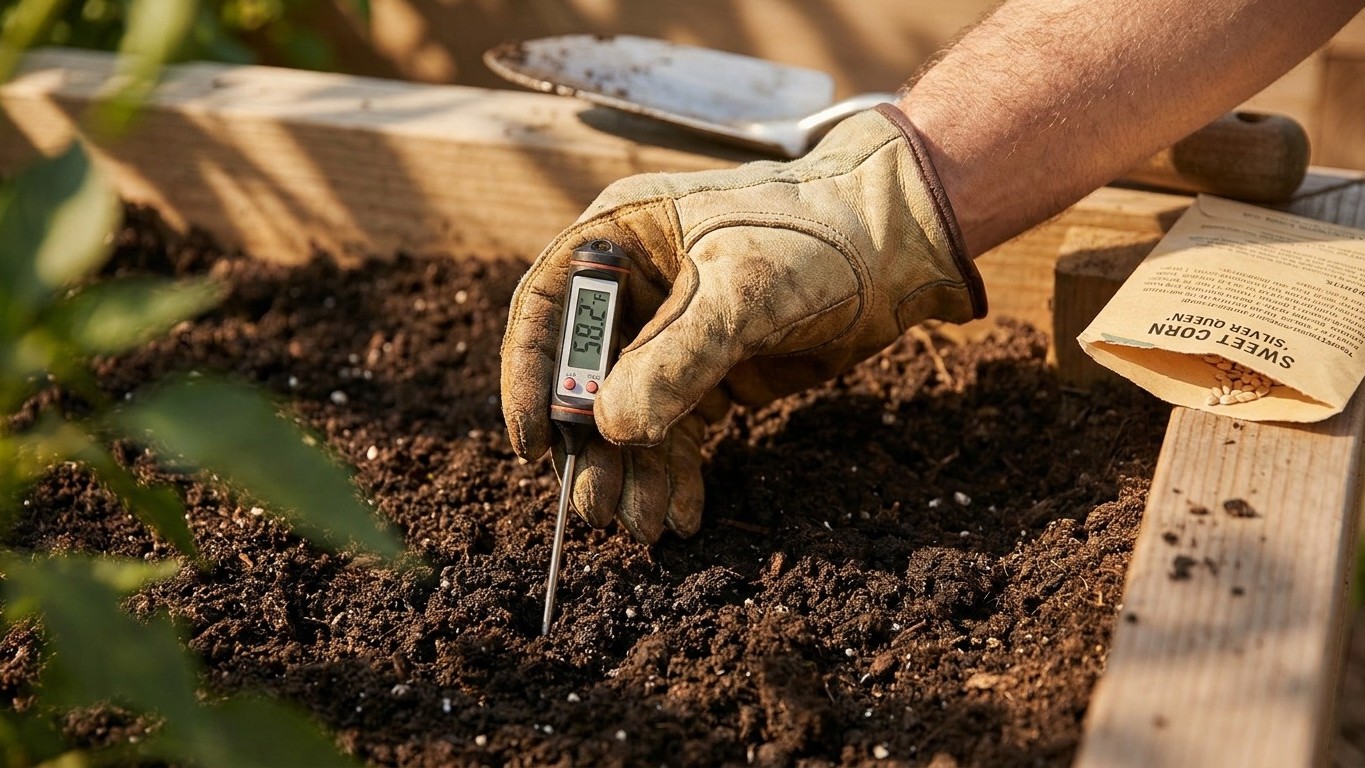

Sow sweet corn in Oregon once soil temperatures hold above 60°F, not on the date of the last frost. West of the Cascades, that usually lands well into late spring. From there, a 60- to 90-day variety has plenty of runway before the first fall frost arrives between November 11 and 27.
The short answer
The mistake most gardeners make with sweet corn isn’t choosing the wrong variety. It’s confusing frost-free with warm enough. Oregon’s last spring frost, according to NOAA climate normals, falls somewhere between March 6 and March 21 west of the Cascades. That date tells you when the air stops freezing. It says nothing about the soil.
Sweet corn germinates poorly in cold, wet ground. It needs soil above 60°F to sprout reliably, and soil warms on its own schedule, lagging weeks behind the air. A garden bed can sit at 50°F on a sunny April afternoon even after the frost risk has technically passed. Planting into that cold ground doesn’t kill the seed outright, but it rots more often than it germinates, and what does come up limps along stunted. The practical fix is simple and unglamorous: check the soil itself, a few inches down, rather than trusting the calendar or the frost date alone.
Once that 60°F threshold is met, usually well after the frost window closes, the question becomes whether there’s enough season left. Sweet corn needs 60 to 90 days from planting to harvest, depending on the variety. Oregon’s first fall frost, per the same NOAA dataset, doesn’t arrive until November 11 to 27. That gap between a late-spring planting and a mid-to-late-November frost is generous almost anywhere west of the Cascades. Even accounting for a slow soil warm-up, there’s typically several months of open growing season to work with.
Heat plays a role too, though a different one than timing. Portland’s climate normals show an average of 11.9 days a year reaching 90°F or hotter. That’s not a huge number, but it’s the signal of a warm-season crop’s real friend: heat load. Warm soil, warm air, and enough hot days in a row are what push corn through germination and into steady growth. A cool, damp spring with few of those warm stretches is exactly when the soil-temperature test matters most, because the calendar can lie to you even when the thermometer won’t.
One caution matters here. This reasoning holds for the valleys and lowlands west of the Cascades. Central and eastern Oregon sit in high desert country with a shorter, harsher season, and the frost windows above don’t transfer cleanly to that side of the state.
Does a late variety fit here?
Whether a particular variety fits depends on subtracting its days-to-harvest number from the stretch between a realistic planting date and that first fall frost. In most of western Oregon, that stretch is long enough to make the question almost academic, but it’s worth working through both ends of the range.
A 60-day variety
A fast 60-day sweet corn is the low-risk choice. Even with a cautious approach, waiting until soil is solidly above 60°F sometime in late spring, a 60-day crop reaches harvest by mid-summer with room to spare before autumn cooling sets in. This is the variety that forgives a slow start, a cool stretch of June, or a gardener who wants a second succession planting later in the season. It also gives the widest possible cushion against the first fall frost, whether that lands on the early side (November 11) or the later side (November 27) of the window.
A 90-day variety
A 90-day variety asks more of the season, but in most of western Oregon it still fits. Add three months to a late-spring planting and harvest lands somewhere in late summer or early fall, still well ahead of the November frost window. The margin is tighter than with a 60-day type, and a slow, cold spring eats into that cushion faster, but nothing in the frost data here rules out a 90-day sweet corn for this territory. Gardeners who want the flavor or size advantages some longer-season types offer aren’t fighting the climate to grow one, provided the soil-temperature step isn’t skipped.
That said, this math applies west of the Cascades. In central and eastern Oregon’s high desert, where the growing season runs noticeably shorter, a 90-day variety carries far more risk, and that’s not the territory this frost data describes.
What goes wrong here
Most sweet corn failures in Oregon gardens trace back to one of three habits, and only one of them has anything to do with the climate directly.
- Sowing into soil that’s still cold. Planting right after the last frost date, rather than after the soil itself reaches 60°F, is the most common cause of poor germination and rot. The remedy is a simple soil thermometer check a few inches deep, repeated over several days, rather than relying on the calendar alone.
- Choosing a variety too late for the actual window. This is rarely the problem west of the Cascades, where the season between soil warm-up and first fall frost runs long, but it’s a real risk in central and eastern Oregon’s shorter high-desert season. The fix is matching days-to-harvest to the local frost window rather than assuming statewide dates apply everywhere.
- Losing sweetness because two types tasseled together. This one has nothing to do with weather. Su, se, and sh2 sweet corn types cross-pollinate if they tassel at the same time, and the result is starchy, disappointing ears regardless of how well the season cooperated. The fix isn’t a distance measurement, since none is published here to rely on, but timing and planting shape: stagger planting dates so tasseling doesn’t overlap, and grow corn in blocks of three or more rows rather than thin single rows, which improves pollination within a variety and helps keep types from mixing.
Common questions
How do I actually check if the soil is warm enough?
Push a standard soil thermometer three to four inches into the bed in the morning, before the sun has warmed the surface, and check it over several consecutive days rather than once. A single warm afternoon reading isn’t reliable evidence that the ground has settled above 60°F.
What happens if I plant before the soil reaches 60°F?
Seeds sit in cold, damp ground far longer than they should, which invites rot before germination and produces weak, uneven stands even among the seeds that do sprout.
Does this frost timing apply to all of Oregon?
No. The March 6 to March 21 last-frost window and the November 11 to 27 first-frost window come from a reference station west of the Cascades. Central and eastern Oregon’s high desert has a shorter season, and these dates shouldn’t be applied there.
Can I plant two different sweet corn types in the same garden?
Yes, but not if they’ll tassel at the same time. Su, se, and sh2 types cross freely when their tasseling overlaps, and the result is a loss of sweetness in the affected ears. Staggering planting dates so tasseling windows don’t coincide protects flavor without needing a distance measurement.