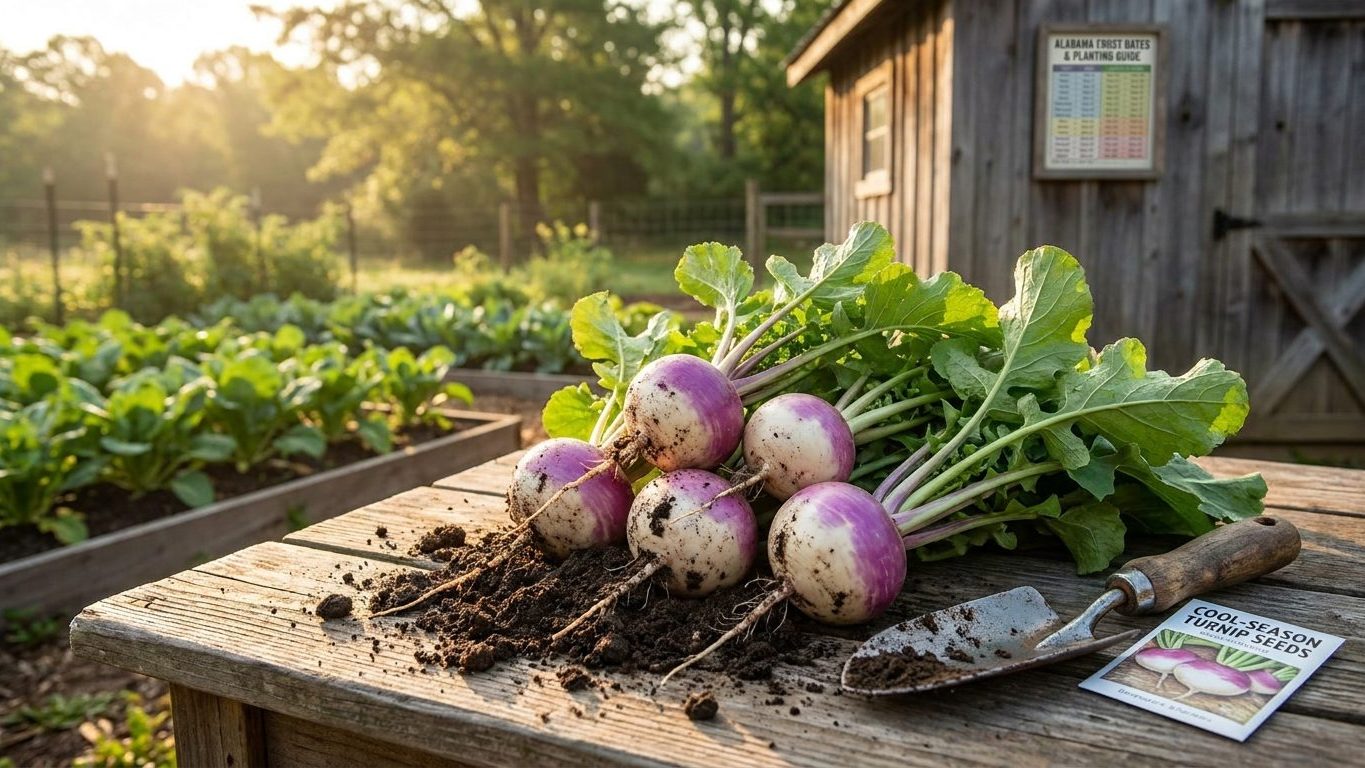

Sow turnips twice in Pennsylvania: in early spring, as soon as the soil can be worked, and again from late August into mid-September for a fall crop. Philadelphia’s average last freeze falls between March 29 and April 6, and its first fall freeze between November 5 and November 16. Count from those dates, then adjust for how far north or how high you garden.
The short answer for Pennsylvania
Those frost dates come from the NOAA Climate Normals for 1991-2020, and each one marks a probability. The March 29 to April 6 range is the stretch when the chance of a 32°F freeze at the Philadelphia reference station sits between 30 and 70 percent. The fall range of November 5 to November 16 is the same band in autumn. A freeze can still arrive after the later spring date, and a mild year can skip past the earlier fall one.
When do you sow turnips in spring in Pennsylvania?
Turnip seed germinates in cool soil, and seedlings shrug off light frost. That lets you sow ahead of the spring frost window, which means early around Philadelphia in a year when the ground is workable. A handful of soil should crumble in your fist instead of smearing like putty. Packet days to maturity for turnips count from sowing, because turnips go straight into the ground. A March sowing is ready before the heat arrives.
When do you sow turnips in fall in Pennsylvania?
Fall is the better season for turnips. Roots that size up in cooling weather are sweeter and less pungent than spring roots. Count back eight to ten weeks from the first-freeze window of November 5 to November 16, and you land between late August and mid-September near Philadelphia. Light frost does not hurt the tops, and cold nights turn some of the root’s starch to sugar.
Philadelphia is the mildest corner of the state. The northern tier and the Alleghenies run two to four weeks later in spring, so spring sowing there slides into April. Their first fall freeze comes earlier than Philadelphia’s, so fall sowing moves up to early or mid-August. Varieties that mature quickly give you more room on both ends, and The Best Turnips and Rutabaga for Pennsylvania sorts them by days to maturity.
What will not work here
The most common failure is a late spring sowing. Turnips sown in May mature in June and July heat, and roots that size up in hot weather turn woody, hot-flavored and pithy. Warm weather also pushes the plant to bolt, sending up a flower stalk before the root has finished. A turnip that has bolted is done as a vegetable. If spring slips past April in the southeast, wait for fall.
Midsummer sowing fails for a related reason. Seed put in during July lands in hot soil, and the seedlings arrive just as flea beetles are most active, chewing small holes in the leaves. The roots that survive grow in warm soil and come out stringy. The late August start beats this by a few weeks, when soil temperatures begin to fall.
Sowing too late in fall also fails, and the timing is easy to miss. Turnips need a stretch of cool growth to make a usable root. Seed sown in October will produce a flush of leaves but little root before hard freezes arrive. As of late October, the window for roots has closed across most of the state, and the next real opportunity is early spring.
Pennsylvania’s humid summers and falls punish crowded rows. Turnips sown thickly and left unthinned hold wet foliage against each other, and leaf diseases follow. Thin seedlings once the first true leaves open. Eat the thinnings as greens.
Watering once a week does not work in a late-August seedbed either. The surface dries fast in late-summer dry spells, and turnip seed that sprouts and then dries out is lost. Keep the top inch of soil evenly moist with light, frequent watering until the seedlings are up, then ease off.
Winter is the last thing that defeats turnips here. The mean daily minimum of the coldest month at the Philadelphia reference station is 26.0°F, which means many nights drop below that. Roots left in the ground through a run of nights in the teens or low 20s turn soft. Lift fall turnips before the ground freezes hard, or mulch them deeply and pull them as needed in a mild stretch. Rutabaga has the same problem in the north on top of a longer season, so sow it by early summer there. The overview in Growing Turnips and Rutabaga in Pennsylvania covers it in more detail.
What changes across Pennsylvania
The USDA Plant Hardiness Zone Map (2023 edition, built on 1991-2020 normals) places Pennsylvania in zones 5a through 7b. That is six half-zone steps inside one state, so there is no single answer to “when do I sow?” The system rests on one variable, the average annual extreme minimum temperature, and the spread tells you how different winter is between the Philadelphia suburbs and the high ground of the northern tier and the Alleghenies.
Hardiness zones describe winter cold, and turnips are a cool-season crop that never faces most of it. Frost dates matter more for the calendar. Still, the zone range is a useful sign of who should shift. A gardener in the northern tier or on a ridge should push the spring sowing later by the two to four weeks the Philadelphia reference run ahead of them, and pull the fall sowing earlier by a similar margin. Start fall seed in early August where Philadelphia gardeners would wait until the end of the month.
Elevation does the same work as latitude. Roughly speaking, a garden higher up behaves like one farther north. Valley floors can also pool cold air, so a low spot in the same county may see frost after a nearby hillside has escaped it. Any one yard can differ from the county average by a week or more.
Look up your own zone on the USDA Plant Hardiness Zone Map by ZIP code instead of assuming it. Once you have it, use it as a rough guide to how far to move the dates in this article.
Where to check this for your own county
Penn State Extension is the state’s land-grant extension service, with an office serving every county. Two items are worth finding there. The first is a local planting calendar for vegetables, which gives sowing dates for fall and spring crops tuned to your area’s frost dates. The second is the list of varieties trialled in your county or the closest research station, because a turnip that does well near Erie may not suit Lancaster County.
The county office can also tell you the local patterns that no statewide table can: when the soil usually thaws, how bad flea beetles and root maggots run, and whether your area gets reliable late-summer rain. Many offices have Master Gardeners who answer questions by phone or email, and they have seen the local failures firsthand.
A county recommendation beats a state one. Philadelphia’s frost dates anchor the dates above, and the state spans six half-zones and several weeks of difference in spring. Treat a statewide calendar as a starting point, then replace its dates with the county ones wherever they differ.
Checking this against your own garden
Your own ground outranks every date here. Three observations are worth making each season, and none needs equipment.
- Soil warmth by feel. In early spring, push a bare hand into the bed. If the soil feels cool but not icy and crumbles instead of clumping, turnip seed will germinate. A south-facing bed along a wall reaches that point days ahead of a shaded one, which tells you which bed to sow first.
- The first true leaves. Seedlings first show two rounded seed leaves, then the first rough, lobed true leaves. In cool soil that takes a while. If your seedlings sit for much longer without true leaves, the soil is still too cold or too dry. Note the date, and use it to sow earlier or later next year.
- Your first frost. Watch when frost first whitens the lawn or blackens tender plants such as basil and tomatoes. Compare it with the November 5 to 16 range. If your yard frosts two weeks sooner, you sit in a cold pocket, and fall sowing should start earlier.
Write all three dates in a notebook for a couple of years. Within two seasons you will have a calendar for your own yard that no state table can match.
If you follow the almanac, here is when to plant turnips by the moon. It is a tradition, not a proven method.
Common questions
Can I sow turnips in July in Pennsylvania?
It rarely works. Hot soil and flea beetle pressure leave seedlings struggling, and roots grown in summer heat come out stringy. Wait until late August in the southeast, or early August in the northern tier and mountains, and sow for a fall crop.
How long do turnips take from sowing to harvest?
Most packets list 30 to 60 days, counted from sowing, because turnips are sown directly in the ground. Greens are ready earlier. Check the days on your variety’s packet and count back from the first-freeze window.
Should I sow turnips before the last frost?
Yes, two to four weeks before. Seedlings tolerate light frost. In the Philadelphia area that means early to mid-March, and in the north and at altitude it means April once the soil is workable.
Can turnips stay in the ground over winter in Pennsylvania?
Only in a mild winter, and with luck. The coldest month’s mean daily minimum is 26.0°F at the Philadelphia reference station, and hard freezes damage the roots. Lift them before the ground freezes, or mulch heavily and harvest during thaws.