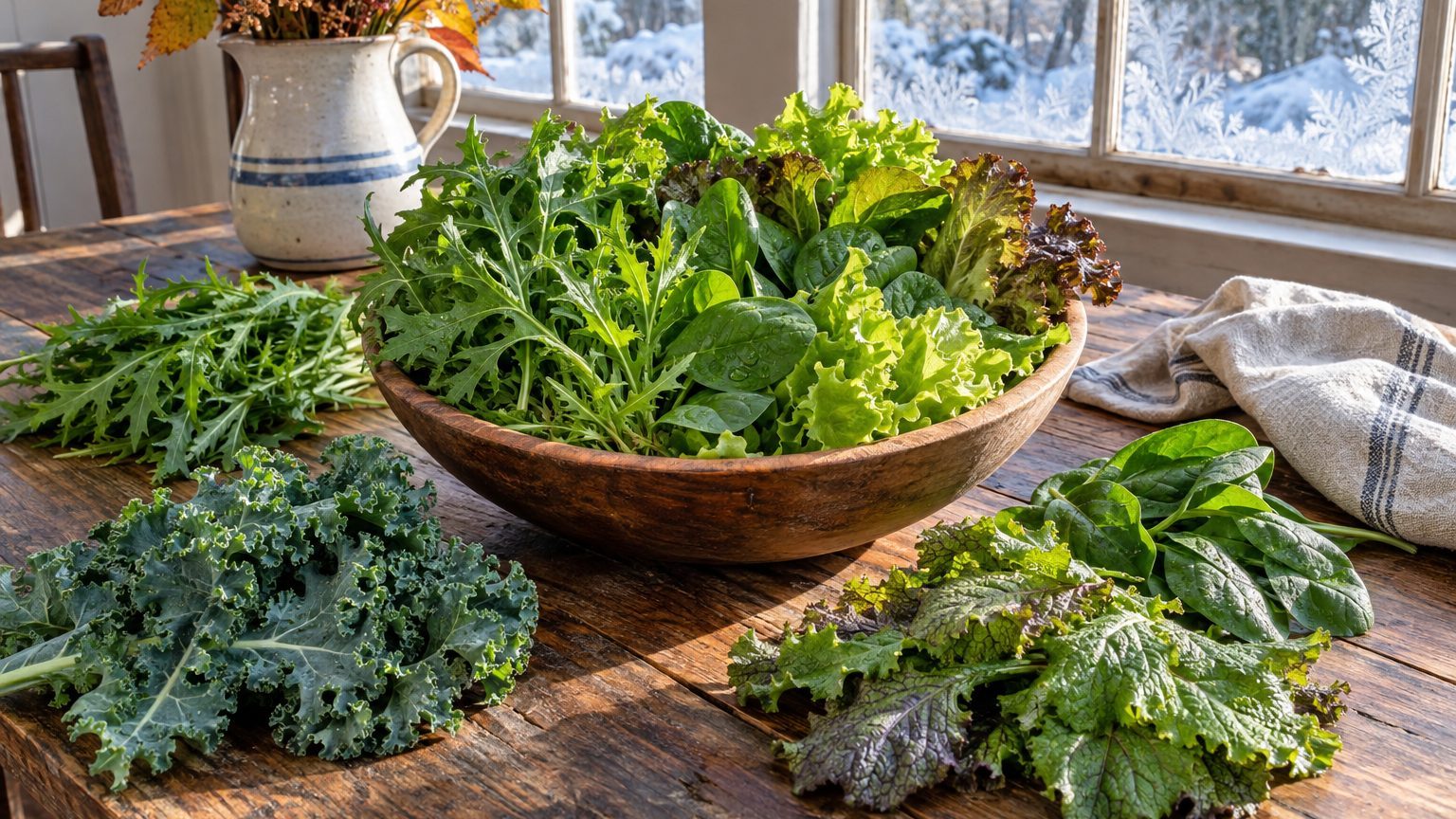

The best winter salads for Pennsylvania are the cold-hardy leafy greens: spinach, mâche, claytonia, kale, and Asian mustards such as mizuna and tatsoi. Arugula and cold-tolerant lettuces work as protected extras. All of them are sown in late summer or early fall and grow slowly through winter under light cover. The full crop list is in Winter Salads for Pennsylvania Gardens.
The short answer for Pennsylvania
At the Philadelphia reference station, the last spring frost falls between March 29 and April 6, and the first fall frost between November 5 and November 16. Those dates mark where the odds of a 32°F freeze sit between 30 and 70 percent. They are probabilities of a freeze on a given date, and any single year can land well outside them.
The number that matters most for winter salads is the mean daily minimum of the coldest month, which is 26.0°F at that station. A night at 26°F is hard on tender lettuce and routine for spinach, mâche, and kale. So the choice comes down to type, and you choose by how much cold each type shrugs off.
| Type | Cold tolerance | Cover in Pennsylvania |
|---|---|---|
| Spinach, mâche, claytonia | Highest; survive hard freezes | Optional in the southeast, helpful elsewhere |
| Kale, collards | High; sweeten after frost | Rarely needed |
| Mizuna, tatsoi, other Asian mustards | Good to moderate | Row cover in cold snaps |
| Arugula | Moderate | Row cover; bolts fast in warm spells |
| Endive, escarole, radicchio | Moderate | Cover for the hardest nights |
| Loose-leaf and butterhead lettuce | Lowest | Low tunnel or cold frame |
Which winter salad greens are the safest bets?
Spinach, mâche, and claytonia are the surest. Mâche forms small rosettes of mild, nutty leaves, and claytonia has round, succulent leaves that stay tender in the cold. Both keep growing, slowly, in weather that stops other crops. Kale gives you bigger leaves, and the cold turns its starches to sugar, so a January leaf tastes better than an August one.
Which types need a cover?
Lettuce, arugula, and the mustards eat well in a Pennsylvania winter only when sheltered. A low tunnel or cold frame adds a few degrees and keeps off wind and wet snow. Sowing dates for each type are laid out in When to Sow Winter Salads in Pennsylvania.
What will not work here

Sowing too late fails more gardens than any cold snap. From roughly early November to early February, daylight at Pennsylvania’s latitude drops under about ten hours, and most salad plants stop adding leaves. A seedling that is still tiny when frost arrives from November 5 to 16 in the southeast will sit there until spring. Slow crops such as radicchio and head endive need an early start and often finish too late to be worth it.
Summer heat is the other end of the problem. Late-summer sowings go into warm soil, and lettuce seed often will not germinate when the ground is hot. Spinach has the same trouble. Sowing at dusk, shading the row with a board or cloth until sprouts show, and watering daily at first gets the seed through. A once-a-week watering routine fails here, because a shallow seedbed dries out in a day or two of August sun.
Humidity punishes close spacing. Pennsylvania summers and autumns are muggy, and crowded rows stay damp. That invites downy mildew, gray mold, and slugs, all of which keep working under cover on mild winter days. Thin seedlings to the spacing on the seed packet, and open the ends of tunnels on sunny days so moisture can leave.
Tender lettuce left bare is another loss. With a 26.0°F mean daily minimum in the coldest month, many nights drop well below that, so watch the heads and cover them when a hard freeze threatens. Cover also needs a plan for snow. Wet snow can flatten a loosely hooped tunnel, so use sturdy hoops and brush heavy snow off.
Soil matters too. Heavy clay in the southeast and in many valleys stays soggy through winter, and roots sitting in cold water rot. A raised bed or a ridge of loosened soil keeps spinach and mâche alive where flat ground would lose them. Deer and rabbits also do far more damage to winter greens, since little else is growing.
What changes across Pennsylvania
Pennsylvania has no single answer. The USDA Plant Hardiness Zone Map spans 5a to 7b across the state, six half-zone bands, from the cold northern tier and high Alleghenies down to the mild southeast. That map is built on one variable, the average annual extreme minimum temperature, so it measures the worst night of the year more than the typical one.
Philadelphia is the mildest corner. The northern tier and the Alleghenies run two to four weeks later in spring, and fall frost arrives sooner there. A gardener in the north has a shorter window to get plants established. Sow earlier than the southeast timing, and put your effort into the hardiest types: spinach, mâche, claytonia, and kale. Plan on low tunnels or a cold frame for anything else.
Altitude works the same way. A garden on a ridge in the Alleghenies can be a full zone colder than a town a few miles down the valley. Cold air also pools in hollows, so a low corner of the yard frosts earlier than the slope above it. If your winters are hard, treat a harvest as something that pauses in the deepest cold and restarts in late winter, with plants waiting under cover rather than growing.
In the southeast, the tradeoff runs the other way. Mild winters allow a longer harvest and a bigger choice of types, but warm spells push arugula and mustards to bolt early. To find the band your own address falls in, look it up on the USDA Plant Hardiness Zone Map by ZIP code rather than guessing from a neighbor’s garden.
Where to check this for your own county
A county recommendation beats a state one, and this is the state one. Pennsylvania runs from sea-level river valleys to plateaus above 2,000 feet, so any statewide advice has to average over very different gardens.
The best next stop is Penn State Extension, the state’s land-grant extension service. Look for two things there. The first is a planting calendar for your county or region, which will put sowing dates for fall greens on the right side of your local frost dates. The second is the list of vegetable varieties trialled in your area, since a variety that held through a hard winter in one county may bolt or rot in another.
Your county’s extension office can also tell you about local conditions that change the answer, such as soil type, common pests in the neighborhood, and whether deer are a serious problem. Master Gardener volunteers often know which late-summer sowings worked in recent seasons. Bring your ZIP code and a rough idea of your garden’s sun and drainage, and you will get an answer matched to your ground.
Checking this against your own garden
What you see in your own beds outranks any date in print. Three observations tell you more than a calendar can.
- Soil warmth by feel. Push your hand a few inches into the bed in late summer. If it feels warm, lettuce and spinach seed will struggle, so wait or shade the row. A bed that cools sooner than your neighbor’s tells you it can be sown sooner.
- First true leaves. Seedlings start with two rounded seed leaves, then grow the first leaves that look like the adult plant. Aim to have true leaves on every seedling before daylight shortens in early November. If they have not appeared by then, plan on cover and a slow start in spring.
- First frost on your own grass. Note when white frost first coats the lawn or car roof, and where. The spots that whiten first are your cold pockets, and the spots that stay clear, usually near a south wall, are where your tender types belong.
Write the dates down for a year or two. Your own notes will soon be a better guide than the regional averages.
Common questions
What is the easiest winter salad green to grow in Pennsylvania?
Spinach is the easiest for most gardeners, with kale close behind. Both handle freezing nights, grow in ordinary soil, and need little cover in the southeast. Mâche is just as hardy but tiny, so it takes more plants to fill a bowl.
Can lettuce survive a Pennsylvania winter?
Only with protection. Outdoors and bare, most lettuce is lost in a hard freeze. Under a low tunnel or in a cold frame, loose-leaf and butterhead types can last through much of the winter, though growth slows to a crawl in the darkest weeks.
When do winter salad greens stop growing?
Growth slows sharply as days drop under about ten hours of light, from roughly early November to early February. Plants hold in a kind of storage, and you pick what is already there. Growth returns as daylight lengthens in late winter.
Do winter salads need cover in northern Pennsylvania?
Most do. In the northern tier and the Alleghenies, row cover or a cold frame helps even hardy greens, and tender types need it. Spinach, mâche, claytonia, and kale often survive uncovered, but sheltered plants stay cleaner and produce sooner in spring.