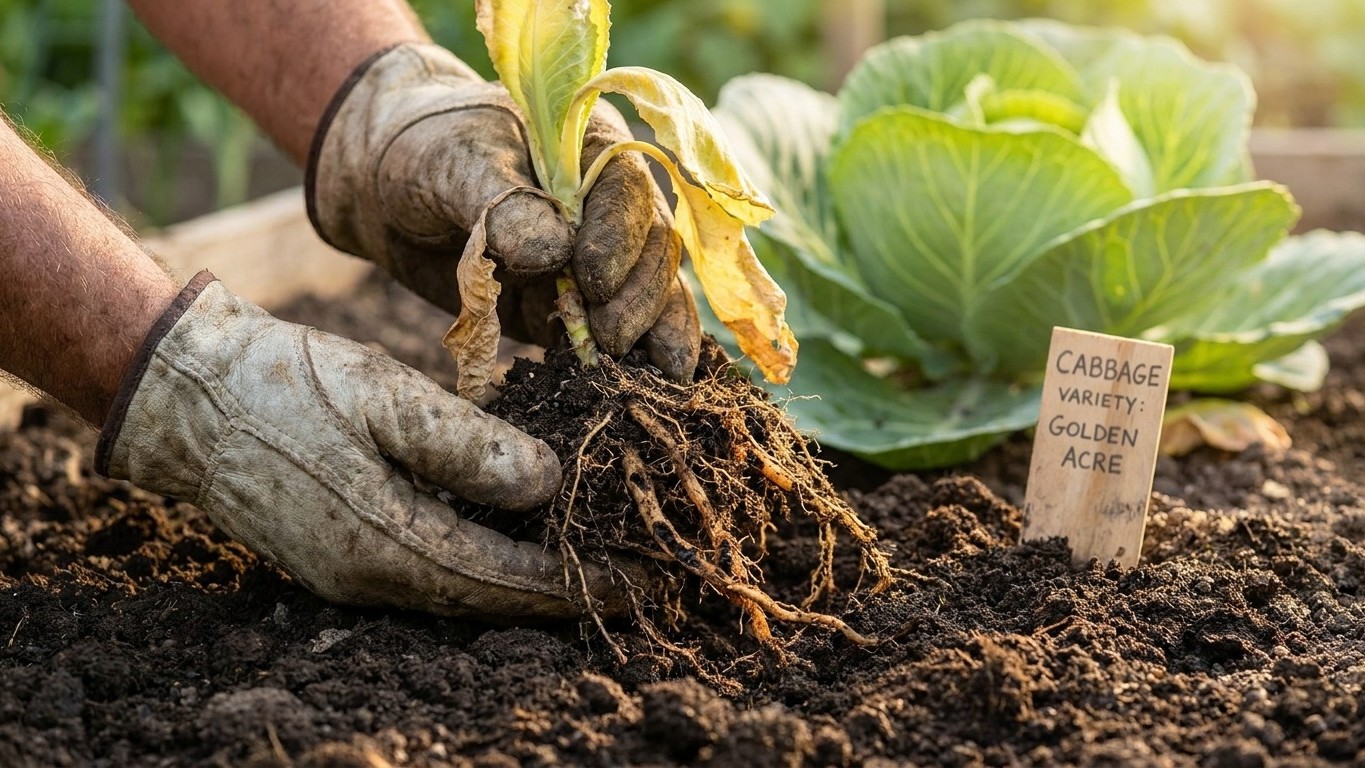

Cabbage maggot damage shows up first as wilting that doesn’t match the weather, then as a plant that lifts right out of the soil because its roots are gone. The insect responsible, Delia radicum, never touches a leaf. Everything happens below the soil line, which is exactly why so many gardeners misread the symptoms and treat the wrong problem for weeks before finding the real cause.
What the damage looks like

From across the garden, the first sign is a row of brassica transplants that look tired in the heat of the afternoon and never quite perk back up by evening, even after watering. Cabbage, broccoli, cauliflower, and radish seedlings are the usual victims, and the wilting tends to hit young plants hardest, sometimes within two or three weeks of transplanting. A healthy neighbor plant right next to a collapsing one is a common and confusing sight, because the damage is patchy rather than uniform across a row.
Move in closer and the picture sharpens a little. Older, outer leaves turn a dull yellow or take on a grayish-blue cast before the rest of the plant does, and growth stalls out compared to unaffected plants of the same age. Some seedlings simply keel over at the base, as if something had cut them loose from the ground, which is closer to the truth than it sounds.
What you find at the root
Pull up a struggling plant and the confirmation is right there. Roots show tunnels and scarring, often with a brown, water-soaked look along the channels. Small, white, legless larvae up to about a third of an inch long may still be feeding inside the root tissue or in the soil clinging to it. In advanced cases the main root looks shredded rather than tunneled, and a foul, rotten smell often accompanies it, since the wounds left behind invite soft rot organisms that finish off what the maggots started.
That gap between what shows above ground and what’s actually happening below is the whole story with this pest. A plant can look merely stressed from the porch, and turn out to have almost no functional root system left once it’s lifted from the bed.
What it is confused with
Wilting brassicas get blamed for a lot of things, and most of the alternatives lead to a wasted afternoon or, worse, a treatment that actively makes things harder for the plant. The table below covers the diagnoses that come up most often instead of cabbage maggot.
| Could be | How to tell it apart | Why the mix-up matters |
|---|---|---|
| Clubroot (fungal disease) | Roots are swollen and club-shaped rather than tunneled; no maggots or larval channels present; soil often stays infected for years | Spraying an insecticide does nothing for a soil-borne fungus; the fix is soil pH management and resistant varieties, not pest control |
| Flea beetle feeding | Small round shot-holes across the leaf surface, damage entirely above ground, roots intact when pulled | Treating the soil or roots wastes effort when the actual feeding is happening on foliage |
| Black rot (bacterial) | Yellow, V-shaped lesions starting at leaf margins and working inward, no root tunneling | This spreads through water and tools, so garden sanitation matters more than any pest treatment |
| Transplant shock or drought stress | Wilting is present but roots pulled from soil look intact and undamaged | The common mistake here is increasing watering, which can make things worse if maggot damage is also present since soggy soil favors root rot |
That last mix-up is the one that trips up the most gardeners. A wilting seedling reads as thirsty, so the response is more water. If maggots have already opened wounds in the root, extra moisture around damaged tissue just accelerates the secondary rot that finishes the plant off. Pulling one plant to check the roots before reaching for the hose settles the question in under a minute.
Where to look to confirm
Confirming cabbage maggot means looking in a specific spot, not scanning the whole plant at once. Choose one of the more wilted plants along the row, not the healthiest-looking one, and dig it out with a bit of the surrounding soil rather than yanking it by the stem, since that snaps off the very evidence you’re looking for.
The stem base and upper root
The action is concentrated right at the soil line and in the top couple of inches of root. That’s where adult flies lay their small, white, rice-grain-shaped eggs in cracks and crevices in the soil close to the stem, and it’s where the larvae tunnel in first before working deeper into the root as they grow. Rinse the root gently in a bucket of water rather than scraping it, and the tunnels, scarring, and any larvae still present will be easier to see against the clean root surface.
What stage you find depends on where the season stands. Early on, you’re more likely to spot the eggs themselves at the soil surface near the stem. A few weeks in, larvae inside the root tissue are the more common find. Later still, brown, oval pupal cases turning up loose in the soil around the root ball mean the current generation is finishing up and adults will emerge again before long.
Check several plants along the row rather than stopping at the first confirmation, since damage is rarely even from one end of a bed to the other. Some rows show heavy tunneling on every third plant and nothing on the rest, which is normal for how these flies lay eggs in clusters near favorable plants rather than spreading evenly.
No fixed count or threshold is given here on purpose. Action levels, and the point at which a garden or field justifies a response, are set by university extension services and differ by state and by season. Your state’s cabbage maggot page on this site names the extension service for your area and links to their current guidance.
What to do once you are sure
Once tunneling, larvae, or the telltale foul-smelling rot confirm cabbage maggot, timing becomes the deciding factor for whatever comes next. Adult flies emerge and lay eggs on a schedule tied to soil temperature and degree-day accumulation, which varies by region and by year. The cabbage maggot life cycle page on this site breaks down each stage and how to track emergence timing so that any protective measure goes in before eggs are laid rather than after the damage is already done.
For what actually reduces damage going forward, from row covers and planting date adjustments to soil-level barriers, the cabbage maggot control page covers the options that hold up in practice. This is also where the specifics on treatment thresholds and any locally approved materials belong, since those decisions run through the same state extension services that set the action levels mentioned above.
The biological control worth knowing about
One natural enemy does more work here than most gardeners realize. The rove beetle Aleochara bilineata both preys on cabbage maggot eggs and larvae and parasitizes the pupae, and in gardens where it’s established it can meaningfully cut down the next generation without any intervention. Preserving it comes down to avoiding broad-spectrum insecticide use near brassica beds and keeping some undisturbed soil and plant diversity nearby, since rove beetles need both prey and shelter to stick around season to season.
Your state extension office is still the authority for anything specific to your growing conditions, planting dates, and locally recommended materials. This site’s territory page for your state lists that office directly, along with the timing windows that matter most where you garden.
Common questions
Can cabbage maggot damage kill an established plant, not just seedlings?
Mature plants can survive moderate root tunneling since they’ve already built a larger root system, but heavy damage combined with secondary rot can still take down established brassicas, especially in wet soil conditions.
Does cabbage maggot damage affect the edible root of radishes and turnips directly?
Yes, and this is where the damage is most obvious to a gardener, since tunnels and scarring show up right on the part meant to be harvested and eaten.
How fast does damage progress once maggots are established?
A seedling can go from mild wilting to complete collapse within a couple of weeks once larvae are actively feeding, since young root systems have little tissue to spare.
Can I still eat vegetables from plants that show maggot damage?
Trim away tunneled and rotted portions of the root; the rest of the vegetable is typically fine to eat, though heavily rotted roots are better discarded since secondary bacteria can spread through the damaged tissue.