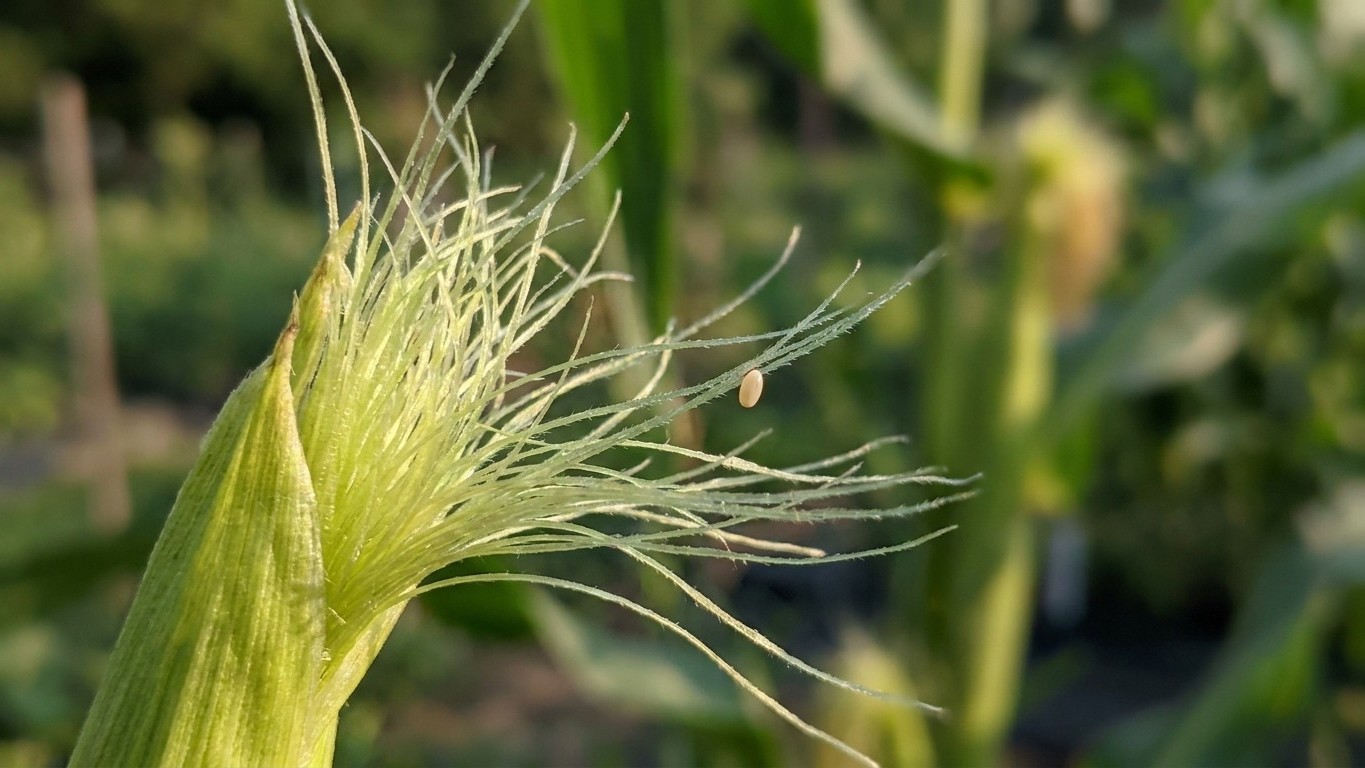

Corn earworm control works only when it targets the larva before it tunnels past the silk into the ear tip, because once inside, no spray, trap, or hand-picking reaches it. The real strategy is layered: watch the silk stage closely, lean on natural predators you already have in the garden, and treat with a labeled product only if damage pressure justifies it and timing allows the material to reach the larva before it disappears into the husk.
Timing beats product

Here’s what separates a controlled corn earworm (Helicoverpa zea) problem from a ruined harvest: the moment of intervention, not the intervention itself. A moth lays a single egg on fresh green silk. The egg hatches in a matter of days, and the newly emerged larva heads straight down the silk channel toward the ear tip. Once it’s fed its way in past the first inch or two of kernels, it’s protected by husk and corn tissue on every side. Spray it then, and you’re coating a wall the caterpillar left behind.
This is why so much generic pest advice falls flat on corn earworm. A calendar-based spray schedule, applied without regard for when silks actually emerge in a given field, will miss the narrow window entirely. Two weeks early, and there’s nothing to kill. Two weeks late, and the larva is already six kernels deep. The insect’s biology, not the gardener’s convenience, sets the clock.
Why the life cycle matters before anything else
Before choosing barriers, biological allies, or a treatment, it helps to know exactly how many generations move through a season, how long each egg-to-moth cycle runs, and which stage is actually vulnerable to a given tactic. That detail is specific enough that it deserves its own explanation rather than a paragraph here. The site’s corn earworm life cycle page walks through egg, larval, pupal, and adult stages in sequence, and it’s worth reading first, because every method described below only works if it’s timed against that cycle rather than against the calendar on the wall.
One more thing worth knowing upfront: the moth doesn’t overwinter reliably everywhere. In colder regions, populations often migrate in on warm-season winds rather than emerging locally, which means local weather and regional flight patterns, not just soil temperature, drive when silks are at risk. That’s another reason a single national answer doesn’t exist for this pest, and why the sections ahead point toward regional guidance rather than a fixed date.
What works without a product
Several tactics reduce corn earworm damage without a label, a rate, or a sprayer, but each one only pays off if it’s applied at the right moment.
- Barriers on the silk: A small clip, rubber band, or clothespin-style clamp placed over the silk channel a few days after silks emerge blocks the moth from laying eggs directly on fresh silk. This has to go on early, before silks brown and before eggs are already present, or it does nothing.
- Mineral oil on the silk tip: A few drops applied to the silk just past full emergence smothers eggs and newly hatched larvae before they travel down the channel. Applied too early, before pollination finishes, it can interfere with kernel set, so timing against the life cycle matters here too.
- Hand removal: Checking ears every few days during silking and picking off visible eggs or young larvae works, but it’s genuinely laborious for anything beyond a small backyard patch. It also demands a trained eye, since the eggs are tiny and pale.
- Trap crops: Planting an early block of corn, or a strip of sorghum, ahead of the main planting can draw egg-laying moths away from the primary crop. This only works if the trap crop reaches silk stage before the main planting does, giving moths a more attractive target first.
- Planting timing: Adjusting planting dates so silking happens outside the peak moth flight window sidesteps the worst pressure entirely, but that peak shifts by region and by season, which again points back to local extension timing rather than a fixed date.
- Fall cleanup: Removing and destroying old ears, stalks, and debris after harvest reduces the pupae and habitat available for the next generation, though in migratory regions this has less effect than it does where the moth overwinters locally.
None of these methods is a silver bullet on its own. Combined, and timed against the silk stage rather than the season in general, they meaningfully cut the number of infested ears without any spray at all.
The allies you already have
Corn earworm has real natural enemies, and in a garden or diversified planting, they often do more work than any spray. Tiny parasitic Trichogramma wasps lay their own eggs inside corn earworm eggs, killing them before they ever hatch into a larva. Lacewings and their larvae feed on both eggs and newly hatched caterpillars. Minute pirate bugs (Orius insidiosus) and lady beetles both prey on eggs and small larvae during the vulnerable window before the caterpillar tunnels into the ear. Together, these predators and parasitoids can hold populations well below damaging levels in a planting that isn’t regularly sprayed.
What preserves them is mostly what you’d expect: flowering plants nearby that provide nectar and pollen for adult lacewings and parasitic wasps, reduced tillage that leaves overwintering sites intact, and avoiding insecticides that don’t discriminate between pest and predator.
That last point deserves to be stated plainly, because it’s where a lot of pest management goes wrong. A broad-spectrum spray applied against corn earworm also kills the Trichogramma wasps, lacewings, and pirate bugs living in and around that planting. The pest population can rebound from migrating moths or a missed egg mass within weeks. The predator population, with its slower reproductive cycle and dependence on a stable food source, takes much longer to recover. The result is a garden with fewer natural checks on the next generation of earworms, and often on other pests those same predators used to keep in check too. A single ill-timed spray can turn one pest problem into a wider one the following month.
This is the strongest argument for holding off on treatment unless damage pressure genuinely calls for it, and for choosing the most targeted option available when it does.
When a product is the answer
There’s an honest case for treatment, and it applies mainly to sweet corn grown for fresh eating, where even light kernel-tip feeding makes an ear unmarketable or unappetizing. Field corn destined for grain tolerates far more feeding without meaningful yield loss, since the damage is usually confined to the tip and doesn’t affect the bulk of the kernels.
Where treatment is warranted, it has to target the same narrow window described above: the period after silks emerge but before larvae have tunneled past the first inch of the ear. Applied to the silk itself, on a schedule tied to fresh silk growth, a treatment can intercept eggs and newly hatched larvae before they’re out of reach. Applied later, once feeding has already moved into the ear, it accomplishes little regardless of what’s in it.
What actually gets applied, and how often, is a question this article won’t answer directly, and for good reason. Permitted active ingredients, formulations, and application intervals are set at the state level and reviewed periodically, which means a product cleared for home garden use in one state may carry different restrictions in another, and guidance changes between seasons as new research and registrations come through. Naming a specific product or rate here risks being wrong the moment conditions shift, or wrong for the reader’s own state from the start.
The reliable path is a state’s Cooperative Extension Service, which tracks current registrations, silking-stage timing for that region’s growing season, and locally calibrated action thresholds based on trap counts or scouting data. This site maintains a dedicated page for each territory that names the current extension resource and the specific guidance relevant to that region; that’s the page to check before buying anything. Treating corn earworm well means matching a permitted product to the correct stage in the correct week, and that combination is set locally, not nationally.
Common questions
Can corn earworm damage be prevented completely without any treatment?
Not reliably in every planting. Barriers, oil treatments, and strong predator populations reduce damage significantly, and in many home gardens they’re enough on their own, but pressure varies by region and season, and a heavy moth flight can overwhelm non-chemical methods even when they’re applied correctly.
Does corn earworm attack anything besides corn?
Yes. The same species feeds on tomatoes, where it’s often called the tomato fruitworm, as well as on cotton, sorghum, and various other crops. A garden with several of these plants growing near each other can see pressure move between them across a season.
Is it too late to do anything once an ear is already infested?
For that ear, largely yes. Once a larva has fed its way past the tip, the practical response is to trim off the damaged section at harvest rather than treat it. The useful window for any intervention, chemical or otherwise, closes once the caterpillar is inside the husk.
Why do some ears get damaged and neighboring ones don’t?
Timing of silk emergence is usually the reason. Moths lay eggs on fresh, actively growing silk, so ears that silk slightly earlier or later than the peak of local moth activity often escape the worst of it, while ears silking right at the peak take the brunt of the egg-laying.