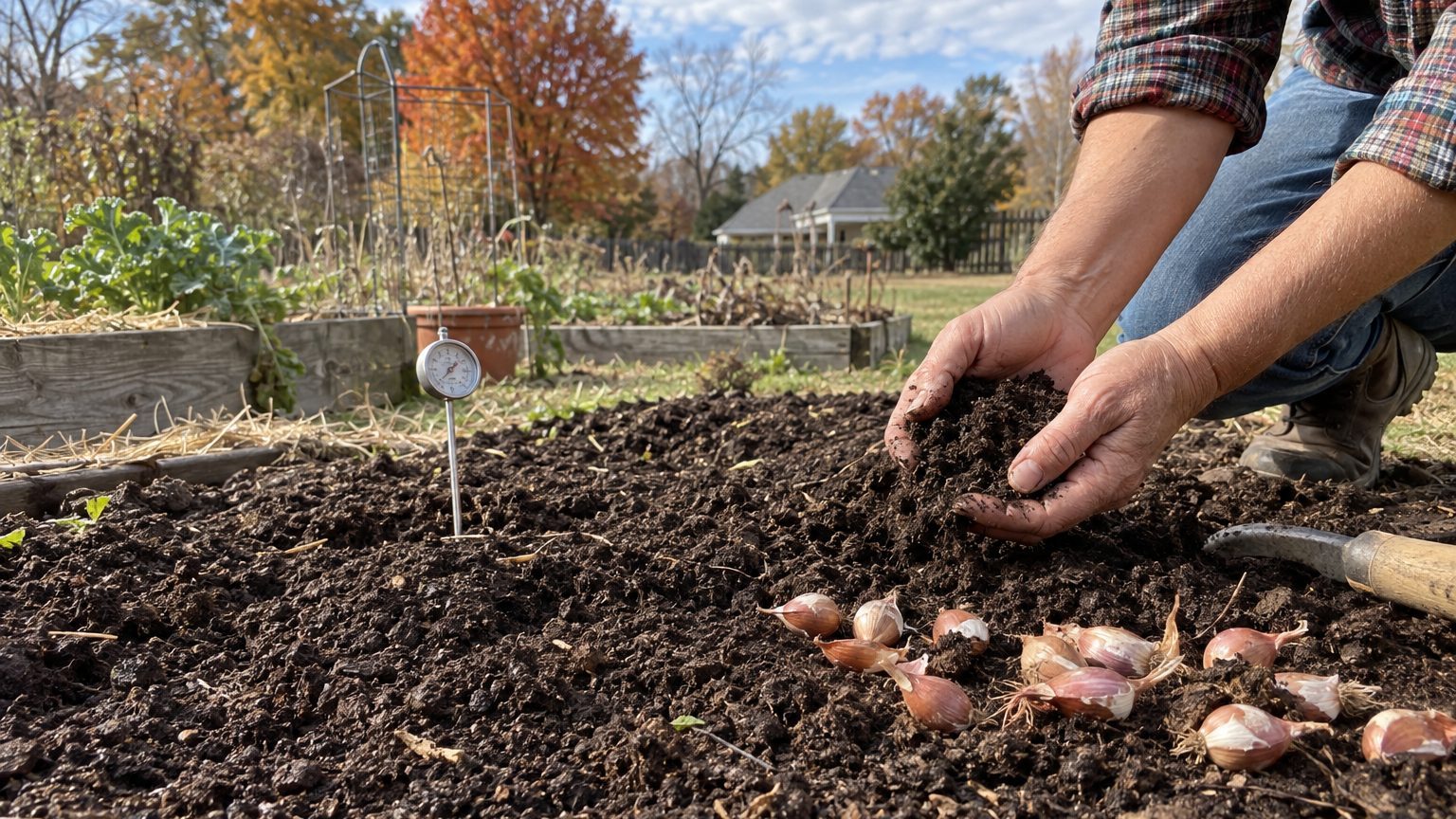

Plant shallots in Prince Edward Island once the soil is workable and warming, which in practice means mid to late spring, after the average last frost of May 16 at Charlottetown. Autumn planting is the alternative, and the island’s winter makes it a gamble. The frost-free stretch is long enough for one solid crop. What follows explains how the dates, the cold and the damp shape that choice.
When the soil is warm enough in Prince Edward Island
The frost date, and why it is only a starting line
The number everyone asks for: at the Charlottetown A station (climate ID 8300300), Environment and Climate Change Canada’s 1981-2010 normals put the last spring frost on average at May 16. Average is the key word. In one year out of two, frost arrives later than that, so treat May 16 as the middle of a window, not a safe date. And one station is not a province. Northern and upland districts of the island run weeks behind Charlottetown.
Frost is also a proxy. Shallots do not read a calendar or a thermometer on the porch; they respond to the soil, and the soil warms after the frost risk ends, not alongside it. A bed can be frost-free and still cold, sodden and slow. Sets pushed into that kind of ground sit idle, and idle sets are the ones that rot.
Reading the soil instead of the calendar
A cheap soil thermometer pushed in at planting depth (an inch or two, or roughly 2.5 to 5 cm) does more than any date. Take the reading in the morning, when the ground is at its coolest, and watch the trend over several days. One warm afternoon proves nothing. Lighter, sandy ground drains and warms sooner than heavy ground, so two beds on the same property can be a week or more apart. Squeeze a handful: if it forms a wet ribbon and stays that way, wait.
Shallots differ from their cousins in one handy way. A single set multiplies into a cluster, so a few weeks of delay in a cold spring costs less than you might fear, as long as the bulbs still have time to size up and finish. The Growing Shallots: One Bulb In, a Handful Out guide covers how that clustering works and how deep to set each bulb.
What carries over from garlic
Autumn planting, curing, storing and allium rotation all work much the same for shallots as for garlic. Two things differ. Shallot sets are smaller and shallower-rooted, so they dry out and heave more easily than a garlic clove set deep. And since shallots are all-allium kin, the rotation clock applies to them just as it does to garlic and onions: keep them out of ground that carried any allium recently.
On curing, inspect rather than trust. Look at the neck, which should be dry and tight, and at the base, which should be firm and clean. A soft neck or a moldy base ends the question: that bulb does not go into storage. Looking sound is not the same as being sound, and no calendar promise about keeping time can be trusted.
How long the season lasts here
Count the days between the two averages and you get 154. That is the span from the mean last spring frost on May 16 to the mean first fall frost on October 17, both from the Charlottetown A station in the 1981-2010 normals. About 22 weeks, in round terms. Both dates are means, so in a given year the window can run shorter or longer by weeks, and the length is only as good as the one station it comes from.
What does 154 days allow? One dependable main crop of bulbs, and not much room beyond it. Sets planted in spring need the whole stretch of warm growth to size up, then a dry spell at the end to cure, and that final stretch is the one the island’s autumns squeeze. A second sowing of bulbs, planted in midsummer in the hope of a late harvest, would be racing the October frost with no margin. Where a long season lets you stagger plantings for a steady supply, a window this size makes the first sowing the only one that counts for storage bulbs.
A later sowing still has a use if you want green shallots, harvested young for their tops, since those do not need to finish and cure. The succession sowing guide on this site walks through how to space those plantings and what each is for.
Then there is the question of transplanting. Growers who start shallots from seed, rather than from sets, can gain weeks by sowing indoors and setting seedlings out after the soil warms. In a window this size, that head start can matter. The catch is the root check. Slide a seedling out of its cell before planting: roots circling the plug or matted at the bottom mean the plant is pot-bound and will sulk after transplanting, giving back the time it was meant to save. White, loosely branching roots mean it is ready. Sets skip that problem entirely, which is a big reason most home gardeners here will find them the simpler route.
The hardiness zone is a separate matter. Natural Resources Canada places Charlottetown in Canadian zone 5b, from its 1991-2020 normals. That is a Canadian-system zone, built on several climate variables, and it does not convert to a USDA zone. Gardeners across the Northumberland Strait can compare notes through Growing Shallots in New Brunswick, but zone numbers from different systems should not be swapped between provinces and states.
Heat and water in Prince Edward Island
A moderate frost-free window of 154 days and a cold winter. Nothing in them points to heat as the limiting factor here. Compare Growing Shallots in Indiana, where summer heat shapes the whole calendar, and the contrast is obvious.
When summer heat is small, the trouble moves to the other side of the ledger. A cool, damp summer brings slow ripening, tops that stay green deep into September, and the diseases that follow wet foliage: downy mildew on the leaves and neck rot at harvest. Those are risks to plan for, not predictions about any particular year. The practical answers are plain. Give the rows airflow, keep the bed weeded, water at the base rather than overhead, and lift the crop on a dry day so it can cure before the damp returns.
The winter decides autumn against spring
The figure that matters most is the cold. At Charlottetown, the mean daily minimum of the coldest month is -12.1 °C (10.3 °F), from the ECCC 1981-2010 normals. That is the average night in the coldest month, not the record low, so individual nights run colder. The average also says nothing about how deep the ground freezes or whether snow cover insulates it.
Where the ground freezes hard and stays wet, autumn-planted sets tend to rot or heave out of the soil. Where winters are milder, the payoff of autumn planting is bigger bulbs, earlier. On balance, a winter this cold makes spring planting the safer call on most home beds. Here is how the two compare on this island:
| Factor | Autumn planting | Spring planting |
|---|---|---|
| Winter risk | Rot or frost heave in wet, frozen ground | None, since sets go in after the thaw |
| Start in spring | Earlier, if sets survive | Waits for workable, warming soil |
| Bulb size | Potentially larger | Usually smaller, but reliable |
| Disease pressure | Long wet period in the ground | Shorter exposure |
| Best for | Small trials on well-drained beds | The main planting |
If you want to test autumn planting, treat it as an experiment. Put a fraction of your sets in the best-drained bed you have, mulch them after the ground starts to freeze, and keep the rest for spring. One winter will tell you more about your own plot than any average.
Which shallots suit Prince Edward Island
Choose by type, and let the island’s facts set the order of the questions. A 154-day window and a damp maritime summer point to four things worth looking for:
- Early-maturing types, because the first fall frost averages October 17 and the crop needs time to finish and cure before it.
- Types with documented disease tolerance, since a cool, wet summer makes mildew and neck rot the first thing to guard against, ahead of yield.
- Types that form well from sets, which skips the transplant root check and the indoor start.
- Types known to cope with a spring planting, since spring is the safer main planting on this island.
A cultivar recommendation is only worth anything if it comes from trials run in similar conditions. A name borrowed from a catalog or another region could be wrong for a cool, damp island, and a gardener finds out only after a season is gone. The people who do have the answer are the provincial specialists. Start with Prince Edward Island’s Department of Agriculture, and ask which allium types have been grown and observed on the island, and where stock free of disease can be bought.
Local growers are the other good source. A farmers’ market vendor who has sold shallots for years knows which ones finished in a wet August and which ones sulked. Grocery-store shallots are a poor shortcut: they may carry disease, and nobody can tell you how they will behave in your soil.
Once you have two or three candidates, plant them side by side in the same bed and write down what happens: when the tops fall, how much mildew shows, how firm the necks are after curing. Those notes, kept for a couple of seasons, will beat any general advice.
Common questions
When should I plant shallots in Prince Edward Island?
Plant in spring once the soil is workable and warming, which means after the average last frost of May 16 at Charlottetown has passed. Because that date is only a midpoint and northern or upland districts run weeks later, let a soil thermometer and the feel of the bed make the final call.
Can I plant shallots in the fall on the island?
You can try, but it is a gamble. The coldest month averages a daily minimum of -12.1 °C at Charlottetown, and in ground that freezes hard and stays wet, autumn sets can rot or heave. Plant only a small share in well-drained soil, mulch them, and keep spring for the main crop.
Is zone 5b the same as a USDA zone?
No. Charlottetown is in Canadian hardiness zone 5b, per Natural Resources Canada, and that system uses seven climate variables where the USDA uses one. Natural Resources Canada itself says there is no simple conversion. The zone also rests on 1991-2020 normals, while the frost dates here come from 1981-2010.
How do I know my cured shallots are safe to store?
Inspect each bulb rather than trusting its looks. The neck should be dry and tight, and the base firm and clean. A soft neck or a moldy base ends the question, and that bulb should not go into storage. Check again from time to time, because a single bad bulb can spoil its neighbors.