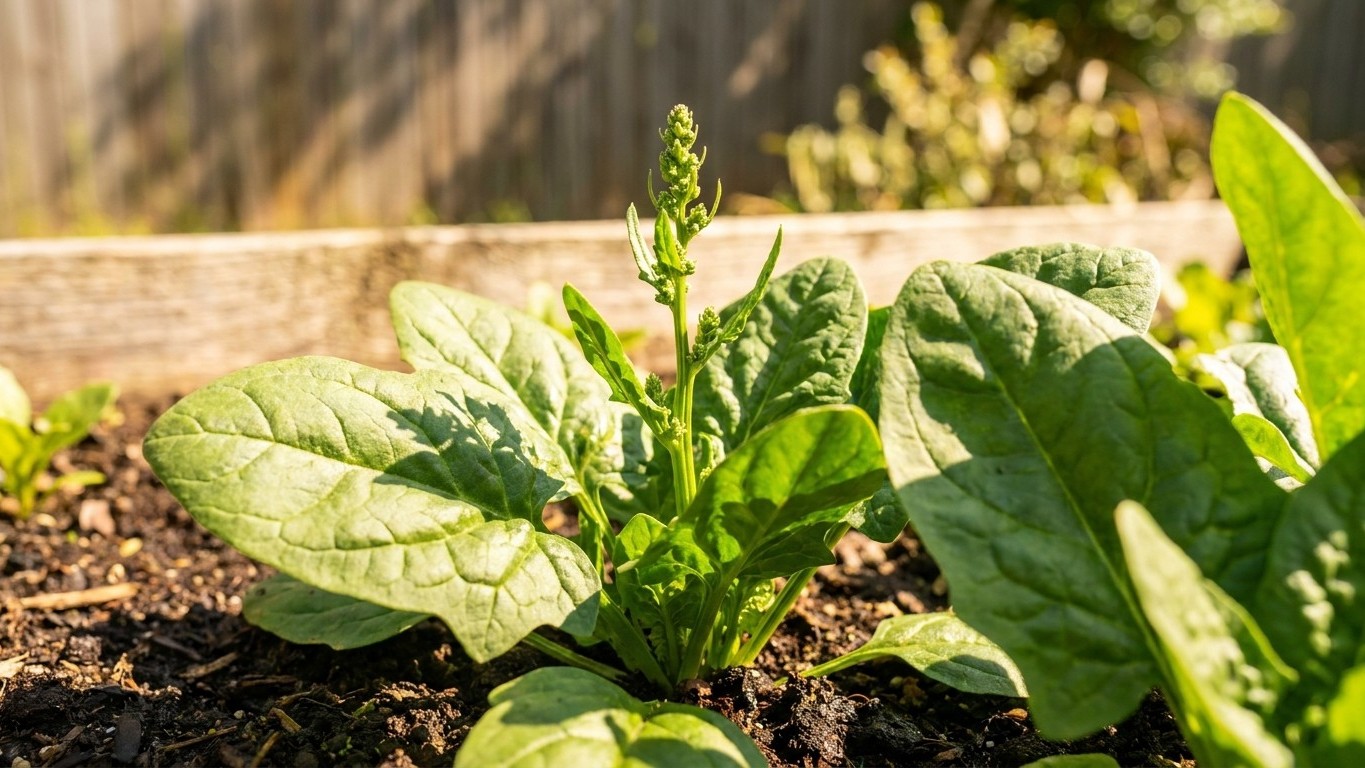

Spinach on Prince Edward Island meets its insects in two short windows: the weeks after a spring sowing goes in near the last frost, and the warm stretch before a late-summer sowing gets going. Between those windows, heat and long days cause more losses than any insect. The sections below match the damage you see to the stage of the plant and the date on the calendar, then explain what stops it.
Which pests attack spinach in Prince Edward Island
The provincial agriculture office and its county contacts document which insects feed on garden crops across the island, and the species list for spinach should come from them. That list is easier to use once you know what a leafy cool-season crop attracts.
Which entries on a pest list can you ignore?
Any provincial list will include insects of orchard trees, potatoes and field grains. Skip them. Spinach is a low rosette of leaves grown in a bed for a few weeks, so what matters are the insects that feed on tender leaves at ground level. They fall into four groups by how they feed:
- Chewers that leave ragged holes in leaf blades.
- Tunnelers that eat the inside of the leaf and leave pale blotches or winding trails.
- Sap feeders that cluster on the underside, curl the leaf and leave a sticky film.
- Seedling cutters that sever young plants at the soil line.
Which species sit behind each group in your district is what the provincial office can tell you, and it is worth a phone call before buying anything.
The season frames everything. Environment and Climate Change Canada puts the mean last spring frost at May 16 at the Charlottetown A station, and the mean first fall frost at October 17. In one year out of two the last spring frost falls later than May 16, and in one year out of two the first fall frost arrives earlier than October 17. Treat both dates as the middle of a window.
Extreme heat is rare at that station, which recorded 0.93 days a year above 30 °C and 0.03 days a year above 32 °C. Spinach still struggles well below those numbers. It grows best where temperatures stay under 75 F (about 24 °C), and seed germination drops once the soil passes 80 F (about 27 °C). Weak, heat-stressed plants are easy to mistake for insect victims.
When each one shows up, and what it does first
Gardeners rarely arrive with an insect name. They arrive with a symptom, so the calendar below runs by plant stage and by the frost-free window, since sowing dates shift from one island garden to the next.
What do you see first in spring?
Spinach is sown directly in the ground, and the first exposure is the seedling stage, the first weeks after the soil has thawed and workable days begin around the mean last frost of May 16. The first sign of trouble is a gap in the row: seedlings lying cut at the soil line or simply vanished. That points to the seedling-cutting group, though cold, wet soil can also stall germination, so check the soil line before deciding.
A few weeks later the plants form a rosette, and the damage moves to the leaves. Ragged holes, pale tunnels and curled leaves with a sticky film show up once the leaves are large enough to feed on and the weather has warmed enough for insects to be active.
Then the days lengthen. The longest day on the island has 15 h 36 of daylight, and long days trigger flowering in spinach on their own, with warm weather adding to the push. When the center of a plant starts stretching into a stalk, the leaves turn small and bitter whatever the insects are doing, and the better move is to read Will Spinach Bolt Early in Prince Edward Island? and harvest what is left.
What happens with a fall crop?
For a fall crop, plant early enough that the plants are not still small when frost arrives, remembering that October 17 is the middle of the first-frost window and the frost can come earlier. The obstacle in late summer is warm soil. Above 80 F, germination drops, so a bed sown too early can leave patchy rows that look like pest losses but are really failed germination. The details are in When to Sow Autumn Spinach in Prince Edward Island.
Fall seedlings meet insects still active in warm September weather, so the same four damage patterns can return. The plants have less time to outgrow the damage before the weather turns, which makes early protection matter more in fall than in spring.
Telling the damage apart from everything else
A lot of spinach trouble looks like insect work and isn’t. Heat, dry soil, poor feeding and mechanical damage all produce holes, yellowing and gaps. Look under the leaves and at the soil line before deciding anything, because insect damage usually leaves evidence there, such as insects themselves, droppings, sticky residue or a cut stem.
| What you see | Possible causes | What settles it |
|---|---|---|
| Gaps in a newly sown row | Seedlings cut by an insect, failed germination in warm soil, soil that stayed too wet or cold | Cut stems at the soil line point to feeding. Seeds that never sprouted point to soil conditions, and above 80 F germination drops |
| Ragged holes in leaves | Chewing insects, hail or wind damage, a stray foot or tool | Insect holes appear in leaves of all ages with droppings nearby. Mechanical damage often follows a line or a weather event |
| Wilting in the afternoon | Dry soil, heat above 75 F, root damage | If plants perk up by morning, the cause is heat or water. If they stay limp, dig up one plant and look at the roots |
| Tall central stalk, small narrow leaves | Bolting | A stalk rising from the center is the signature of day length and warmth, and it has nothing to do with insects |
| Pale blotches or winding trails in the leaf | Insects feeding inside the leaf, leaf disease | Hold the leaf to the light. Trails with a dark speck inside suggest insects, and blotches without any structure suggest disease |
A table can narrow the possibilities, but it can’t tell you what is in your own beds. The provincial agriculture office handles that, and it will want a clear photo, the date, and a leaf or two in a sealed bag.
What actually works here, and what is a waste of time
On an island with a short season, calendar and barriers do more than any treatment. A floating row cover goes on the day you sow, with the edges buried or weighted so nothing crawls in underneath. It keeps the insects off the leaves before they know the bed is there. Where afternoons climb toward 75 F (about 24 °C), lift or vent the cover, since a cover traps warmth that spinach doesn’t want.
Timing does the rest. Sow close to the mean last frost date of May 16 rather than waiting for a warm spell, because a crop that grows quickly in cool spring weather is out of the bed before the longest days push it to bolt. Harvest young leaves often and clear the bed of old plant debris at the end of the season so insects have fewer places to wait out the winter. In a fall crop, count back from your harvest date so the plants are not still small when frost arrives.
What is a waste of time?
Spraying on a schedule before you know what is feeding. A treatment aimed at the wrong group of insects does nothing to the right one, and sap feeders under a curled leaf are hard to reach with any spray. Waiting for damage to become obvious wastes the one stretch when protection is cheap. Sowing into warm soil and blaming insects for the thin stand wastes seed. Leaving bolting plants in the bed hoping they recover wastes space, because a plant that has sent up a stalk does not go back to producing good leaves.
Which products are registered for home use on the island, and how they should be applied, is a question for the provincial agriculture office, since the rules change.
Where to check this for your own county
The island has three counties, Prince, Queens and Kings, and the provincial agriculture office can connect you with the contact who covers yours. Ask for the pests documented on leafy greens in your district, and ask when each one typically shows up compared to the local frost dates.
Why doesn’t a provincial list describe your garden?
Pest presence varies within the province. A species recorded somewhere on the island may be absent from your lot, and one common in one county may be rare in another. The frost dates carry the same caution. The May 16 and October 17 means come from the Charlottetown A station, and northern or upland districts can run weeks behind it. Use those dates as the center of a window, then adjust by watching when your soil is workable and when the first frost actually hits your garden. Keep a short log of both for a couple of seasons.
The next step is simple. Take clear photos of the damage, one of the leaf top, one of the underside and one at the soil line, write down the sowing date and how the bed has been watered, and send them to your county contact with a question about what is documented on spinach in your district.
Common questions
When are spinach seedlings most at risk from insects on Prince Edward Island?
The first weeks after sowing are the most exposed period, which starts around the mean last spring frost of May 16 at Charlottetown A. A fall sowing faces the same risk in late summer, when insects are still active and warm soil can also slow germination.
Is May 16 a safe date to sow or set out spinach?
It is the mean, so in one year out of two the last frost falls later. Treat it as the middle of a window. Spinach is sown directly in the garden, so the date is a guide for starting the bed, with row cover as protection against surprises.
Does a cool island summer protect spinach from bolting?
Only partly. Long days trigger flowering independently of temperature, so cool weather helps with bitterness and growth but does not cancel the effect of 15 h 36 of daylight.
How long does harvested spinach keep?
UC Davis Postharvest says spinach will not maintain good quality for more than 2 weeks, and that is a ceiling at its optimum of 32 °F (0 °C) and 95 to 98 percent relative humidity. At 41 to 50 °F (5 to 10 °C), wilting, yellowing and decay set in faster. Keep it at the back of the bottom shelf, where it is coldest, and eat it well before the two weeks are up.