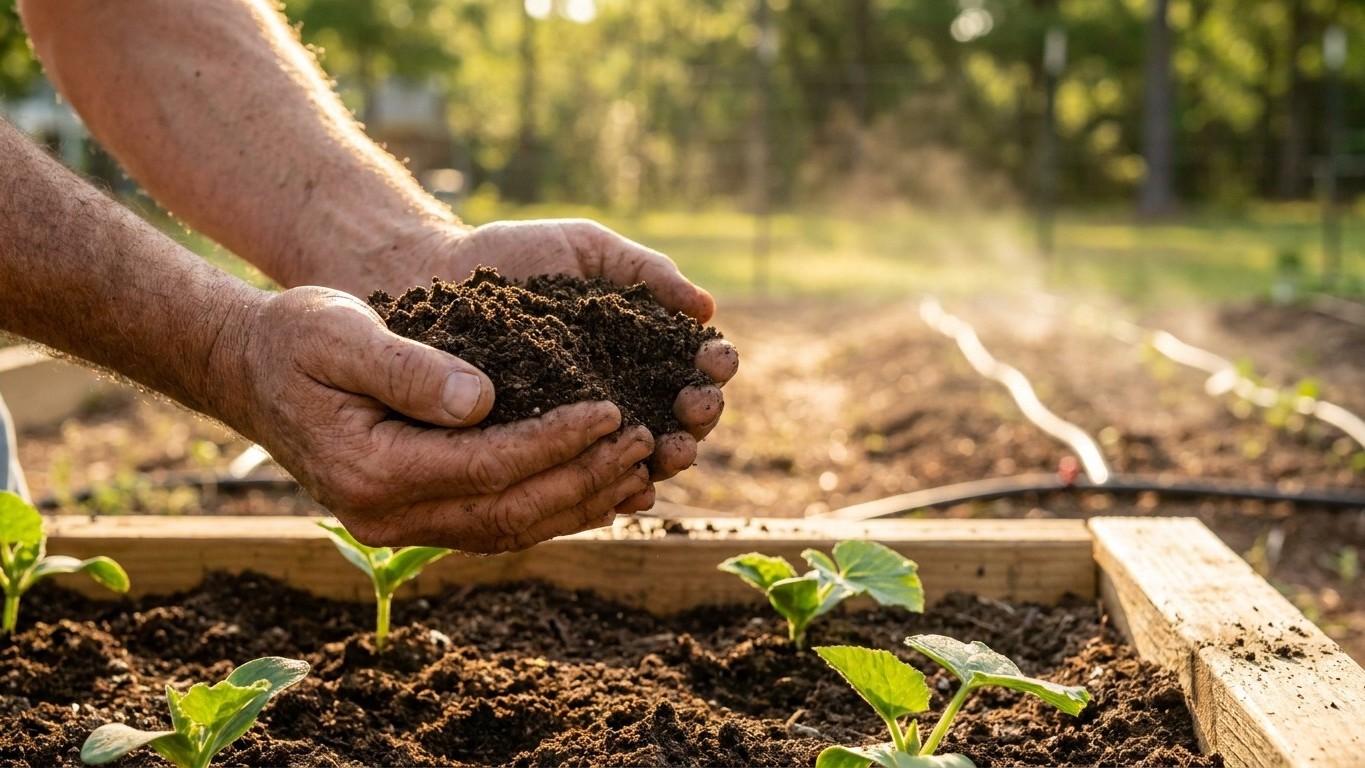

Summer squash grows well in Prince Edward Island once soil temperatures climb into the 60s Fahrenheit, which typically happens two to three weeks after the average last spring frost. With roughly 154 frost-free days on the calendar and almost no extreme heat to worry about, the bigger challenges here are cool nights, humidity, and getting the timing right for a short but workable window.
When the soil is warm enough in Prince Edward Island
Gardeners always want a date, so here it is: the average last spring frost at Charlottetown A, the reference station for the province, falls on May 16, according to Environment and Climate Change Canada’s 1981-2010 Climate Normals. That figure comes with a catch worth repeating, because it changes how you should use it. A mean date is exactly that, a midpoint. In roughly half of all years on record, frost arrived after May 16, not before it. Treat the date as the center of a window, not a green light.
Frost is also the wrong thing to watch if your real goal is planting summer squash successfully. What matters is soil temperature, and soil lags behind air temperature by days or weeks depending on how wet, shaded, or heavy the ground is. Squash seed sits and rots in cold, damp soil rather than germinating, and transplants set into soil still in the 40s or low 50s simply stall, sometimes for a month, even if the air above them feels pleasant. The safer approach is to let the calendar guide your general timing, then confirm with a soil thermometer pushed a few inches into the bed before you commit seed or transplants to the ground.
Why this matters more on PEI than elsewhere
Prince Edward Island sits in Canadian hardiness zone 5b, based on Natural Resources Canada’s Plant Hardiness data for the reference city used in these figures. That’s worth flagging clearly: the Canadian zone system is built from seven climate variables, not the single minimum-temperature measure the USDA system uses south of the border. The two numbers are not interchangeable, and a Canadian 5b does not map cleanly onto any single USDA zone. If you’re used to reading USDA zone numbers, set that habit aside here.
The other caution is geographic. Charlottetown A is a single reference point on a fairly compact island, but coastal breezes, inland pockets, and elevation still create real differences in when soil actually warms. A garden a short drive from the coast can run a week or more behind or ahead of the provincial average, so the May 16 date is a starting point for the province as a whole, not a guarantee for any one backyard.
In practice, most Island gardeners find that late May into early June is the realistic window for direct seeding or Transplanting summer squash outdoors, once the frost risk has meaningfully dropped and the soil has had time to catch up. Raised beds and black landscape fabric can nudge that timeline earlier by helping soil absorb and hold heat faster than open, unmulched ground.
How long the season lasts here
Subtracting the average last spring frost (May 16) from the average first fall frost (October 17) gives a frost-free window of about 154 days at the Charlottetown A reference station. That’s a genuinely workable stretch for a crop like summer squash, which usually needs somewhere in the neighborhood of two months from seed to first harvest, depending on growing conditions and type.
What that length of season allows is the more useful question. A 154-day window gives Island gardeners real flexibility. It’s long enough to direct-seed in late May or early June, harvest through most of the summer, and still consider a second, smaller sowing in early July aimed at extending the picking season into early fall before the October frost risk climbs. It is not a season long enough to treat lightly, but it’s far from the tightest window a northern gardener has to work with either.
That flexibility is also why transplanting versus direct seeding becomes a real decision here rather than an obvious default. Where the season is short, transplants earn their keep by buying two or three extra weeks of growth before the ground would otherwise support direct-sown seed. With 154 days on the table, transplants are still useful for getting an earlier first harvest, but they’re not strictly necessary the way they would be in a shorter-season territory. Summer squash also dislikes root disturbance more than many vegetables, so if you do start indoors, using biodegradable pots or another method that avoids disturbing the root ball at transplant time matters more than the choice of transplanting itself.
For gardeners weighing whether a second sowing makes sense on this timeline, and how to space it out for a steady harvest rather than one overwhelming glut, the succession sowing guide on this site walks through the spacing and timing decisions in more depth. The short version for PEI: a second planting in the first half of July is realistic, but anything later starts cutting it close against the mid-October frost average, especially in a cooler-than-normal year.
Heat and water in Prince Edward Island
Here’s where the Island’s climate genuinely diverges from most of the summer squash advice written for warmer parts of North America. The Charlottetown A reference station records an average of 0.0 days per year above 90°F. That’s not a low number, it’s effectively zero. Summer squash rarely faces heat stress here, and the usual warnings about pollen dying in high heat or blossoms dropping in a heat wave simply don’t apply to a typical Prince Edward Island summer.
That changes the entire risk profile for the crop. Instead of worrying about scorching afternoons and moisture-starved plants, Island gardeners should be watching for the opposite problem: cool, damp conditions that favor fungal disease and slow ripening. Squash likes warmth, and a summer with few genuinely hot days means fruit can take longer to size up and mature than a gardener used to a hotter climate might expect.
Rainfall reinforces that picture. Summer rainfall across June, July and August averages about 10.8 inches, broken down as 3.89 inches in June, 3.15 inches in July, and 3.77 inches in August, per the same 1981-2010 Climate Normals. That’s a reasonably steady, moderate supply of natural moisture spread fairly evenly across the growing season, not the feast-or-famine pattern seen in drier or hotter regions. Combined with near-zero days of extreme heat, the practical result is that irrigation is rarely the make-or-break factor for summer squash on PEI the way it is farther south or west.
The trade-off is disease pressure. Consistent rainfall plus mild temperatures plus squash’s famously large, water-holding leaves creates conditions where powdery mildew and other fungal issues can take hold, particularly late in the season as nights cool and dew lingers longer on foliage. Spacing plants generously for airflow, watering at the soil line rather than overhead, and removing damaged or yellowing leaves promptly are the practices that matter most here, more than any irrigation schedule.
Which summer squash suit Prince Edward Island
Given a moderate 154-day season, essentially no extreme heat, and a cool, humid summer pattern, the reasoning points toward specific types rather than specific named varieties. Earlier-maturing types make sense given that fruit development runs a bit slower without hot days to speed things along. Types bred or selected for open growth habit and good airflow help offset the disease pressure that comes with steady summer rainfall and mild temperatures. And disease resistance, particularly to powdery mildew, becomes a genuinely useful first filter when you’re choosing between options rather than an afterthought.
What this page won’t do is name a specific cultivar. That’s a deliberate choice, not an oversight. Variety performance depends heavily on trials done in the actual growing conditions of a region, and the summer squash that performs best in a Charlottetown backyard may differ from what does best on the western end of the Island or in a more sheltered inland plot. Naming a variety here, without local trial data behind it, would be a guess dressed up as advice, and it’s the kind of error an experienced gardener catches immediately.
The better move is checking with the Prince Edward Island agriculture resources, which track varieties and practices suited to the province’s actual growing conditions rather than to a national or continental average. Local extension guidance also tends to reflect real-world results from the current season’s weather, something no climate normal or general planting guide can offer.
- Early-maturing types, to make the most of a moderate season without extreme heat to accelerate ripening
- Open, airy growth habits, to reduce the humidity trapped around foliage during rainy stretches
- Disease-resistant selections, particularly for powdery mildew, given the steady summer rainfall pattern
None of that requires guessing at a brand name or a specific hybrid. It requires matching the type of plant to the conditions already laid out here, then letting a local source confirm which specific options have actually performed well in Island gardens recently.