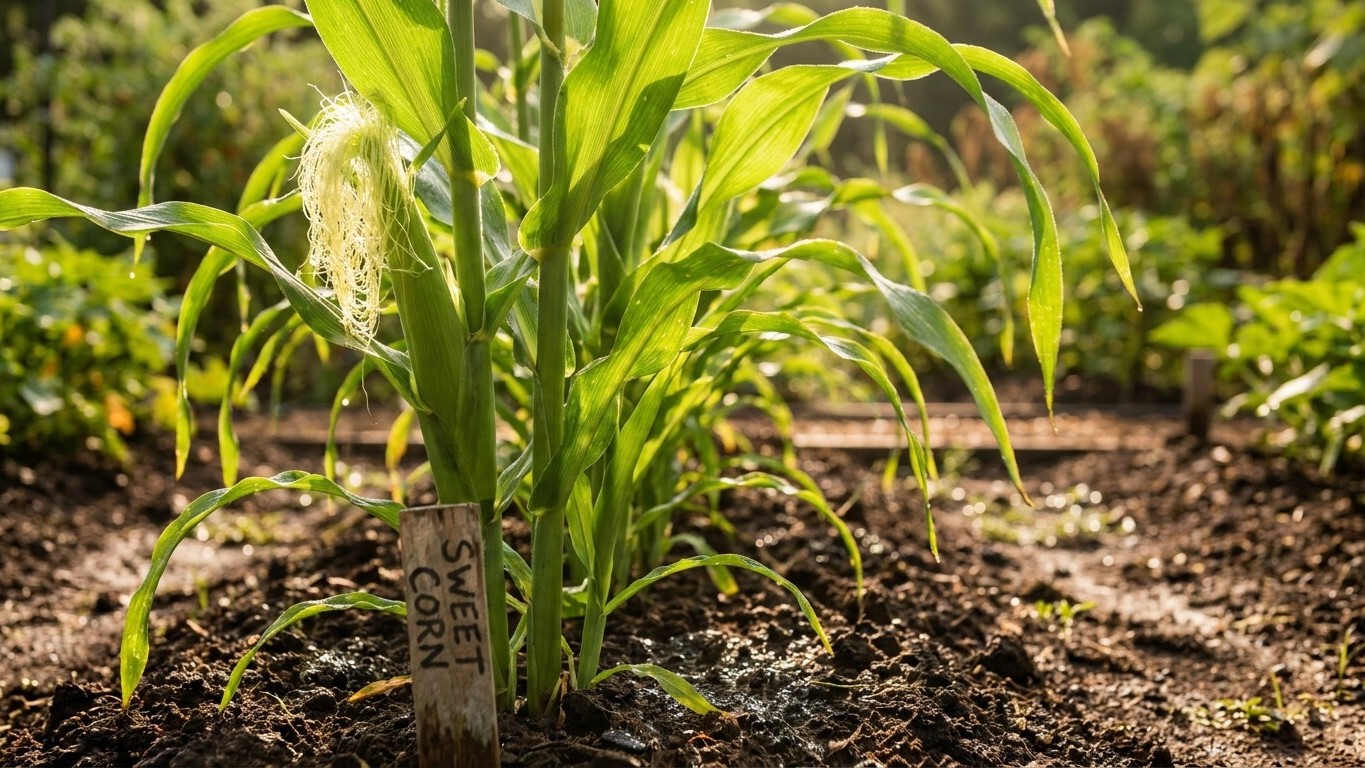

Yes, sweet corn can ripen on Prince Edward Island, but the margin for error is thinner than most gardeners expect. The island’s growing season runs from a mean last frost in mid-May to a mean first frost in mid-October, and sweet corn needs warm soil, not just frost-free air, before it germinates reliably. Get the timing wrong at either end and a 90-day variety can run out of season before the ears fill.
The short answer
Start with the number gardeners usually reach for first: the average last spring frost at the Charlottetown reference station falls on May 16. That date matters, but it is not the date to plant sweet corn. Sweet corn germinates only once soil temperature climbs above 60°F, and soil warms far more slowly than air. A frost-free morning in mid-May does not mean the ground has caught up. Utah State University Extension is blunt about this threshold: below 60°F, sweet corn seed sits in cold, damp soil and simply rots or fails to sprout rather than waiting patiently for warmth. The exact calendar date the soil crosses 60°F on Prince Edward Island isn’t published in the sources behind this article, so the honest answer is to test the soil directly, with a simple soil thermometer pushed a couple inches down, rather than counting days from the frost date and assuming the ground is ready.
That gap between frost date and plantable soil is the single biggest miscalculation gardeners make here. It’s tempting to treat May 16 as a green light. It isn’t. The soil needs its own warm-up period after the air stops freezing, and on an island shaped by cool ocean water on every side, that lag can run longer than it does a hundred miles inland. Once the soil is genuinely warm enough to plant, the clock that actually decides whether corn ripens starts ticking: 60 to 90 days from planting to harvest, depending on variety.
The other end of the season is more forgiving than a lot of Canadian gardeners assume. The average first fall frost at Charlottetown lands on October 17, which is a comparatively late date for a Maritime province, a reminder that the surrounding water moderates the climate here more than latitude alone would suggest. Between a soil that’s ready in late spring and a frost that waits until mid-October, there’s a real working window, likely well over 100 days in most years. That’s enough room for the 60-to-90-day range Utah State’s guidance describes, though how much cushion is left depends heavily on how early or late the soil actually warms in a given year, and that figure isn’t nailed down in the data available here.
One more number belongs in this picture: the mean count of days per year reaching 90°F or hotter at the reference station is zero. Prince Edward Island summers simply don’t deliver the heat spikes that push corn through its growth stages fast. That absence of scorching days is good news for water stress and sunburned husks, but it also means the maturity clock printed on a seed packet, tested under warmer average conditions, may run slower here than the day-count implies. The short answer to “will it ripen” is yes, with a caveat: plant by soil temperature, not calendar date, and don’t assume the packet’s day-count is exact in a cool coastal climate.
Does a late variety fit here?
A 60-day variety
A 60-day variety is the safer bet on Prince Edward Island, and the math backs that up comfortably. Even allowing for soil that takes its time warming past 60°F, a 60-day maturity window leaves substantial breathing room before the October 17 mean fall frost. If soil warms enough to plant by early June, a 60-day type could be ready for harvest by early August, months ahead of the average frost and with plenty of slack if the season runs a little cool or the soil takes an extra week or two to come up to temperature. This is the variety category where island gardeners have the least to worry about, and where a delayed planting because of a stubborn wet spring is unlikely to sink the crop.
A 90-day variety
A 90-day variety fits the calendar on paper, but the margin shrinks fast. Ninety days from a June planting lands harvest around early September, still ahead of the mean October frost, so in an average year it should work. The trouble is that “average” cuts both ways: the frost dates published here are means, not guarantees, which means in roughly half of all years the first fall frost arrives later than October 17, and in the other half, potentially earlier. Add the fact that Prince Edward Island records zero days above 90°F most summers, meaning heat-loving corn accumulates growing warmth more slowly than it would in a hotter inland climate, and a 90-day variety’s real-world maturity can stretch past its printed day-count. It likely still fits, but with far less buffer than a 60-day type, and a late, cool spring that delays soil warm-up could push the harvest uncomfortably close to frost risk. Gardeners aiming for a 90-day type should treat it as the ambitious end of what the island’s season can carry, not a safe default.
What goes wrong here
- Soil sown too cold. Planting on the last-frost date instead of waiting for the soil itself to reach 60°F is the most common mistake. Seed sits in chilled, wet ground, rots before it sprouts, or emerges weak and stunted. The remedy is simple: check soil temperature directly with a thermometer rather than counting days from May 16, and hold off until the reading is consistently above 60°F, not just on one warm afternoon.
- A variety too late for the season. Choosing a 90-day type without accounting for a cool, slow spring can leave ears filling out just as the first fall frost approaches. Since the island’s zero days above 90°F mean corn matures more slowly here than its day-count suggests, the remedy is to lean toward the shorter end of the 60-to-90-day range unless the soil warmed unusually early that year, and to keep a close eye on the calendar once tasseling begins.
- Sweetness lost to cross-pollination, and it has nothing to do with climate. Su, se, and sh2 sweet corn types lose their signature sweetness if they tassel at the same time nearby, because their pollen crosses and changes the kernel starch content in the very ears growing that season. No frost, no cold soil, no length of season causes this failure; it’s purely a matter of timing between plantings. The remedy is to stagger planting dates so different types don’t tassel together, or to grow only one type in a given season, and to keep sweet corn in blocks of three or more rows rather than a single thin line, since block planting improves pollination within a variety and makes it easier to manage timing between separate plantings.
Common questions
Is May 16 a safe date to plant sweet corn on Prince Edward Island?
No. May 16 is the average last spring frost, not a soil temperature reading. Sweet corn needs soil above 60°F to germinate well, and that threshold arrives later than the frost date. Test the soil directly rather than planting by the frost date alone.
How long does sweet corn take to ripen once planted?
Depending on variety, sweet corn needs 60 to 90 days from planting to harvest. That’s separate from the days-to-harvest count measured from silk emergence, which runs 17 to 24 days and tells growers which week to start checking ears, not whether the whole crop will finish before frost.
How do I know sweet corn is actually ready to pick?
Look for three signs together: dry, brown silks at the tip of the ear, husks that are still moist and green, and milky, not clear or thick, juice when a kernel is punctured. One sign alone isn’t reliable; all three together confirm ripeness.
Can I grow two sweet corn varieties in the same garden without losing sweetness?
Yes, as long as they don’t tassel at the same time. The sweetness loss comes from su, se, and sh2 types cross-pollinating while tasseling together, not from growing multiple varieties in the same space. Stagger planting dates between types, or choose varieties with different maturity lengths so their tasseling windows don’t overlap.