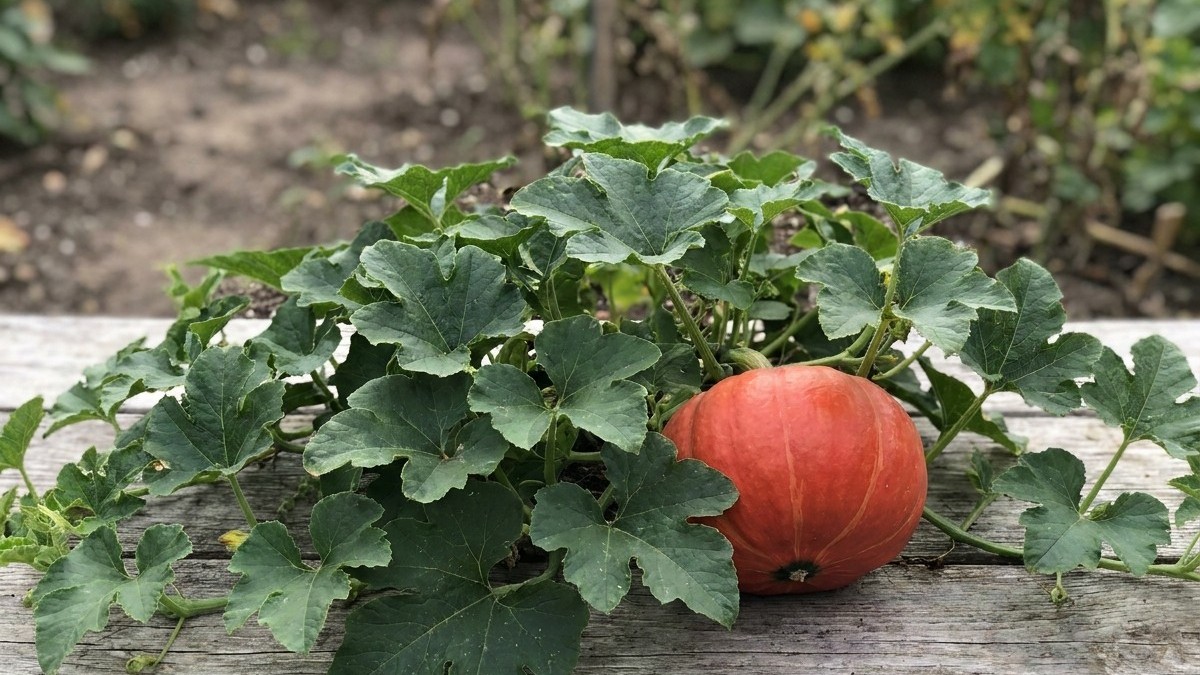

In Quebec, the latest a pumpkin flower can open and still give a ripe fruit falls roughly between August 11 and August 21. That comes from counting 45 to 55 days forward to an average first fall frost of October 5. Cut the fruit with its stem attached before frost, and a whole pumpkin keeps three to six months in a cool, dark spot at 45 to 50 F. The rest of this page shows how those dates are built and where they bend.
The short answer
October 5 is not a deadline. It is the average first fall frost at the Environment and Climate Change Canada station at Montreal/St-Hubert, and an average is a midpoint. In one year out of two, frost arrives later than that date. In the other half, it arrives earlier. Treat it as the middle of a window rather than a safe date, and plan as if the early half of that window could be the one you get.
The station also matters. A province is not one climate, and northern or upland districts run weeks behind the St-Hubert figure. Canadian normals also use an earlier 30-year period than the US figures used elsewhere on this site, so don’t line the two up as if they were measured the same way. If you garden well north of Montreal or on higher ground, your own frost window starts earlier, and the whole flower calendar shifts with it.
Counting back from frost
Utah State University Extension puts the pumpkin clock at 45 to 55 days to mature after flowering. Not after seeding, and not after transplanting. A seed that went in the ground in late May has no ripening clock running until a flower opens and the fruit sets.
Now the arithmetic. Counting 45 days back from October 5 lands on August 21. Counting 55 days back lands on August 11. So the latest flower that can still produce a ripe pumpkin opens somewhere between about August 11 and August 21. A flower that opens after that window is betting on a frost that comes later than average, and that bet loses half the time. Fruit from a flower in the middle of August may reach full size and still stay green. For a calendar you can trust, favor flowers that opened earlier in the month, and treat anything later as a bonus.
Cutting and keeping
Harvest with the stem attached, and do it before frost. The stem is not decoration. A pumpkin cut off at the fruit leaves an open scar, and that is where rot gets in during storage. Use pruners rather than twisting the fruit off, and carry the pumpkin by its body, never by the stem.
Once it is in, a whole pumpkin keeps for three to six months in a cool, dark location between 45 and 50 F, according to University of Illinois Extension. That figure applies to a whole pumpkin only. Utah State’s guidance on storage is shorter: keep them where they will not freeze. It publishes no humidity target and no keeping time, so none are claimed here.
The less obvious rule comes from Illinois too: store pumpkins away from ripening fruit and vegetables such as apples, potatoes, and tomatoes. Ripening produce gives off a gas that ages a pumpkin faster. That makes the porch shelf beside the apple crate the worst place in the house to put one, however cool it is out there.
When to sow here
Seeding date depends on the soil, not the calendar. Utah State says pumpkins are sown when the soil reaches 65 F. Here is how that plays out for a Quebec garden near the St-Hubert station.
- Start from the last spring frost, and read it as a midpoint. The average last spring frost at Montreal/St-Hubert is May 6. As with the fall date, frost arrives later than that in one spring out of two, so May 6 is not a green light for tender plants.
- Add the soil lag. Soil at 65 F is not the same event as the last frost. The soil trails the air by weeks, so the target lands well after May 6, in the second half of May at the earliest. Utah State gives no lag in days, so no exact date is offered here. A soil thermometer a few inches down, read in the morning, settles it better than any chart.
- Subtract two weeks if you use row covers. Covers warm the soil beneath them, and they buy about two weeks. In words: take the date your bare soil would reach 65 F, move it two weeks earlier, and that is the earliest you can sow under cover. Remove them when the plants need pollinators, since open female flowers must be reached by bees.
- Sow, then watch for flowers instead of counting from seed. The source publishes no seeding-to-flower interval, so there is no honest way to predict the date of the first bloom from the sowing date. Write down the day each female flower opens. Female flowers are the ones with a tiny fruit swelling behind the petals.
- Test each flower against the window. A flower dated before August 11 has 55 days or more before an average frost. A flower dated between August 11 and August 21 is on the edge, and flowers after August 21 are unlikely to ripen. Seedlings set out as transplants follow the same rule, since the 45 to 55 days still start at flowering.
For the full growing picture, from site choice to feeding, start with Growing Pumpkins in Quebec. The question of whether a given planting will finish in time gets its own treatment in Will Pumpkins Ripen Before Frost in Quebec?
What goes wrong here
A short season punishes small delays. These are the failures it causes most often, each with a remedy.
- A late flower that never colors. A fruit set after the window has fewer than 45 days, and it will stay green and soft-skinned when frost comes. Remedy: stop feeding the late fruit. Snip off flowers and tiny fruit that open after the cutoff so the vine puts its energy into pumpkins that can finish.
- A fruit caught by frost. Because October 5 is only a midpoint, a frost on an earlier night is normal rather than freakish. Remedy: check the forecast through late September, cut ripe fruit with the stem attached before the cold night, and keep covers or old sheets ready for the nights you are still waiting. The sources give no keeping time for a frost-touched pumpkin, so use those first rather than putting them in storage.
- A vine that dies back before the skin hardens. When leaves fail early, the fruit loses its supply while the rind is still thin. Remedy: look for the cause, whether a pest or a cold snap, and cut the fruit with stem attached once it has full color. Early losses of leaves are often insect damage, covered in What Eats Pumpkin in Quebec, and When, which also links to the pages on squash bugs and cucumber beetles.
- Trusting the station date in a colder district. The St-Hubert average does not describe northern or upland gardens, where frost comes weeks earlier. Remedy: ask a neighbor who has gardened there for years when their first frost usually hits, and shift the August flower window earlier by the same amount. The figure for your own location is not published here.
- Storing the harvest beside ripening fruit. The pumpkin survives the season only to age quickly in a cellar shared with apples. Remedy: keep whole pumpkins in their own cool, dark spot at 45 to 50 F, away from apples, potatoes, and tomatoes, and above freezing.
Common questions
Do the 45 to 55 days start at seeding?
No. They start when the flower opens. Utah State University Extension counts maturity from flowering, so a pumpkin sown in late May has no ripening clock until it blooms and sets fruit. Counting from seeding would put the flower window months off.
Is October 5 a safe date to leave pumpkins in the field?
No. It is the average first fall frost at the Montreal/St-Hubert station, which means frost comes later in one year out of two and earlier in the other. Cut ripe pumpkins, stem attached, before a frost is forecast instead of waiting for the date.
How long does a whole pumpkin keep?
Three to six months, in a cool, dark location between 45 and 50 F, per University of Illinois Extension. Keep it away from apples, potatoes, and tomatoes, because the gas they give off while ripening ages the pumpkin. Utah State adds only that it must be kept where it will not freeze.
Does the 45 to 50 F range apply to a carved pumpkin?
No. That range and the three-to-six-month figure describe a whole, uncut pumpkin. The sources used here publish nothing for a carved one, so no keeping time is offered. Once the rind is opened, plan on a much shorter life than a whole fruit gets.