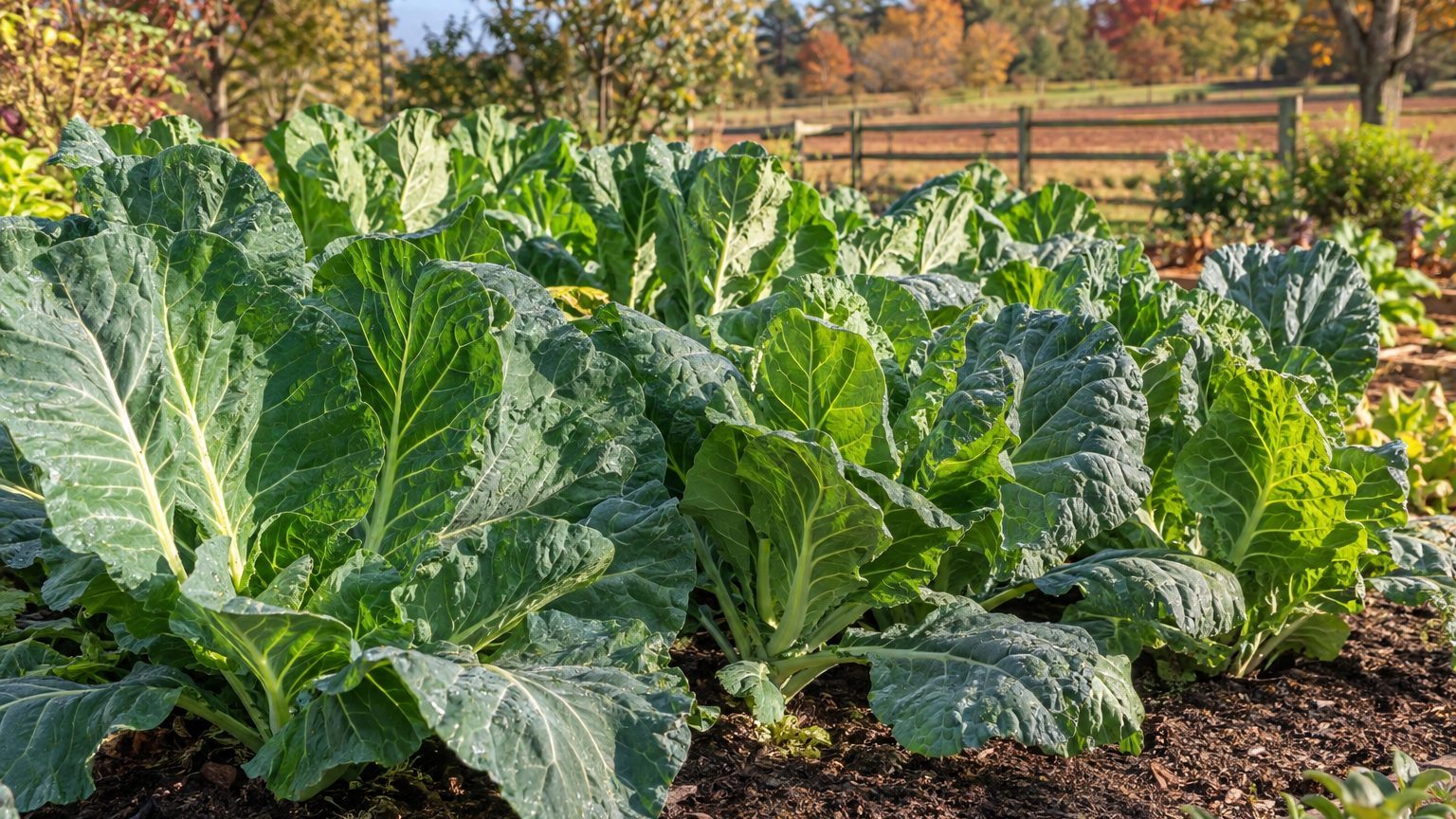

Plant a medium-sized, cold-hardy collard such as Vates or Champion, and run it as a spring and fall crop rather than a summer one. Southern New England gives collards a long enough season for a full-sized plant, but winters are too cold to count on a second year. Fast greens like kale and mustard fill the gaps around them.
The short answer for Rhode Island
Choose by type, not by brand: a compact or medium non-heading collard that tolerates cold and bolts slowly beats the giant, slow Georgia-type plants that thrive in long Southern summers. The reasoning is simple arithmetic. Collards need roughly two to three months from transplanting to a real harvest, and Providence’s frost-free stretch is long enough for that, but not long enough to be wasteful about it.
Start with the reference-city numbers. In the 1991-2020 NOAA climate normals for Providence, the last spring freeze (32°F) falls between April 7 and April 17, and the first fall freeze between October 24 and November 3. Those dates are probabilities, not promises: the band marks where the chance of a 32°F freeze still arriving in spring, or having already arrived in fall, sits between 30 and 70 percent. Count from the later spring date to the earlier fall one and you get about 190 days. Count from the earlier spring date to the later fall one and it is about 210. Either way, there is room for a spring planting that matures by midsummer and a fall planting that sweetens into November.
Winter sets the ceiling. The mean daily minimum of the coldest month in Providence is 22.1°F. Collards shrug off nights in the 20s, and the cold actually improves the flavor, but a January that averages in the low 20s at night, with colder stretches in between, usually finishes plants that have no protection. Treat them as annuals. For a fuller walkthrough of a season, see Growing Collards in Rhode Island.
Here is how the main types sort out for this climate:
| Type | Examples | Fit for Rhode Island |
|---|---|---|
| Compact, cold-tolerant, open-pollinated | Vates, Champion | Best all-around choice; steady in spring and holds through fall frosts |
| Large, slow, heat-loving | Georgia types | Workable if transplanted early; may not reach full size in a cool or late year |
| Loose-heading heirloom | Morris Heading | Good for a fall crop; the head shelters the inner leaves |
| Quick substitutes | Curly and lacinato kale, mustard, turnip greens | Ready sooner; ideal for filling gaps and for late sowings |
What will not work here
Late planting is the main failure. A collard needs to reach working size before November, when cooling soil and shortening days slow growth to a crawl. Transplants set out in September stand through the fall as small plants and then sit there, giving a few leaves instead of a harvest. The slowest Georgia-type collards suffer most from a late start, because they spend their first weeks building a large frame that the season cannot finish.
Counting on winter survival fails nearly as often. With a coldest-month mean minimum of 22.1°F and a USDA hardiness range from 6a to 7b, an unprotected collard in an open bed commonly browns out by late winter. Sheltered coastal yards with a thick mulch and a row cover sometimes carry plants through, and a few leaves may regrow in March. But if the plan depends on it, the plan is fragile. Sow or transplant a new crop instead and consider any survivors a bonus.
Humid summers punish close spacing. Collards crowded together hold moisture in the canopy for hours after rain or dew, which invites leaf spots and other diseases. Give each plant room to spread, water at the soil line in the morning, and rotate away from any bed where cabbage-family crops grew the previous year. Warm, damp weather also means cabbage worms, whose green larvae can strip a leaf to the veins in a few days. Floating row cover laid over the transplants soon after they go in is more reliable than any spray.
Then there is the trap of trusting a single set of dates. The Providence figures come from one weather station near the water, which runs warmer than inland and rural ground. Suburban and rural gardens commonly see the last spring frost one to two weeks later and the first fall frost one to two weeks earlier, and more so on higher or low-lying frost-pocket sites. A gardener who sets tender, unhardened transplants out on April 7 because the reference-city window opens then is gambling. Collards handle a light frost, but a hard freeze can still take out seedlings that were raised indoors and never toughened up.
The wrong seed for the wrong slot
Starting heat-lovers like okra or sweet potato slips alongside collards by the same calendar is another common mistake. Collards want cool soil and cool air, while those crops want warmth. Keep the collard window in the cool shoulders of the year.
What changes across Rhode Island
The state is small, but it is not one garden. The USDA Plant Hardiness Zone Map (2023, built on 1991-2020 weather) places Rhode Island across zones 6a to 7b. That span comes from a single variable, the average annual extreme minimum temperature, and it means there is no single answer for the whole state. Providence is the reference point for the numbers above, and other parts of the state differ from it.
Generally, the shoreline, Narragansett Bay and the islands run milder, because the water holds heat into fall and delays the first hard freeze. Gardens there can push a fall collard crop later and have the best odds of carrying plants through a mild winter with mulch. The northwestern corner and the higher inland towns run colder, with later springs and earlier autumns. A gardener there should shift every date toward the middle of the season: transplant later in spring, finish the fall crop planting sooner, and lean on the quicker, more cold-tolerant types rather than the large, slow ones.
No reader should assume a zone from a neighbor’s advice or from the state average. Look up your own location on the USDA Plant Hardiness Zone Map, which can be searched by ZIP code, and then compare it with what your own yard does, since a south-facing slope and a hollow at the bottom of the same lot can act like different zones.
Where to check this for your own county
The state’s land-grant extension service is the best next stop. University of Rhode Island Cooperative Extension publishes research-based gardening guidance for the state, and it is the place where local knowledge gets checked against trial results. A county or local recommendation beats a statewide one every time, and everything above is a statewide view that smooths over real differences between the coast and the hills.
When you get there, look for two things in particular. The first is a local planting calendar for cool-season vegetables, ideally one that lists dates for spring and fall plantings of brassica greens such as collards, kale, and cabbage. The second is any vegetable variety trial work, meaning side-by-side growing tests that name which collard and kale varieties performed best, held up to cold, and resisted disease in the state’s conditions. Trial results beat a catalog description, because the catalog writer was not growing in your climate.
Extension offices also commonly offer soil testing, which is worth doing before a collard bed goes in. A test shows whether lime or nitrogen is needed before you spend money on fertilizer you may not need. If the office has a gardening help line or a Master Gardener program, use it for local pest timing, such as when cabbage worms show up in your area.
For the timing side, When to Plant Collards in Rhode Island lays out the sowing windows in more detail, and the extension calendar for your county should either confirm those dates or nudge them a week in one direction.
Checking this against your own garden
Your own yard outranks every date in this article. Three observations will tell you more about its microclimate than any table.
- Soil warmth by feel. In early spring, grab a handful from 2 to 3 inches down. If it crumbles easily and no longer feels icy against your palm, collard transplants can go in. If it clumps wet and cold, wait. A bed that reaches this point a week before the neighbor’s is warm and well-drained, and one that lags is probably low or shaded.
- The first true leaves. On seedlings started indoors, the first pair of leaves are seed leaves. The true leaves, which look like small collard leaves, appear next. When seedlings have several true leaves and have spent a week or so outdoors in daylight, they are ready to plant. Seedlings that stay leggy and slow indicate your light or temperature is off, not the calendar.
- The first frost on a tender plant. Write down the date basil, zinnias, or tomato leaves first blacken in fall, and the date they were last safe in spring. Over two or three years, those notes give you a frost window for your own yard, which can differ by a week or more from the Providence band.
Common questions
Can collards survive a Rhode Island winter?
Sometimes, but not reliably. The coldest month averages a low of 22.1°F in Providence, and colder nights are common inland. Plants in sheltered coastal yards with heavy mulch or row cover can pull through a mild winter, while those in open beds often do not. Plan on replanting each year.
Is kale a better choice than collards?
Kale matures a little sooner and tolerates cold slightly better, so it is the safer pick for late plantings and colder inland sites. Collards produce larger, sturdier leaves and handle humid summer heat better. Growing both, side by side, is a sensible hedge.
When should I start collard seeds?
For a spring crop, start seeds indoors, then set plants out in the weeks around the last frost window. Inland and rural gardens should lean toward the later end. For a fall crop, plan so plants are established well before the first freeze. The details are in When to Plant Collards in Rhode Island.
Do collards really taste better after a frost?
Yes. Cold nights sweeten the leaves and soften the bitterness. A fall crop harvested after the first light frost is usually the best eating of the year, which is one more reason to favor fall plantings in this climate.