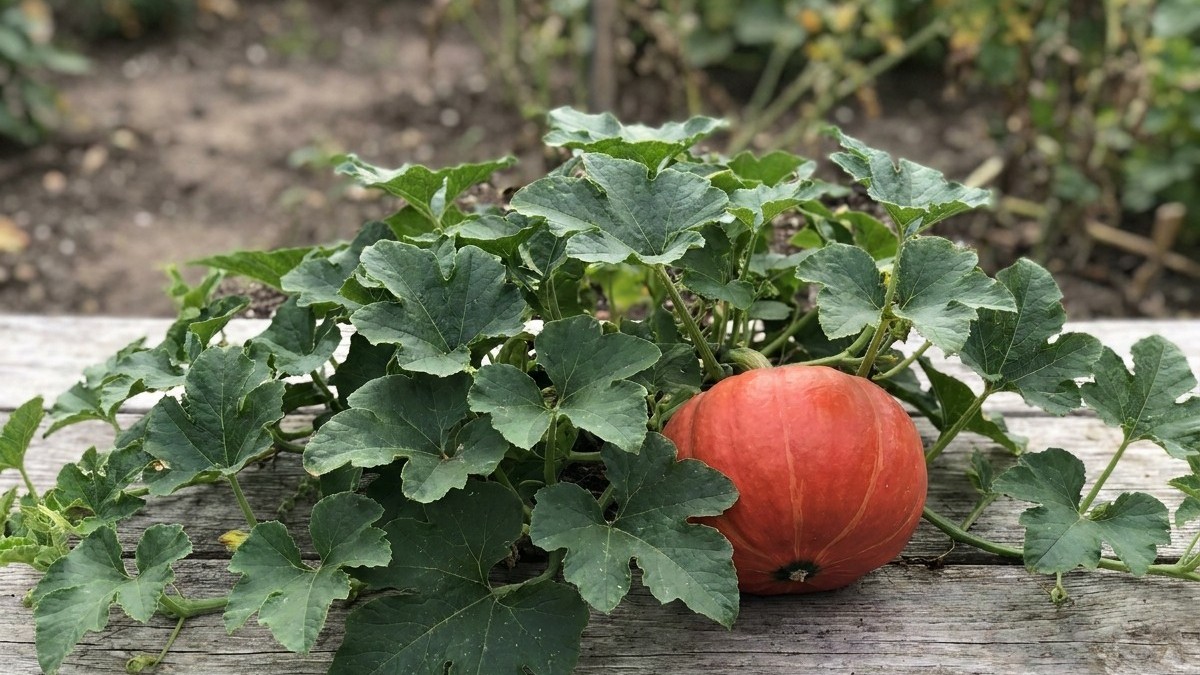

Cut pumpkins in Rhode Island before the first hard fall frost, once the fruit has fully colored, and leave a piece of stem attached. A whole pumpkin then keeps for three to six months if you store it right. The harvest deadline, though, gets set months earlier, on the day the flower opens.
The short answer
At the airport reference station in NOAA NCEI’s U.S. Climate Normals, the first fall freeze at 32 F falls in a window from October 24 to November 3. That is the band where the probability of a freeze runs between 30 and 70 percent. Count back 45 to 55 days from those two dates. October 24 minus 55 days lands on August 30. November 3 minus 45 days lands on September 19. So the latest flower that can still turn into a ripe pumpkin opens somewhere between roughly August 30 and September 19. It is a window, not a single day, because frost does not keep an appointment.
Plan on the early side of that window. A flower open by August 30 has its full 55 days even if frost arrives on October 24. A flower that opens on September 19 only works if frost holds off until early November and the fruit is one of the quicker finishers.
Why the count starts at the flower
Utah State University Extension puts pumpkin maturity at 45 to 55 days after flowering. After flowering, not after seeding, and not after transplanting. This is where most backyard calendars go wrong. Seed to first flower takes weeks, and the sources used here do not publish that stretch, so counting from the sowing date puts your harvest estimate off by weeks. Mark the day the first flower opens, add 45 to 55 days, and compare that range to your frost window. If the range runs past the window, the fruit will not finish.
Your garden is not the airport
Those frost dates come from one airport weather station. They describe a reference city, not the whole state. Suburban and rural gardens usually see the first fall frost earlier than an airport does, often by one to two weeks, and more at elevation. Shift the flower deadline earlier by the same amount if that sounds like your yard. Check frost records for your own county before you trust any single date, including the ones in this article.
Harvest itself is simple. Cut the pumpkin from the vine with the stem attached, and do it before frost. If you are unsure whether a late fruit has time left, Will Pumpkins Ripen Before Frost in Rhode Island? walks through the borderline cases. For the full growing picture, start with Growing Pumpkins in Rhode Island.
When to sow here
Sowing is where the back-count either works or doesn’t. The seed needs soil at 65 F, and that is a soil reading, not a calendar date. Work through it in this order:
- Start with the last spring frost. At the same airport station, the last 32 F freeze falls from April 7 to April 17, again in the 30-70 percent band. Frost can still show up after that in a cold pocket, and suburban or rural gardens usually see their last frost a week or two later than the airport does.
- Add the soil lag. Soil trails the air by weeks, so 65 F arrives well after the last frost. The sources here do not publish a date for it, so take it as an illustration. Add three weeks to April 7 through 17 and you reach April 28 to May 8. Add five weeks and you reach May 12 to May 22. Either way, 65 F soil and the last frost date are two different events, and the gap between them is the whole point.
- Subtract the row cover bonus. A row cover buys about two weeks. Take the five-week example, where bare soil warms around May 12 to May 22. Under a cover you could sow about two weeks sooner, around April 28 to May 8. The cover protects the seedling and warms the soil, but it does not cancel a late frost, so keep it on hand for cold nights.
- Use a thermometer, not the calendar. Push a soil thermometer in where the hill will go and sow when it reads 65 F. The dates above show roughly when that happens. Your own reading overrules them.
- Close the loop at the first flower. Whatever day you sow, the date that matters is the first flower. Add 45 to 55 days. If the answer lands before the August 30 to September 19 window (earlier still if your garden freezes early), you are on schedule.
Early sowing has a price. Young vines under covers are exactly what squash bugs and cucumber beetles go looking for. What Eats Pumpkin in Rhode Island, and When covers the timing and what to look for, so there is no need to repeat it here.
What goes wrong here
Rhode Island’s growing season gives pumpkins enough time, but not a lot of slack. When it fails, it fails in a few predictable ways:
- A late flower that never colors. Fruit set on a flower that opened after the window stays green when frost arrives, because 45 to 55 days will not fit. The remedy is to stop counting on it. Once flowers open past the back-count date, pinch them off so the vine puts its energy into fruit that can still finish. Check the date against the ripening page before you give up on a borderline fruit.
- A fruit caught by frost. A freeze damages the pumpkin and the vine. Watch the forecast through the last week of October, because the first fall freeze can arrive on October 24, or sooner in a colder garden. Cut every fruit that is close to ripe, stem attached, before the cold night. Utah State University Extension says to keep harvested pumpkins where they will not freeze. It publishes no storage temperature or keeping time. Use any frost-touched fruit first, and do not count on it for the long-term storage described below.
- A vine that dies back before the skin hardens. Insects, disease and cold can all kill the leaves early, and a pumpkin with soft skin has had no chance to finish. If the vine collapses, cut the fruit with its stem attached rather than leaving it in the field. Pests are the usual cause, so look at the squash bug and cucumber beetle details on the pests page before next season and not after.
- A stem knocked off in handling. The harvest rule is stem attached. A pumpkin carried by its stem can lose it, so lift from the body instead and set it down gently. A missing stem is not a death sentence, but it is a reason to use that fruit first.
- Storing next to the apples. University of Illinois Extension says to keep whole pumpkins away from ripening fruit and vegetables such as apples, potatoes or tomatoes. Ripening fruit gives off a gas that ages the pumpkin, which makes the porch beside the apple crate about the worst spot. A whole pumpkin keeps for three to six months in a cool, dark place between 45 and 50 F.
Common questions
Is it too early to cut a pumpkin before the first frost?
Not if it has fully colored. Cutting early is safer than leaving fruit exposed on a night that might freeze. Leave the stem attached. A green fruit cut early is a different matter, and the ripening page explains what to expect.
How long does a whole pumpkin keep?
Three to six months in a cool, dark spot at 45 to 50 F, according to University of Illinois Extension. Keep it away from apples, potatoes and tomatoes. Utah State University Extension adds only that pumpkins should be kept where they will not freeze.
How long does a carved pumpkin last?
The sources used here do not publish a keeping time for a carved pumpkin. The 45 to 50 F range and the three to six months apply to a whole, uncut pumpkin only, so do not carry them over to a jack-o’-lantern.
Do the October 24 to November 3 frost dates apply to my yard?
They describe the airport reference station, not a guarantee for the state. Suburban and rural gardens usually freeze earlier, often by one to two weeks, and higher ground freezes sooner still. Pull your county’s frost records and shift the flower deadline of August 30 to September 19 by the same margin.